
A cross-country comparison found positive correlations between the share of boys receiving a Mohammed name variant and several police-recorded crime rates. Here are the calculations, the sensitivity test and what this analysis can establish.
By Doggy. Adapted from my original Instagram carousel, with source notes and workings collected in one place.
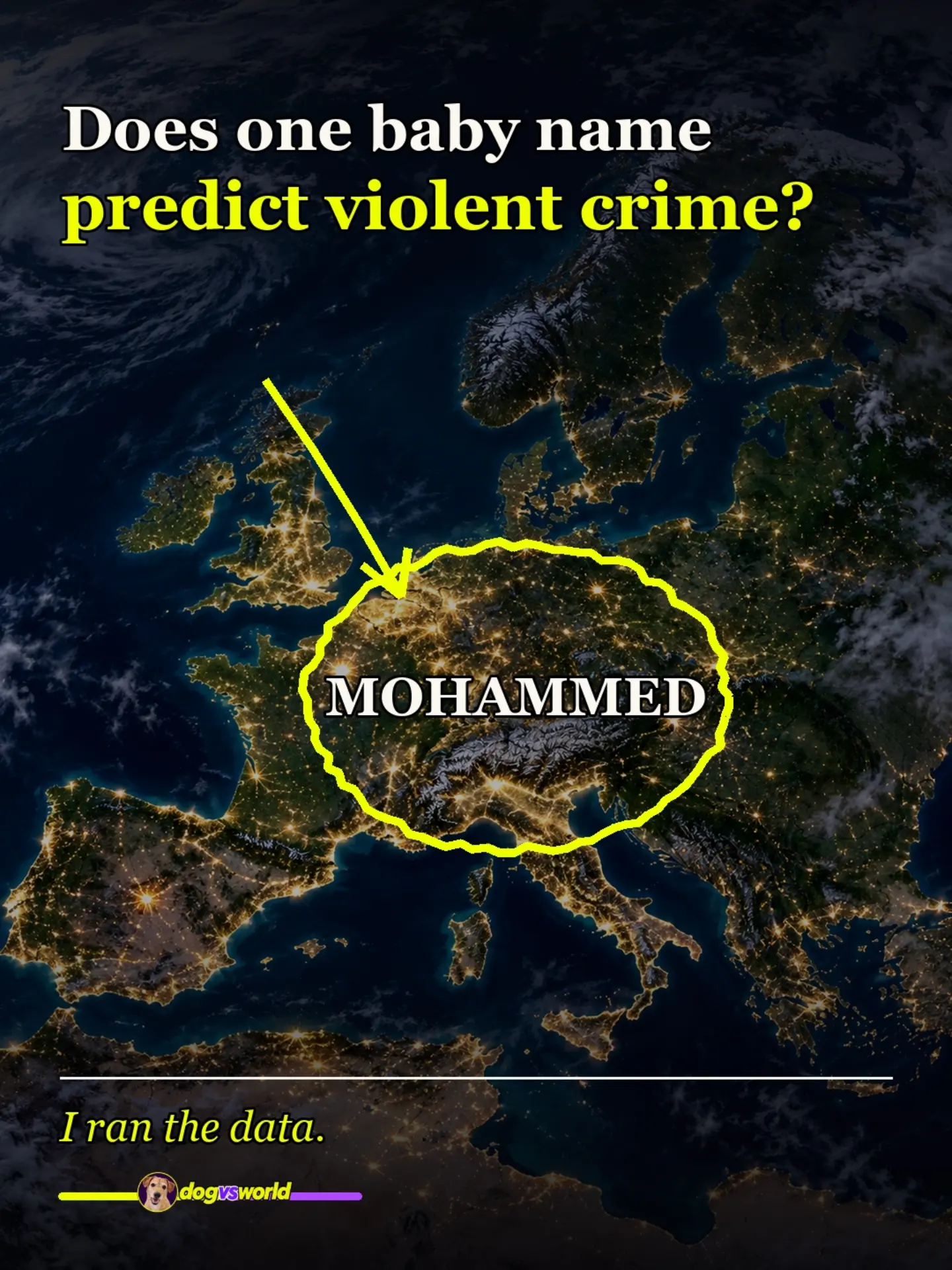
What was compared?
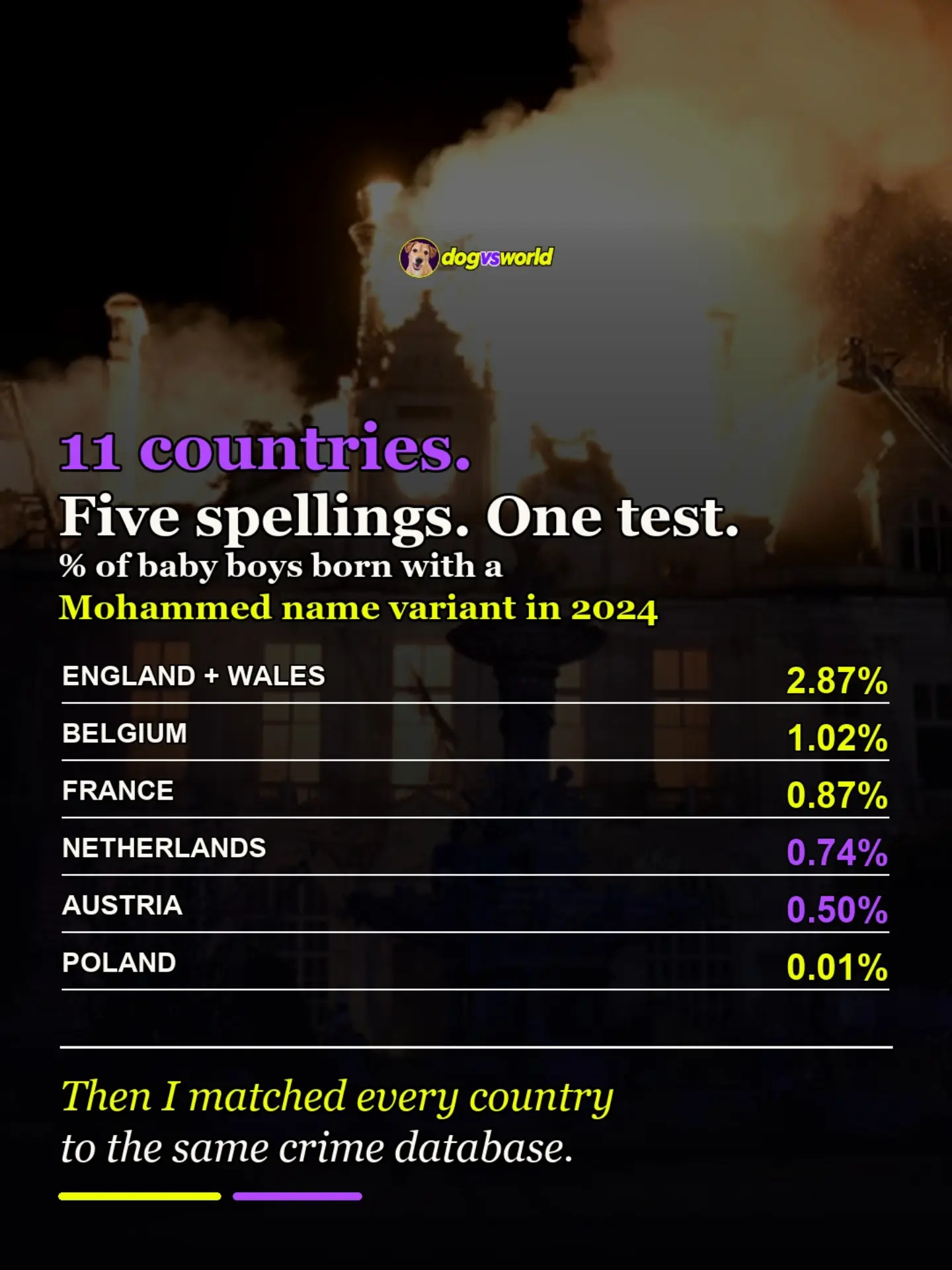
I compared 2024 baby-name shares compiled from national statistics with 2023 Eurostat police-recorded offences per 100,000 residents. The name compilation combines Muhammad, Mohammed, Mohammad, Mohamed and Mohamad. It covers 11 countries, but England and Wales were excluded from the correlation calculation because a comparable 2023 Eurostat series was unavailable. The resulting comparison has ten countries.
The name figures are a secondary compilation, reported through the Daily Mail and discussed in The Daily Sceptic. They should not be mistaken for a harmonised measure of religion or migration background.
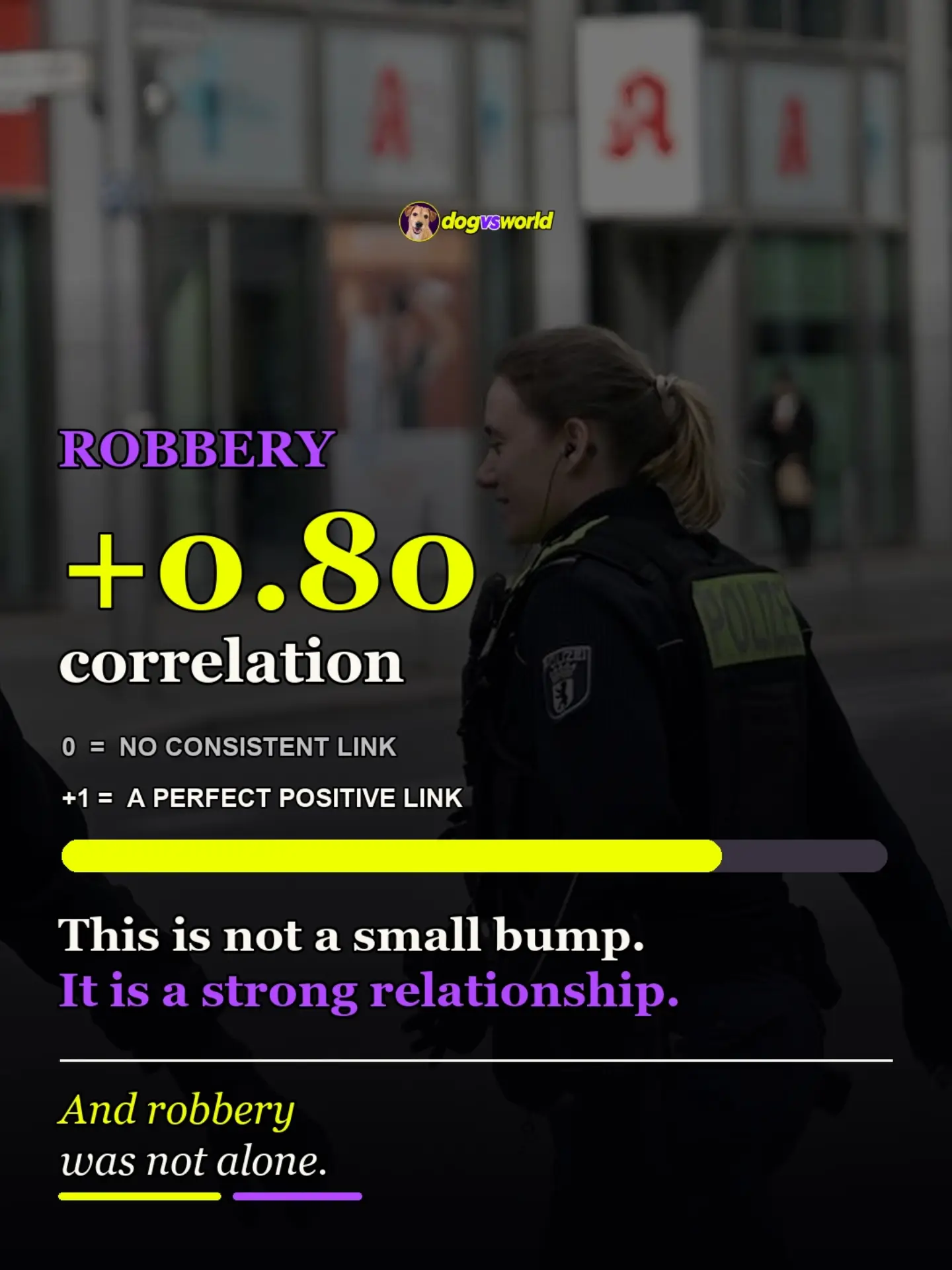
The Pearson correlations
| Recorded offence | Ten countries | Without Poland |
|---|---|---|
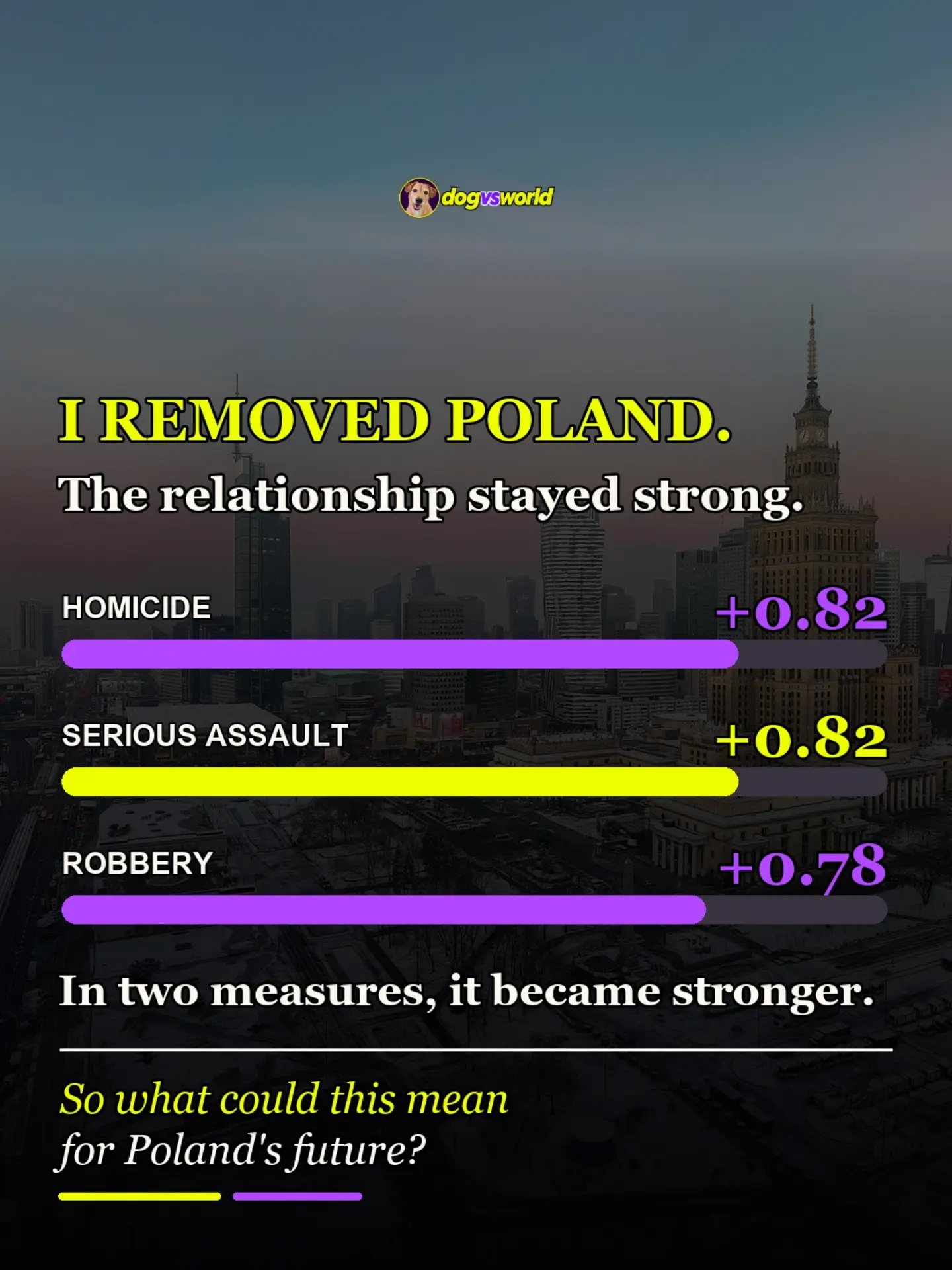
| Robbery | +0.802 | +0.780 |
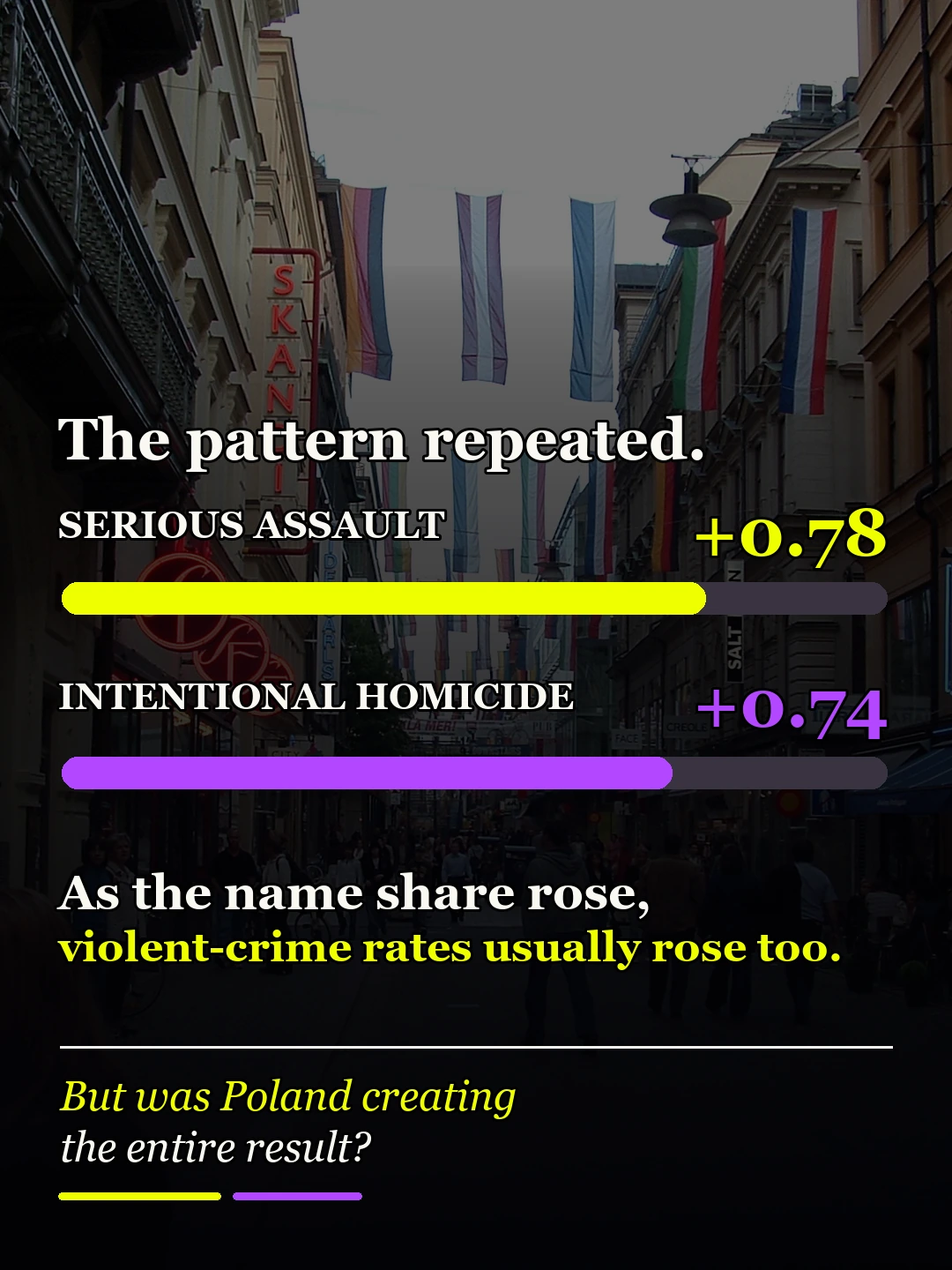
| Serious assault | +0.778 | +0.818 |
| Intentional homicide | +0.736 | +0.819 |
| Sexual violence | +0.511 | +0.380 |
| Rape | +0.503 | +0.325 |
| Theft | +0.379 | +0.016 |
| Burglary | +0.197 | −0.133 |
Pearson’s r measures a linear association and ranges from −1 to +1. It is calculated as the covariance of the two measures divided by the product of their standard deviations. It is not a percentage increase in crime or an individual risk estimate.
Removing Poland
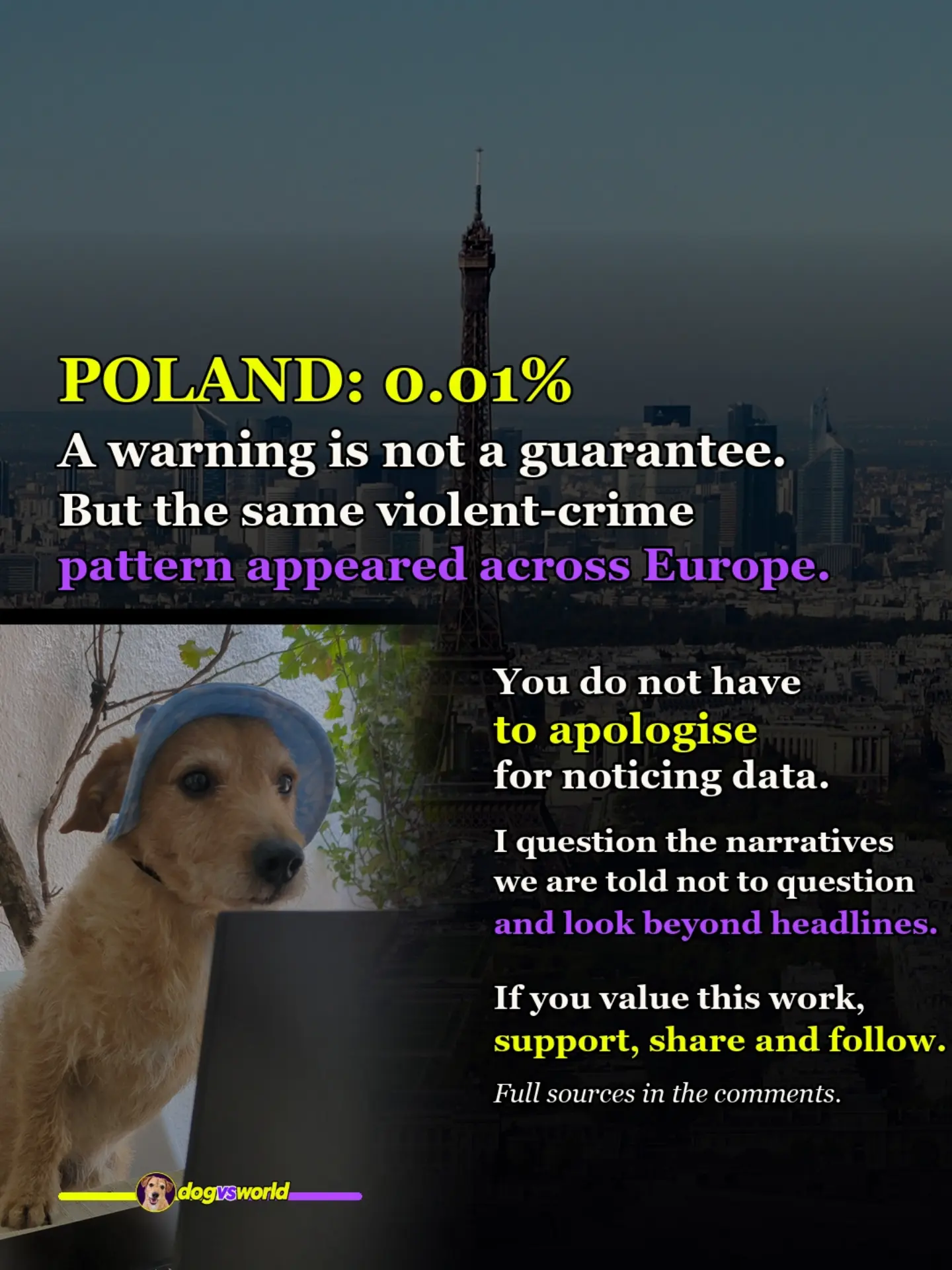
Poland’s displayed name share is 0.01%, making it a useful sensitivity check. Removing it leaves nine countries. Robbery remains positively correlated, while the homicide and assault correlations rise. Other relationships weaken, especially theft and burglary. Reporting the full set makes that distinction visible.
What the pattern does not prove
This is a small, country-level, exploratory comparison using different years. It does not identify offenders, establish that a name or religion causes crime, or validate a prediction for Poland’s future. Differences in reporting, legal definitions, recording practices, age structures, urbanisation and other untested factors could influence the relationship. Removing one country is a robustness check, not a causal test.
Sources and workings
- Eurostat: crim_off_cat, 2023 police-recorded offences, per 100,000 residents.
- Published baby-name compilation and discussion.
The carousel below preserves the original presentation. Its use of “predict” is a question, not evidence of a validated forecasting model.
The original carousel
The first slide appears above. The remaining slides are reproduced in order. The source notes above explain the measures used.
More research
- Europe’s recorded rape rates: changes from 2008 to 2024
- Denmark conviction totals versus population-adjusted rates
- Denmark sexual-offence convictions by origin: 2021–2025
Keep the research going
I research, check and create these reports myself. Support my work on Buy Me a Coffee, or send a correction or source suggestion.