
Eurostat’s police-recorded rape series shows contrasting changes across five European countries between 2008 and 2024. The figures describe recorded offences and require care when comparing countries.
By Doggy. Adapted from my original Instagram carousel, with source notes and workings collected in one place.
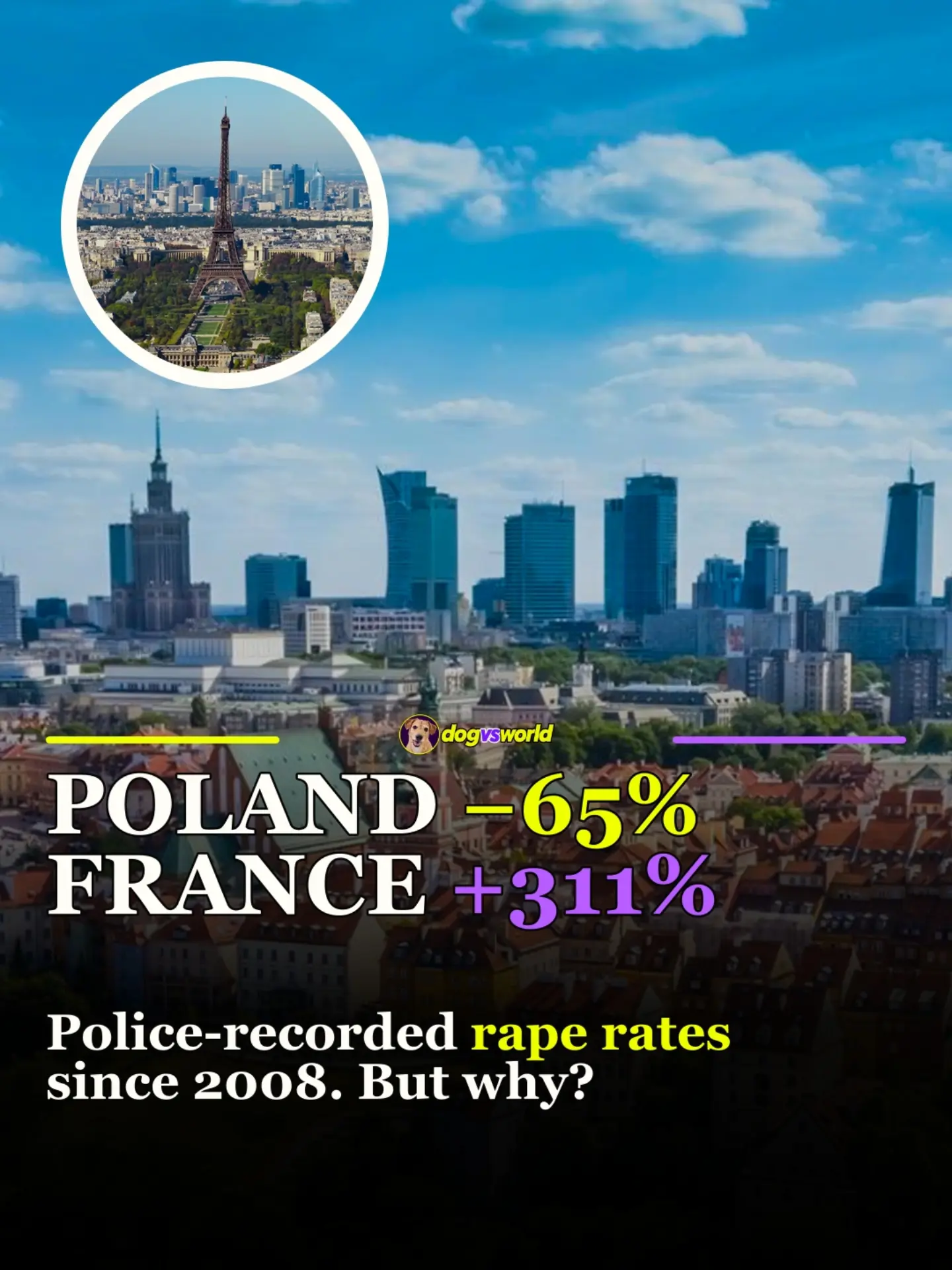
The rates and the changes
The source is Eurostat’s crim_off_cat dataset, offence category ICCS03011 (rape), unit P_HTHAB (offences per 100,000 inhabitants). The original extraction used the dataset updated on 29 April 2026.
| Country | 2008 rate | 2024 rate | Change |
|---|---|---|---|
| Poland | 4.23 | 1.46 | −65.5% |
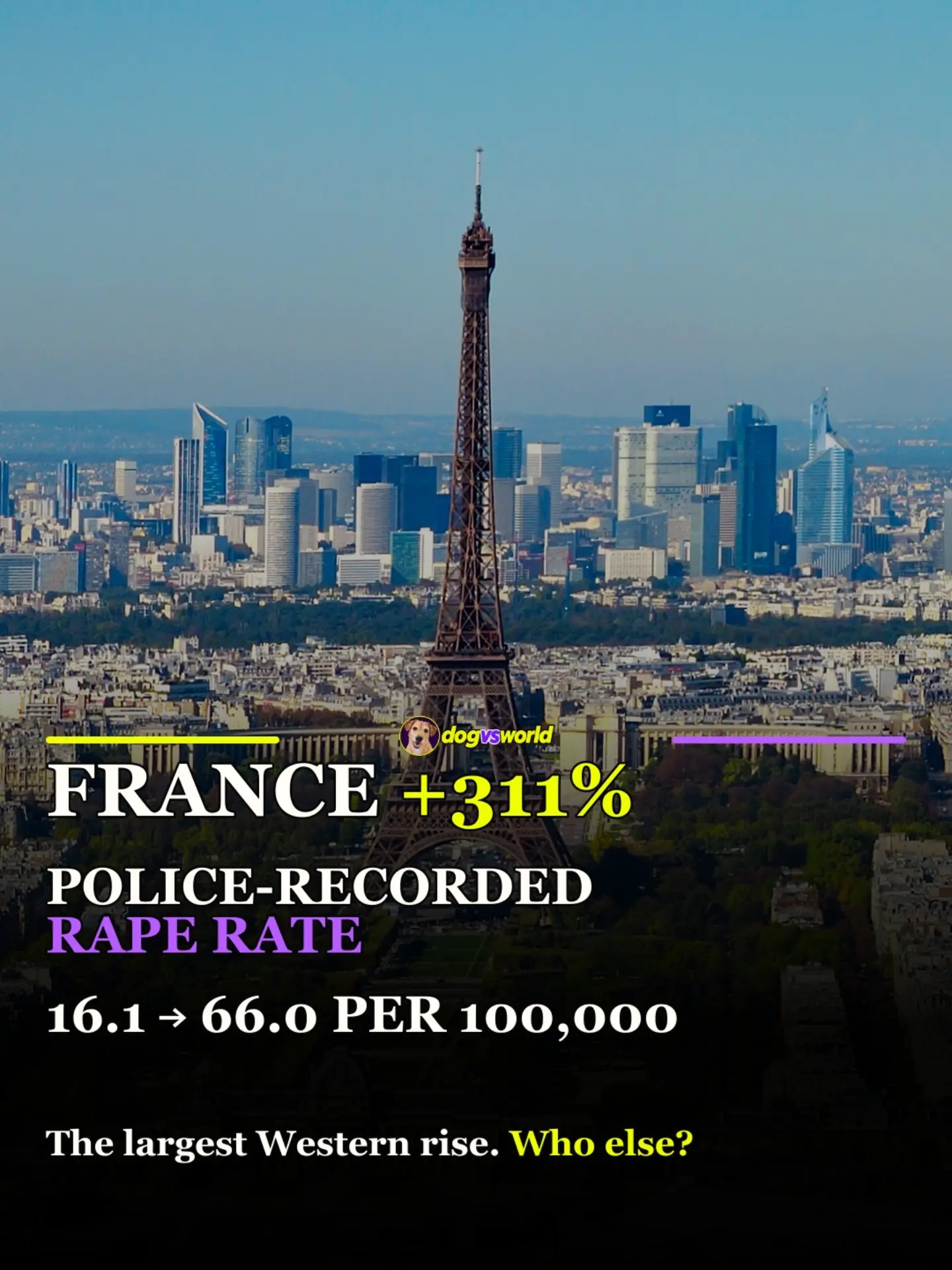
| France | 16.06 | 65.95 | +310.6% |
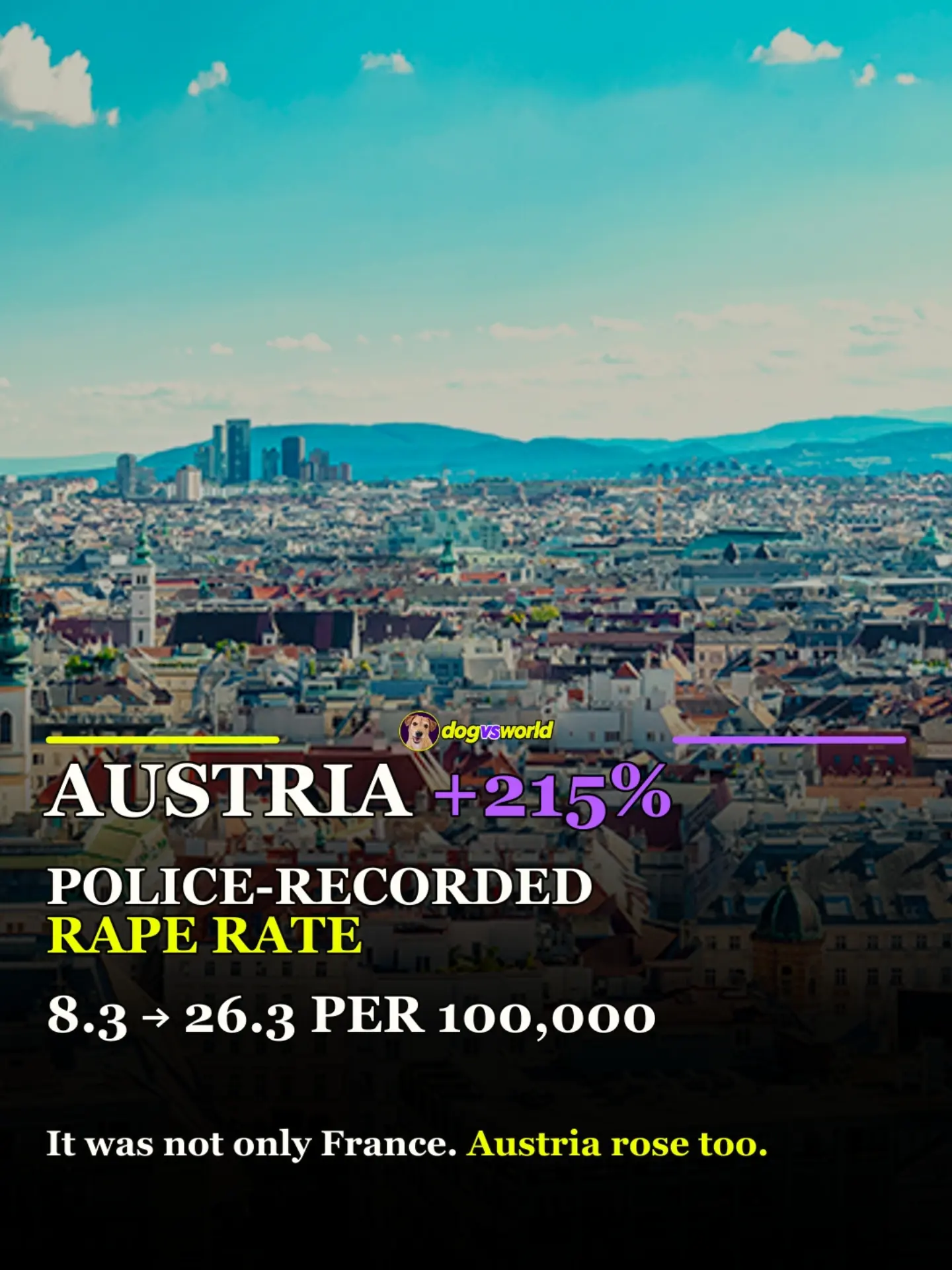
| Austria | 8.34 | 26.29 | +215.2% |
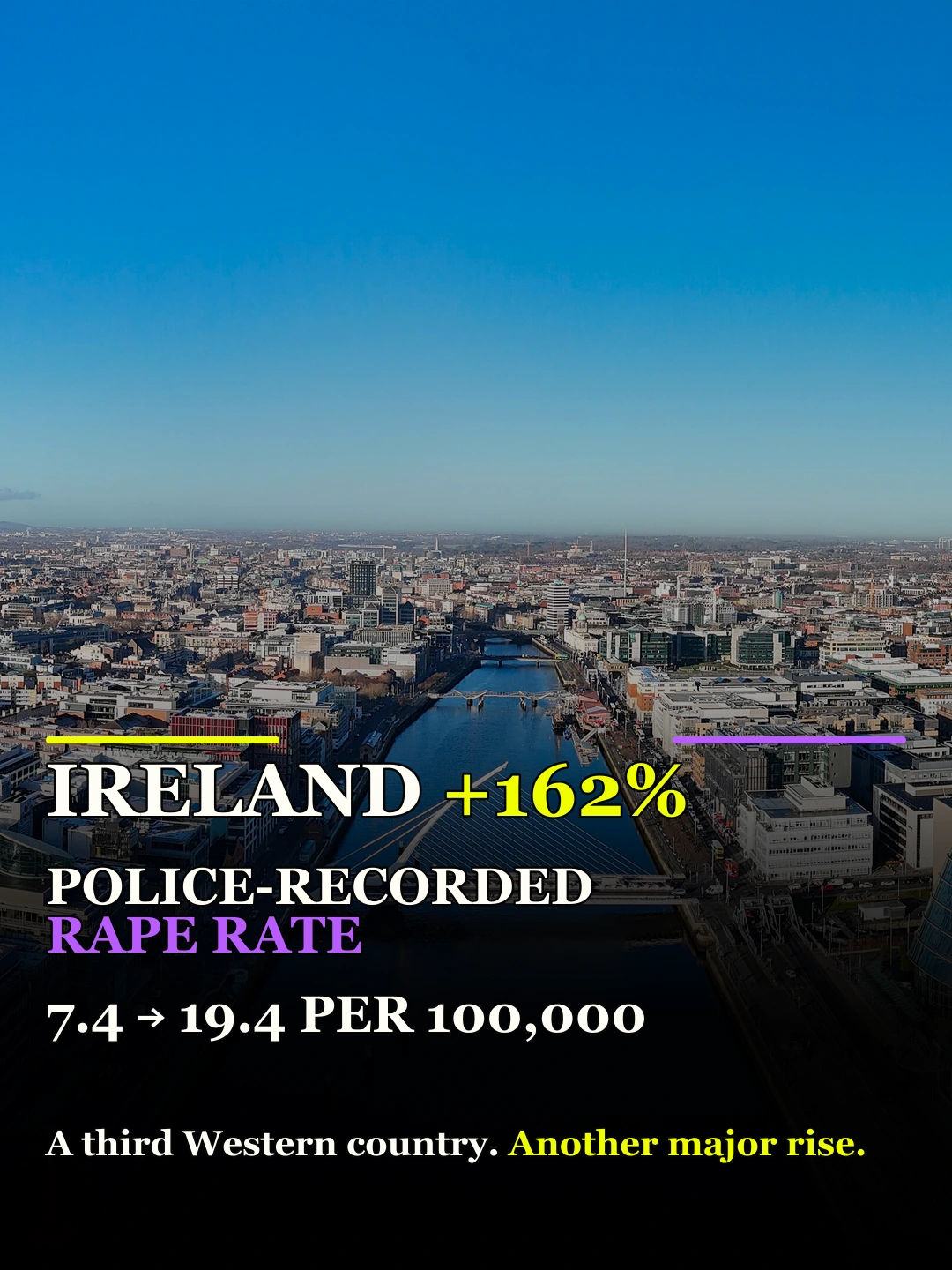
| Ireland | 7.42 | 19.43 | +161.9% |
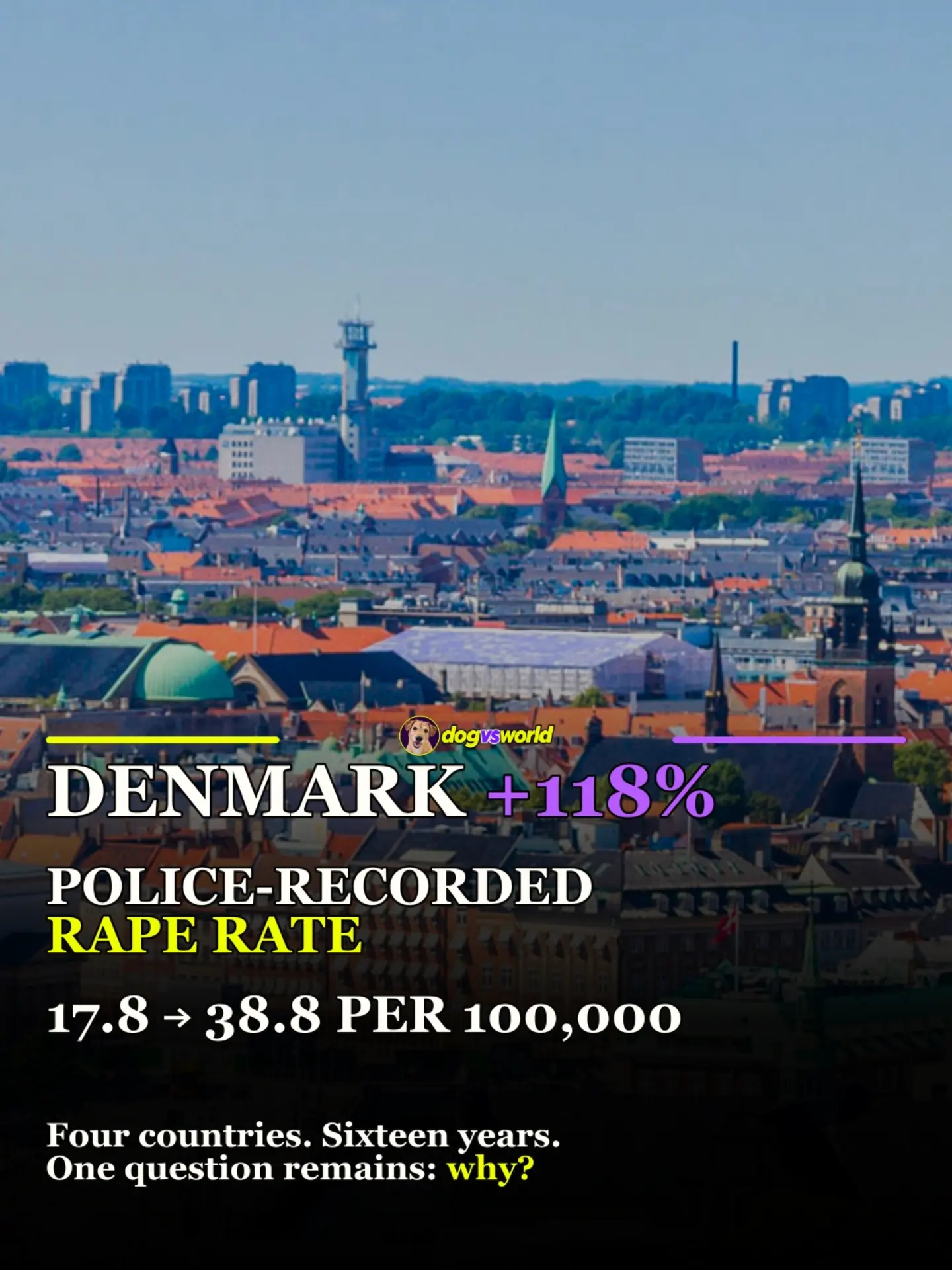
| Denmark | 17.81 | 38.83 | +118.0% |
The calculation
Percentage change = ((2024 rate ÷ 2008 rate) − 1) × 100. For France, ((65.95 ÷ 16.06) − 1) × 100 = approximately 310.6%. The carousel presents rounded headline changes. Calculations from already-rounded source values may differ slightly from calculations using a source’s full precision.
Recorded offences are not prevalence
These are police-recorded rates. They are not estimates of how many people experienced rape from a victimisation survey, and they do not directly measure the probability that an individual will be assaulted.
Differences and changes in law, reporting behaviour, police recording and statistical systems can affect comparisons. A rise in recorded offences may reflect changes in underlying incidence, improved reporting, broader definitions or a combination. These figures alone cannot isolate those explanations.
What can be concluded?
The selected countries’ recorded series moved in different directions over this period. That is a starting point for investigation, not proof of any particular demographic, religious or policy cause. A causal explanation would need additional evidence and attention to country-specific breaks in the series.
No city-level comparison is included because the original research did not identify a standardised city series matching this 2008–2024 measure across the selected countries.
Source and workings
Eurostat: police-recorded offences by offence category (crim_off_cat). DOI: 10.2908/CRIM_OFF_CAT. Select ICCS03011, the per-100,000 unit and the relevant countries and years to reproduce the comparison.
The original carousel
The first slide appears above. The remaining slides are reproduced in order. The source notes above explain the measures used.

More research
- Denmark conviction totals versus population-adjusted rates
- Denmark sexual-offence convictions by origin: 2021–2025
- Nevada rape-offender data and Las Vegas registry figures
Keep the research going
I research, check and create these reports myself. Support my work on Buy Me a Coffee, or send a correction or source suggestion.