
Raw totals and population-adjusted rates answer different questions. Denmark’s sexual-offence conviction tables illustrate why the denominator must stay visible.
By Doggy. Adapted from my original Instagram carousel, with source notes and workings collected in one place.
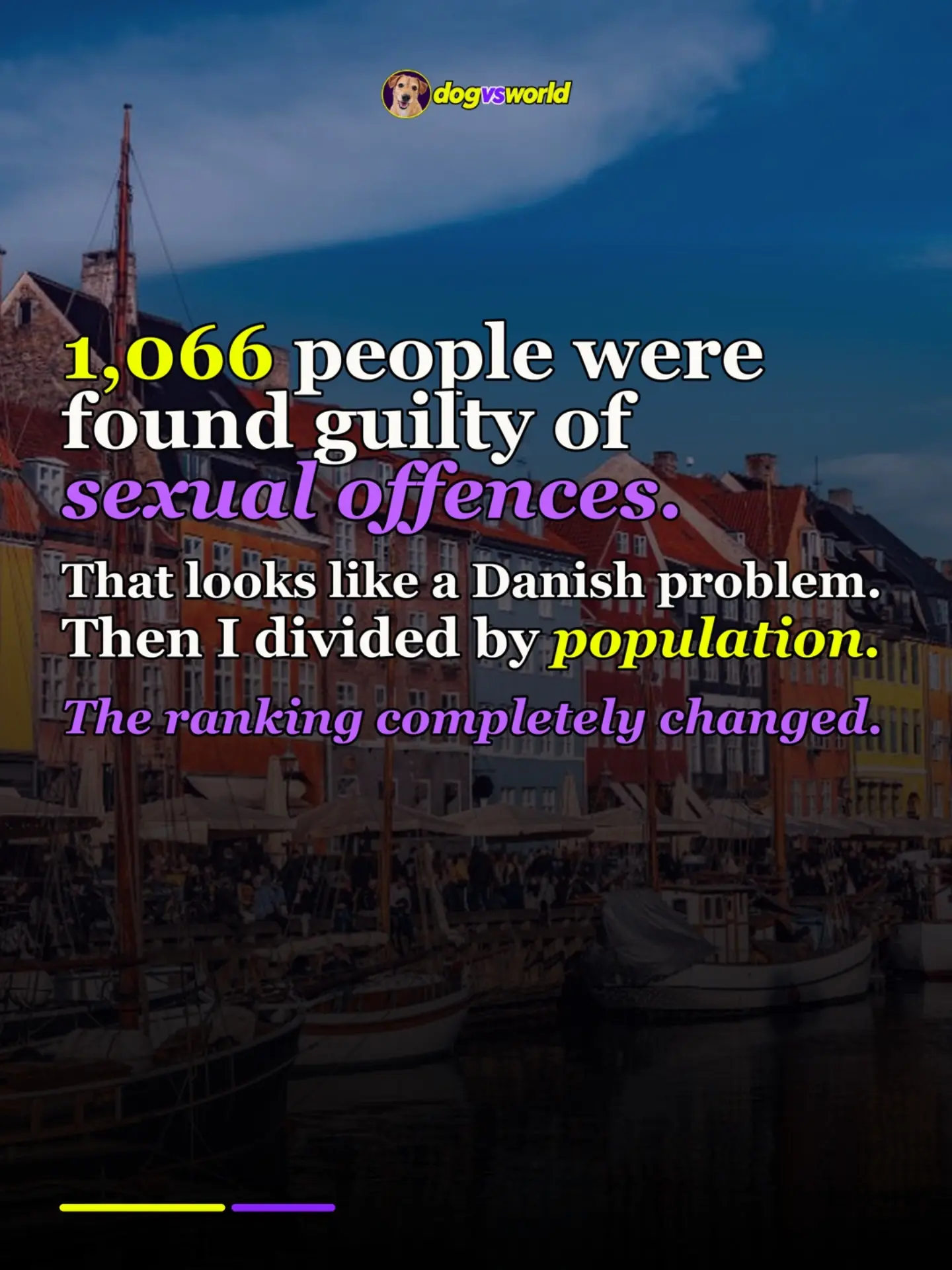
The 2025 totals
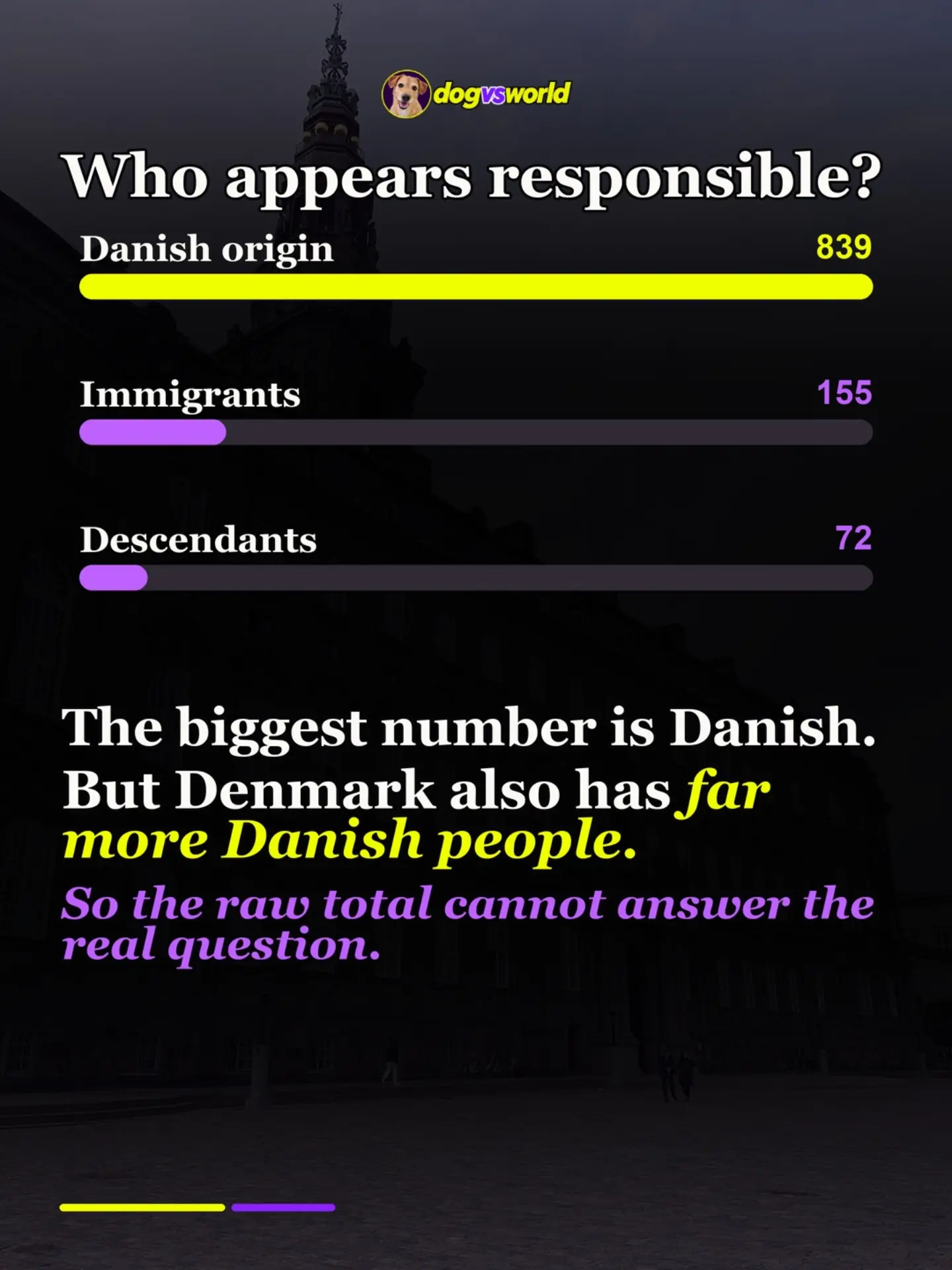
The original analysis records 1,066 guilty-person entries for sexual offences in 2025: 839 Danish-origin entries, 155 immigrant entries and 72 descendant entries. The largest group total is Danish-origin, but these population groups differ substantially in size.
| Ancestry category | 2025 entries |
|---|---|
| Danish origin | 839 |
| Immigrants | 155 |
| Descendants | 72 |
| Total | 1,066 |
A separate five-year rate comparison
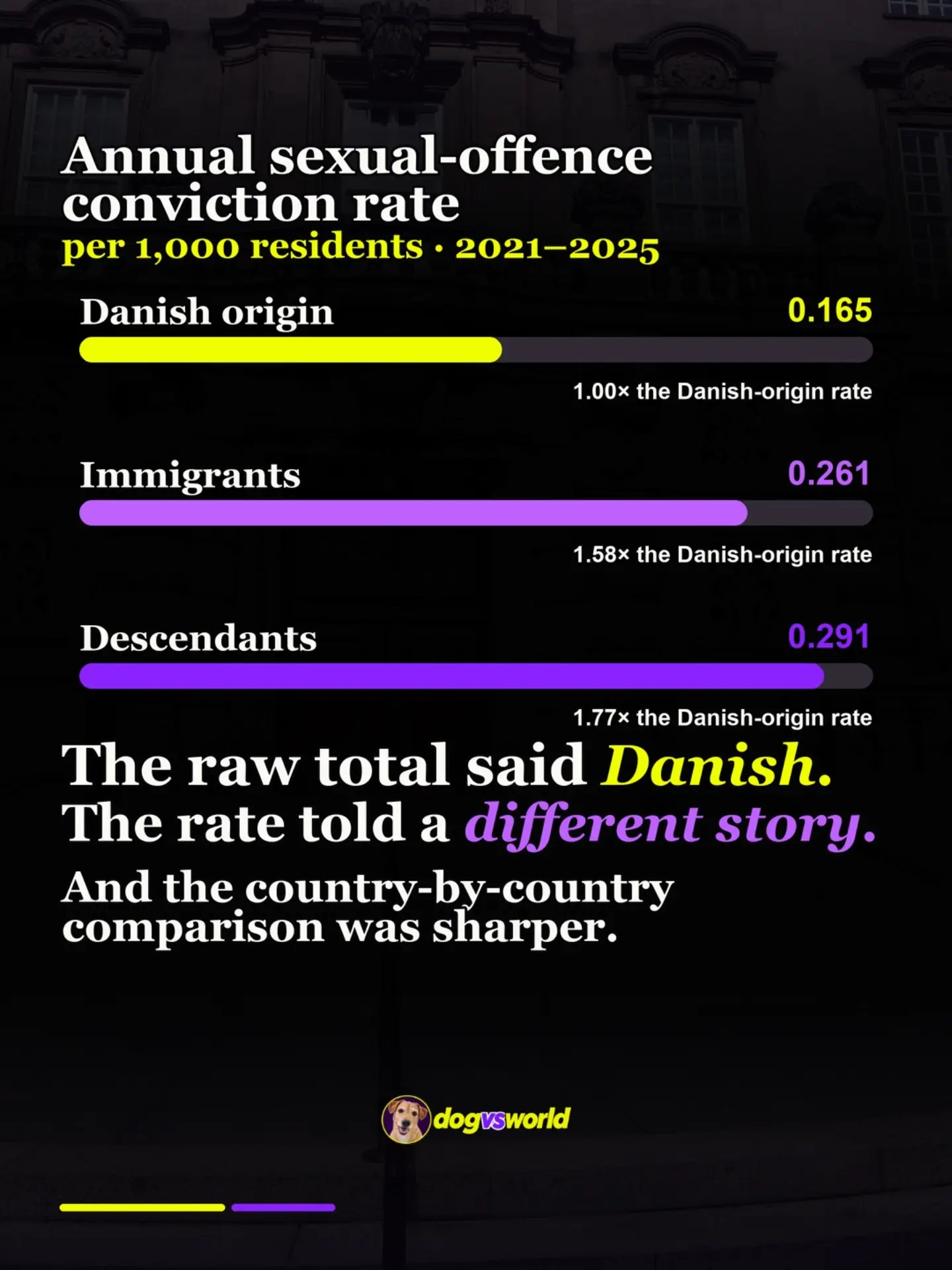
For a less volatile rate comparison, the research combines 2021–2025 guilty-person entries and annual population denominators. These are crude annualised rates per 1,000 residents, using the full population denominator in the original analysis.
| Category | Five-year entries | Population-years | Annual rate per 1,000 |
|---|---|---|---|
| Danish origin | 4,135 | 25,104,478 | 0.1647 |
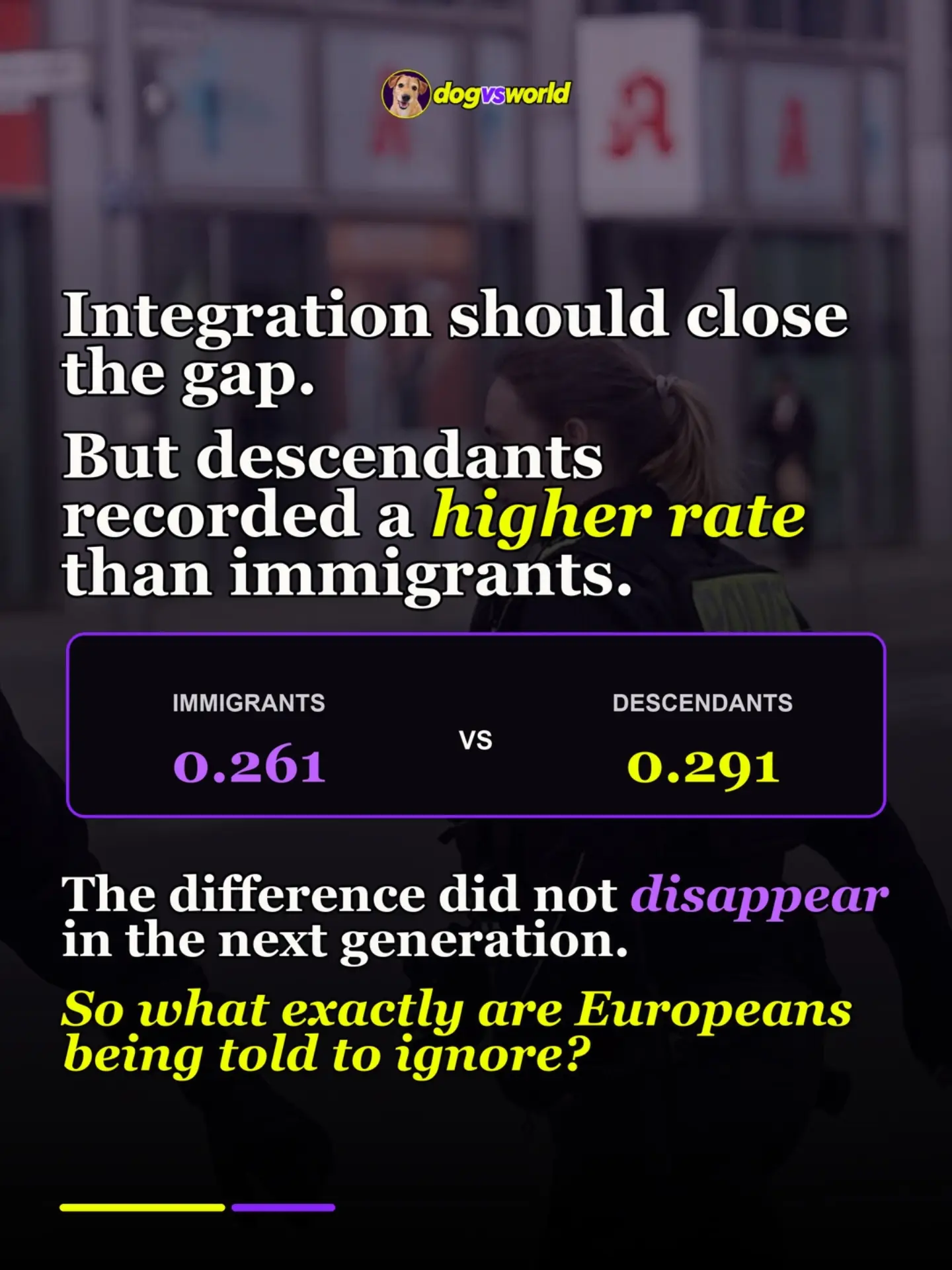
| Immigrants | 896 | 3,434,261 | 0.2609 |
| Descendants | 309 | 1,061,363 | 0.2911 |
For example, 896 ÷ 3,434,261 × 1,000 = approximately 0.2609. Relative to the Danish-origin rate, the displayed immigrant rate is approximately 1.58 times as high and the descendant rate approximately 1.77 times as high.
Country-of-origin comparison
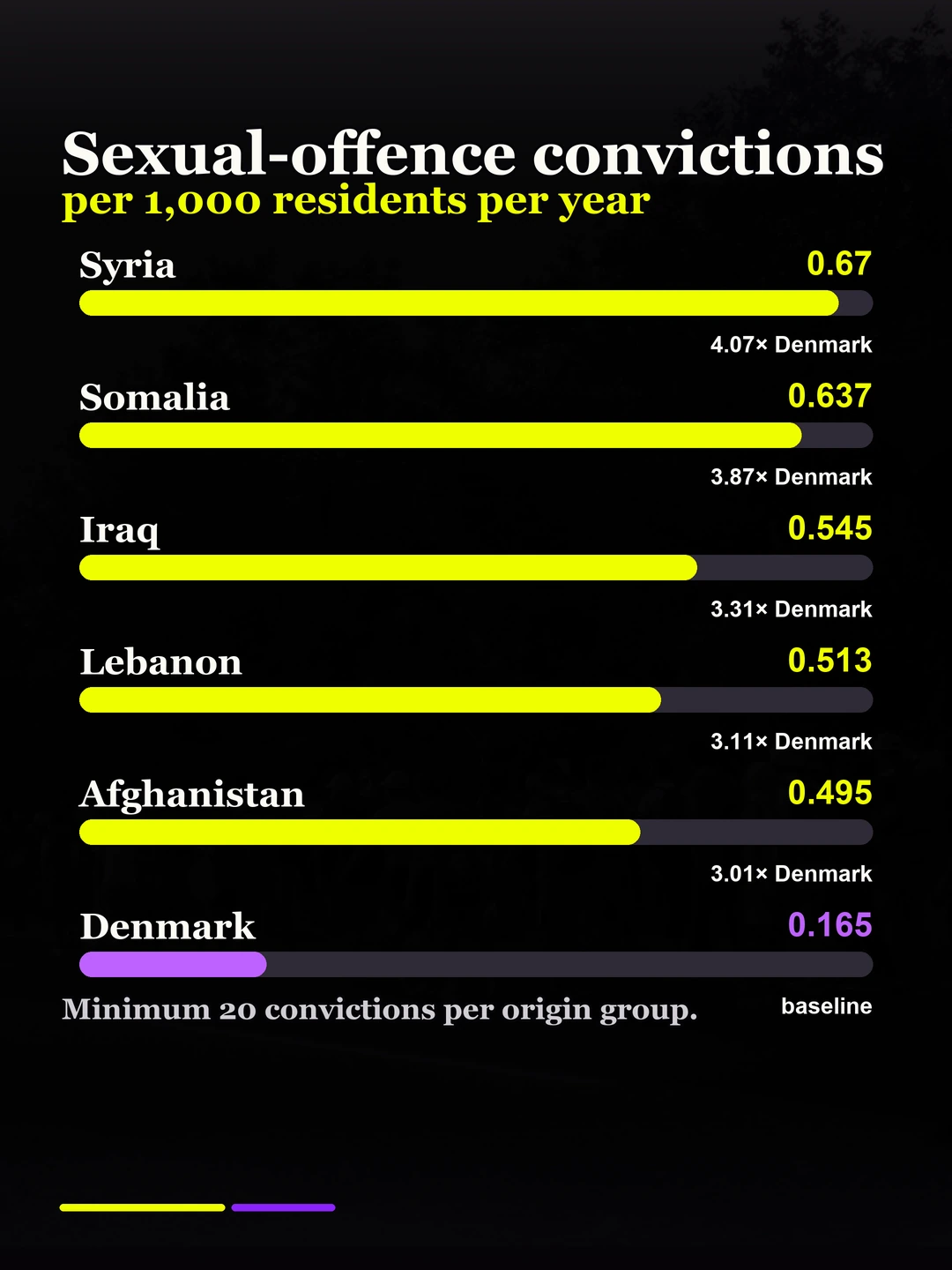
Using the same 2021–2025 denominator method, and requiring at least 20 entries per origin group, the original analysis reports these annual rates per 1,000 residents:
| Origin | Annual rate per 1,000 |
|---|---|
| Syria | 0.6695 |
| Somalia | 0.6369 |
| Iraq | 0.5449 |
| Lebanon | 0.5130 |
| Afghanistan | 0.4950 |
| Danish origin | 0.1647 |
Why definitions matter
These figures are not adjusted for age or sex. Descendants and immigrants can have different demographic structures, so the difference does not by itself measure the effect of integration. Guilty-person entries across years are not necessarily unique people. Country of origin does not identify religion or establish causation.
The separate country-ranking article uses a population aged 15–79 and a 10,000-resident eligibility threshold. Its rates differ because its denominator and inclusion rules differ. The two series should not be mixed.
Official sources
- Statistics Denmark: convicted-person tables, updated 8 April 2026.
- STRAFNA4: offence and country of origin.
- STRFNA10: offence and ancestry.
- FOLK1C population denominators.
- FOLK1E population denominators.
The original carousel
The first slide appears above. The remaining slides are reproduced in order. The source notes above explain the measures used.

More research
- Europe’s recorded rape rates: changes from 2008 to 2024
- Denmark sexual-offence convictions by origin: 2021–2025
- Nevada rape-offender data and Las Vegas registry figures
Keep the research going
I research, check and create these reports myself. Support my work on Buy Me a Coffee, or send a correction or source suggestion.