
Las Vegas registry totals and Nevada’s incident-based offender data measure different things. This report separates the two and explains the population-adjusted figures used in the original carousel.
By Doggy. Adapted from my original Instagram carousel, with source notes and workings collected in one place.
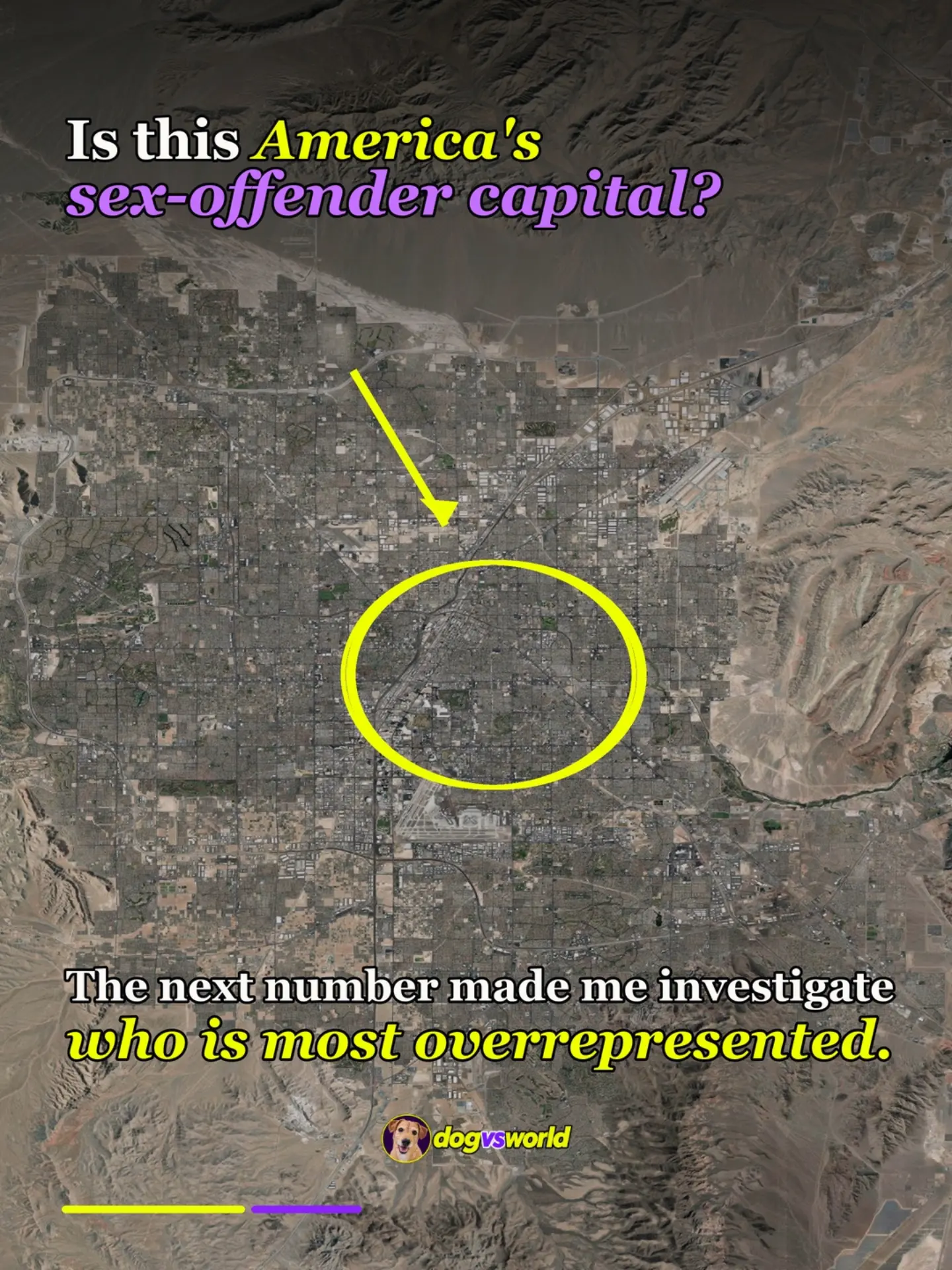
The Las Vegas registry figure
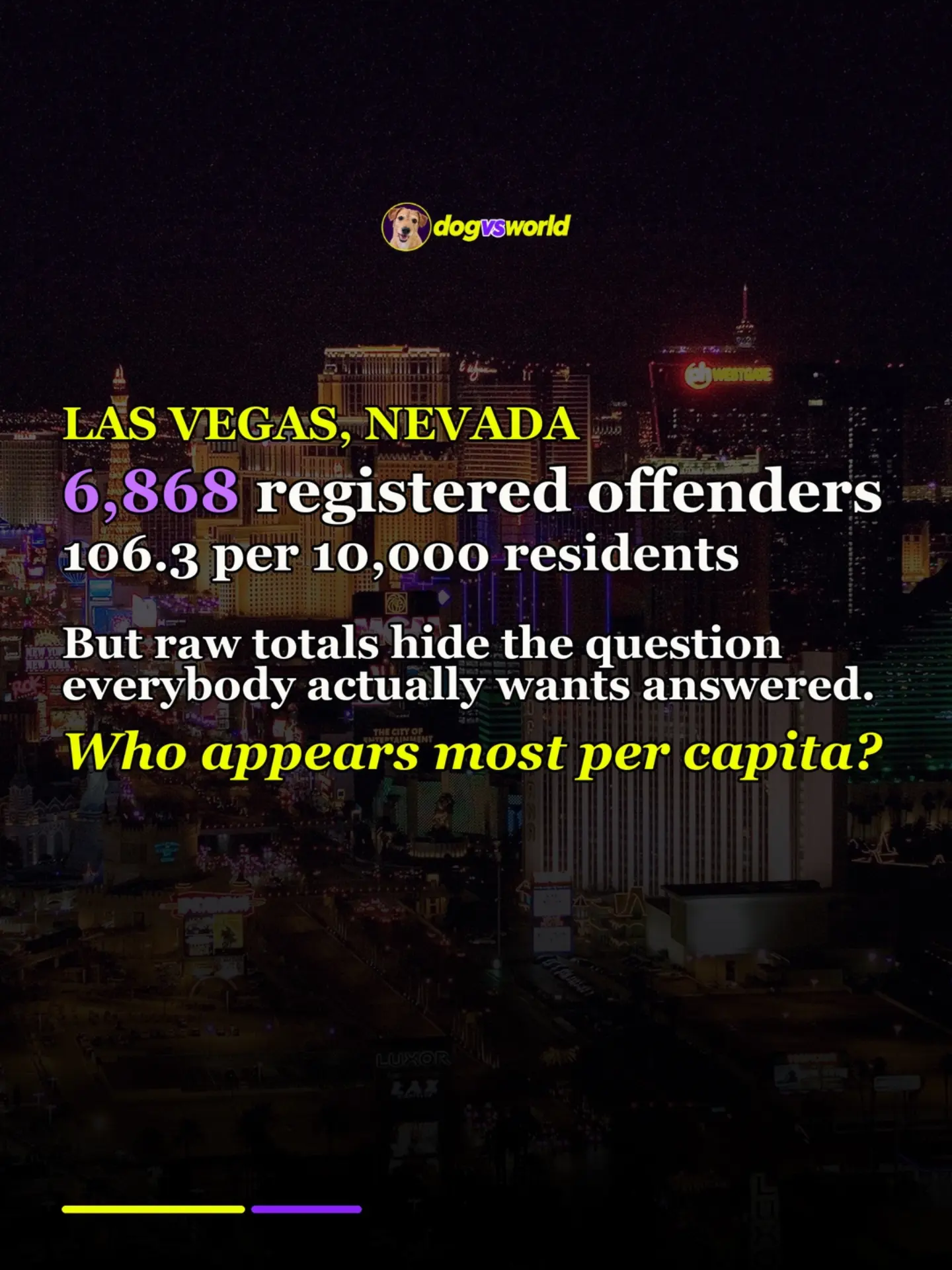
The original research recorded 6,868 published registry records listing Las Vegas, corresponding to 106.3 per 10,000 residents in the third-party city table accessed in October 2026. That is a registry-record measure, not an annual crime rate. It does not establish a national “sex-offender capital” ranking.
Nevada’s public registry does not publish every registered person: its conditions describe Tier 2, Tier 3 and Tier 1 offenders with minor victims, with Tier 1 adult-victim cases excluded. Registry coverage and city-address rules matter when comparing places.
Nevada known-offender entries, 2021–2025
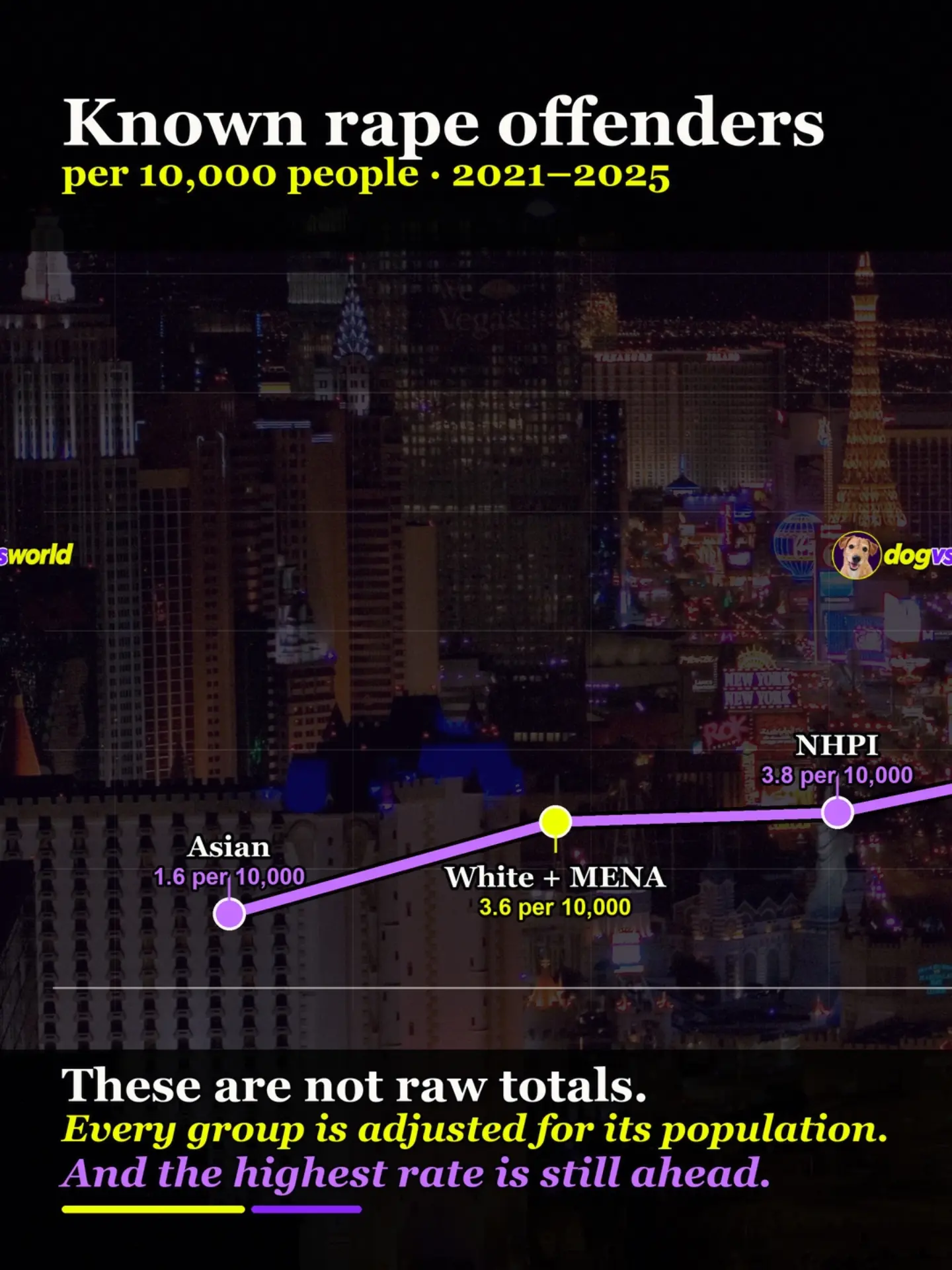
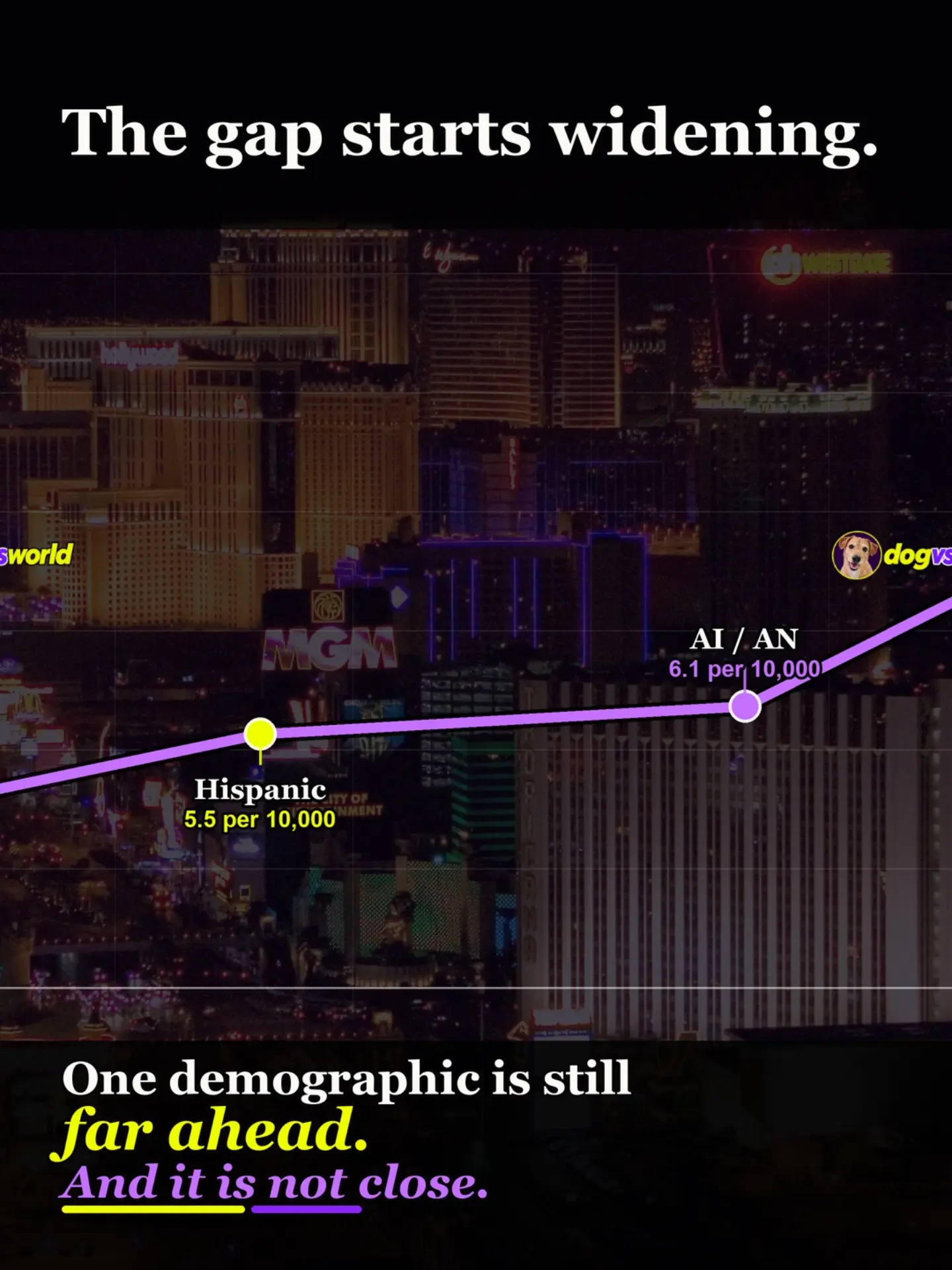
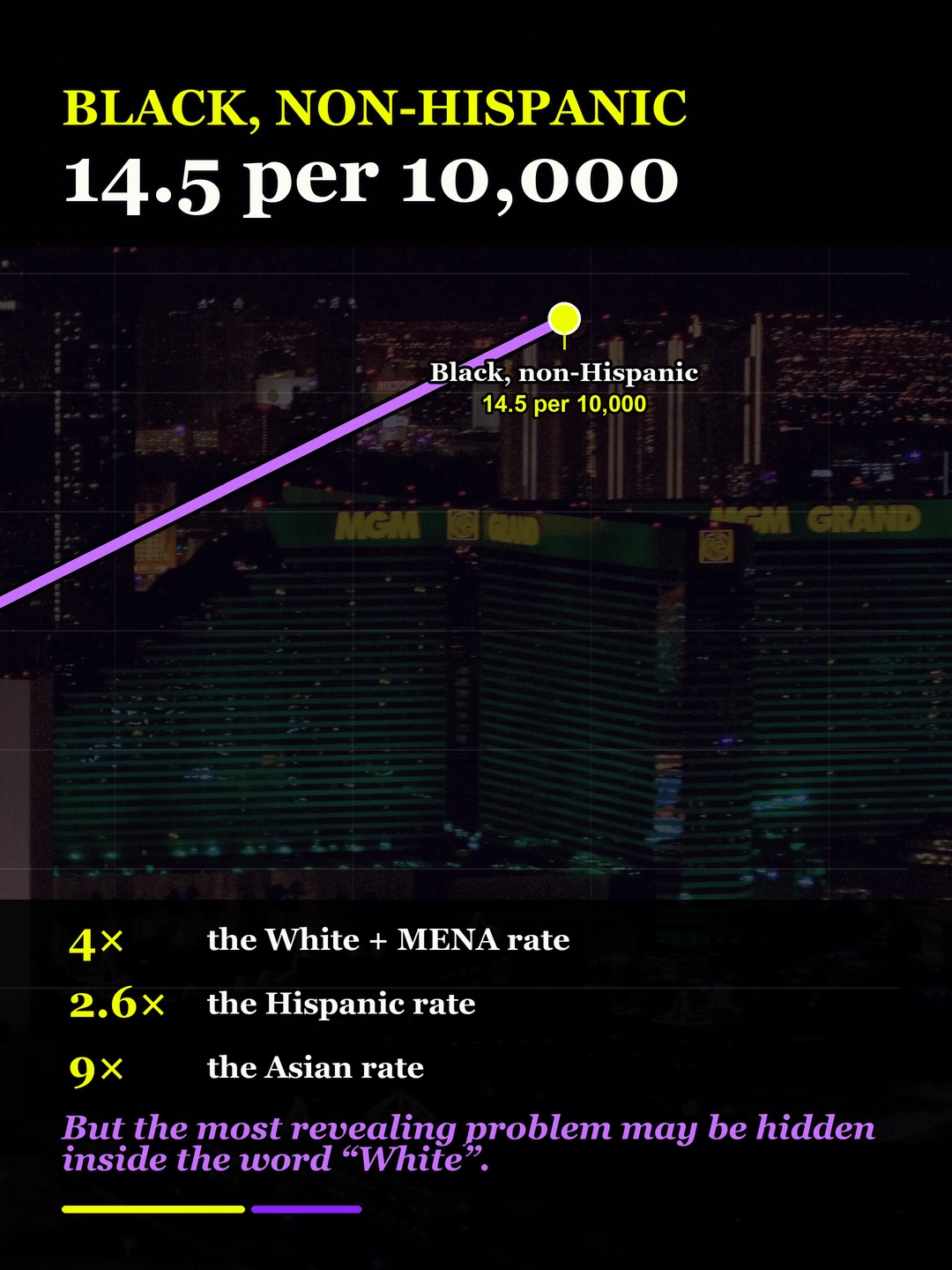
The following rates come from CrimeDB’s aggregation of FBI NIBRS incident records for Nevada. They concern known-offender entries in rape incidents reported by participating agencies, not convictions, unique individuals or members of the Las Vegas registry. The original rates per 100,000 were divided by ten to display them per 10,000.
| Recorded group | Entries | Rate per 10,000 |
|---|---|---|
| Black, non-Hispanic | 2,288 | 14.5 |
| American Indian/Alaska Native, non-Hispanic | 73 | 6.1 |
| Hispanic, any race | 2,653 | 5.5 |
| Native Hawaiian/Pacific Islander, non-Hispanic | 47 | 3.8 |
| White plus MENA, non-Hispanic | 2,549 | 3.6 |
| Asian, non-Hispanic | 242 | 1.6 |
The denominators use Census population figures scaled to reporting coverage. The five-year source series should not be read as a count for a single year. Race was unknown in 1,221 entries, approximately 14%, so missing information can affect comparisons.
Why White and MENA are combined
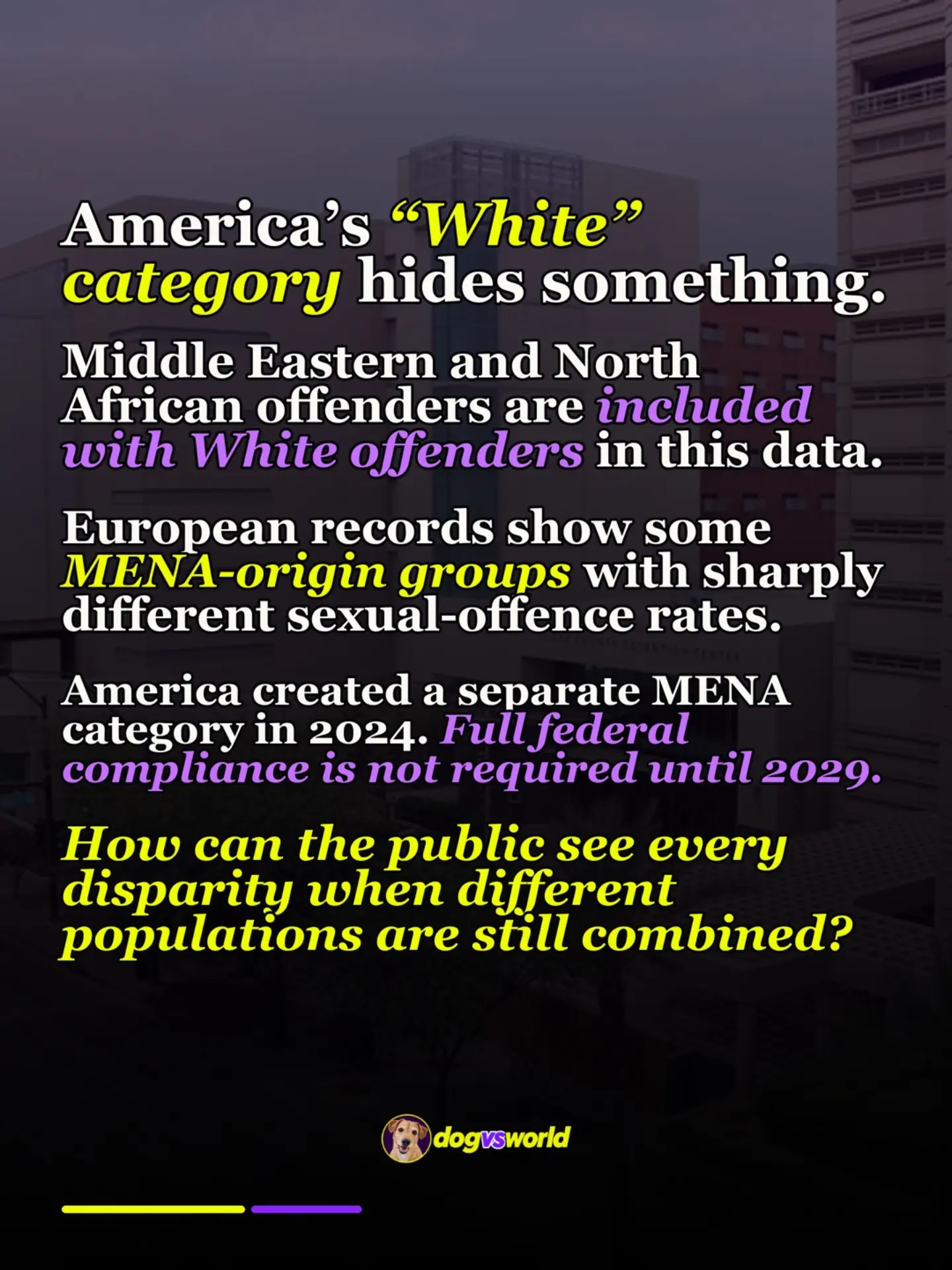
The older federal classification included Middle Eastern and North African people within White. The 2024 revision to Statistical Policy Directive No. 15 creates a separate MENA category, with federal implementation required no later than March 28, 2029. A combined category cannot reveal a separate MENA rate, and the data do not justify assigning one by assumption.
Sources and definitions
- Third-party registry city table used for the original Las Vegas figure.
- Nevada official registry: conditions of use and publication scope.
- CrimeDB: Nevada data, FBI sources and denominator notes.
- OMB: revised federal race and ethnicity standards.
These are descriptive group-level figures. They do not determine an individual’s behaviour or establish an inherent racial explanation. Background photographs are illustrative.
The original carousel
The first slide appears above. The remaining slides are reproduced in order. The source notes above explain the measures used.

More research
- Europe’s recorded rape rates: changes from 2008 to 2024
- Denmark conviction totals versus population-adjusted rates
- Denmark sexual-offence convictions by origin: 2021–2025
Keep the research going
I research, check and create these reports myself. Support my work on Buy Me a Coffee, or send a correction or source suggestion.