

Where are the liberals? If bodily autonomy matters, women living with female genital mutilation deserve your outrage too. A study of 1,132 women in selected US communities found that 55% reported experiencing FGM. Here is who that figure covers, what US child-abuse specialists reported, and why I think protecting girls must come before protecting a tradition.
By Doggy. Published 5 November 2026. Research and commentary adapted from my original Instagram carousel.
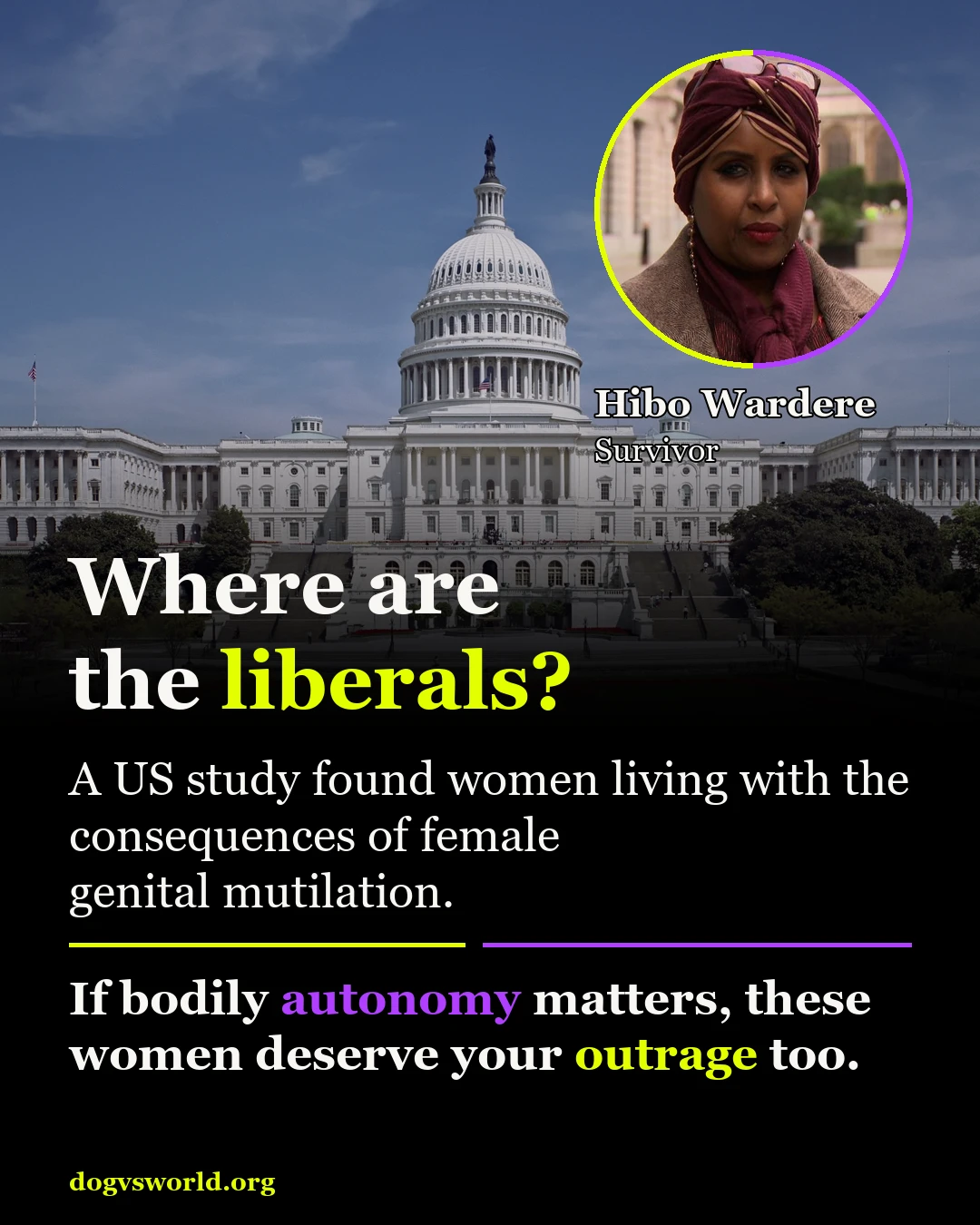
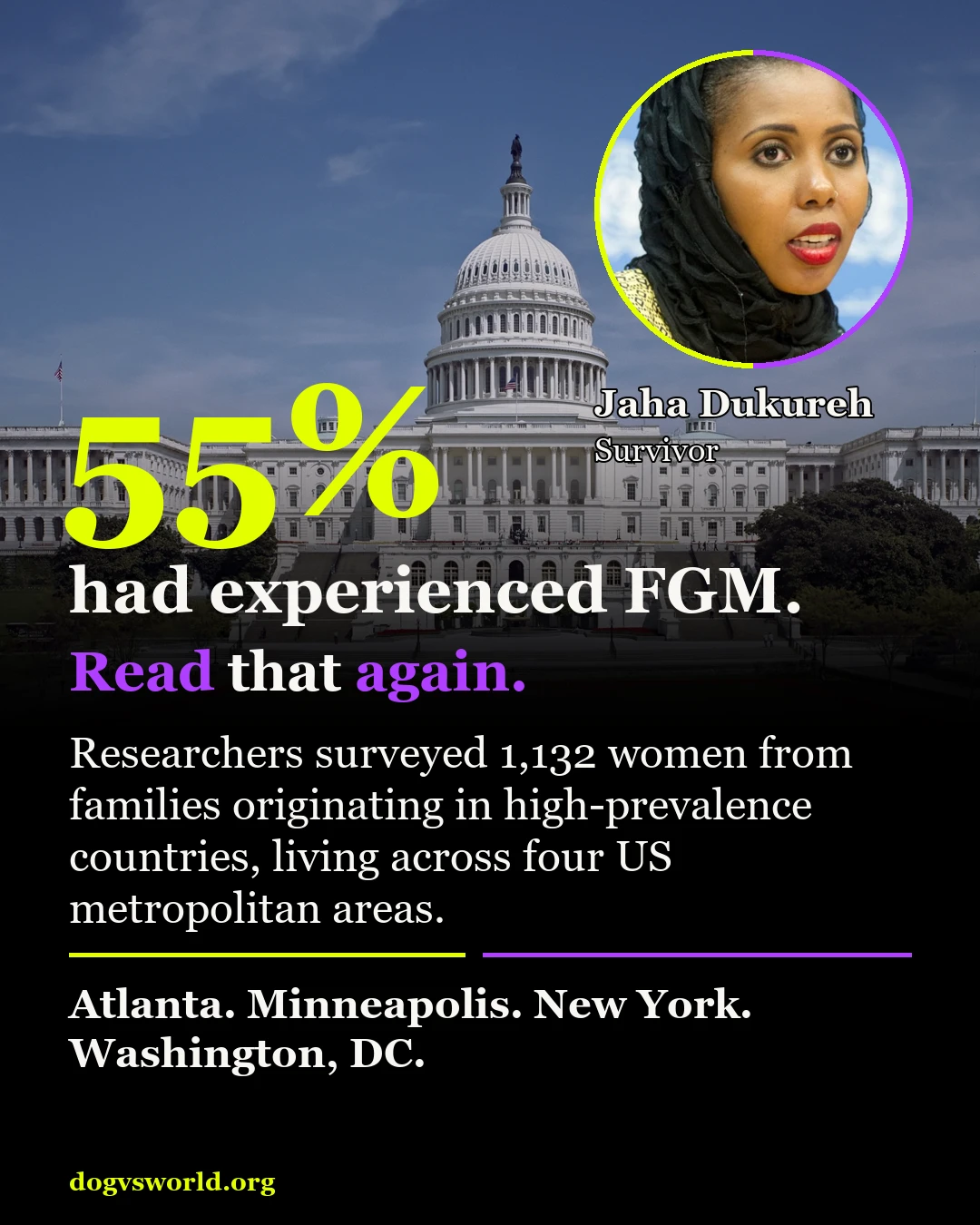
What the 55% figure actually means
The Women’s Health Needs Study factsheet reports the finding behind my second slide. The survey ran from November 2020 to June 2021 in Atlanta, Minneapolis, New York and Washington, DC metropolitan areas.
Participants were women aged 18 to 49 who were born, or whose mothers were born, in selected countries where FGM is common. Among the 1,132 participants, 55% reported having experienced it.
That is not a prevalence estimate for all American women, all immigrants or all Muslims. Nor does it tell us that the cutting happened in America. It is a lifetime-experience finding among this selected study population. The published design and methods paper explains the recruitment and study population.
I want people to understand the number, not just react to it. These are women living with the consequences. Their need for attention and appropriate care does not disappear because the headline needs a careful denominator.
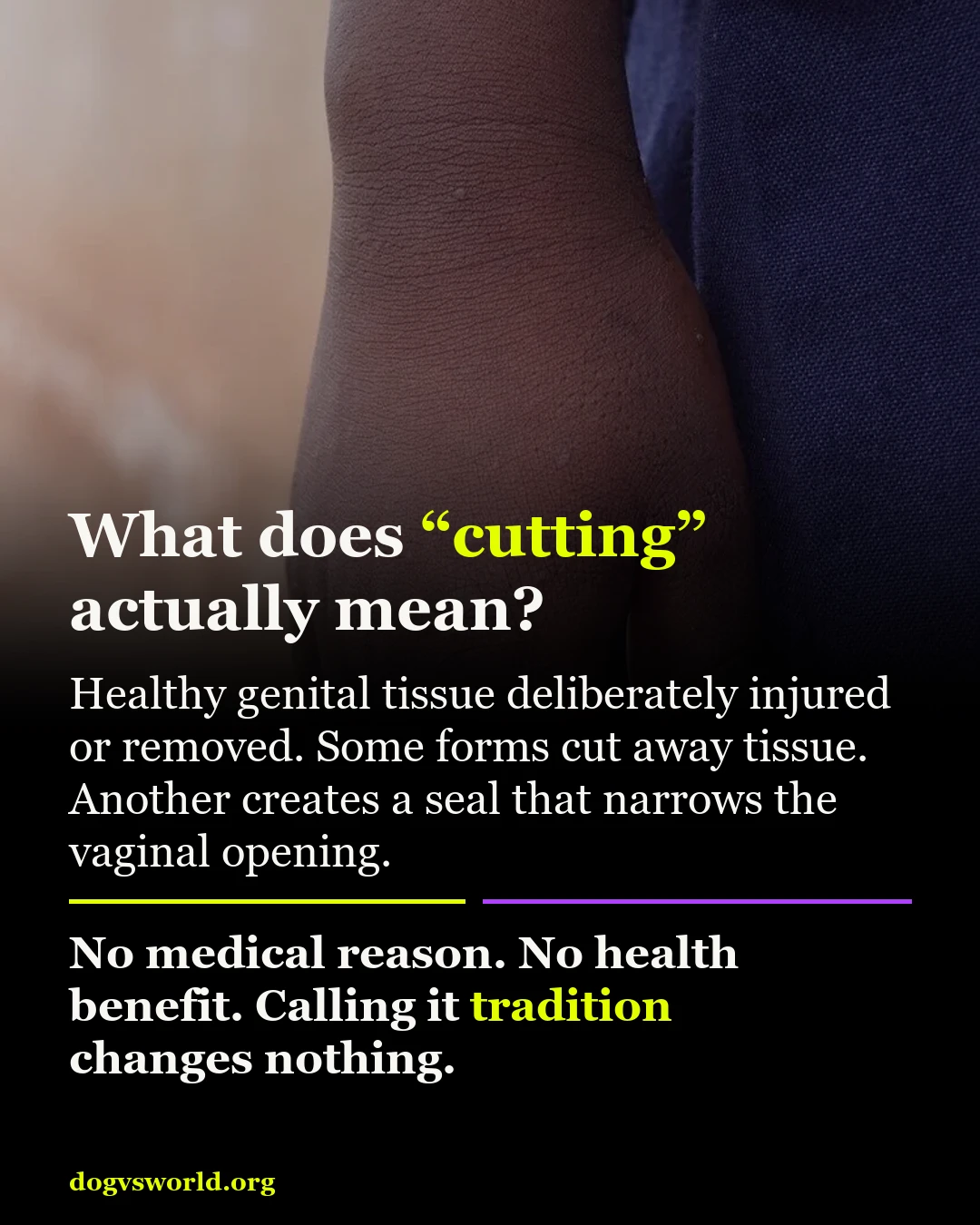
What does cutting mean?
According to the World Health Organization, FGM involves injury to female genital organs for non-medical reasons. Forms vary, including removal of healthy tissue or narrowing the vaginal opening by creating a covering seal. It has no health benefit.
Calling something a tradition does not answer the question of whether it harms a child. If an adult defended this without invoking culture, would the conversation be any easier to avoid?
Crossing a border does not automatically end the risk
A separate study by Pipes and colleagues, published in BMC Women’s Health in June 2024, surveyed US child-abuse paediatricians in September and October 2020. There were 65 respondents from 510 eligible Helfer Society members, a 12.7% response rate.
Respondents reported encounters involving cutting performed in the United States, alongside cases before migration and confirmed plans to take girls abroad for cutting. These were clinicians’ reports, not a national incidence count. The study does not establish how common the practice is in America today or demonstrate a current surge.
The point still matters. A border is not a safeguarding policy. Protection has to reach the child, wherever the adults intend the harm to happen.
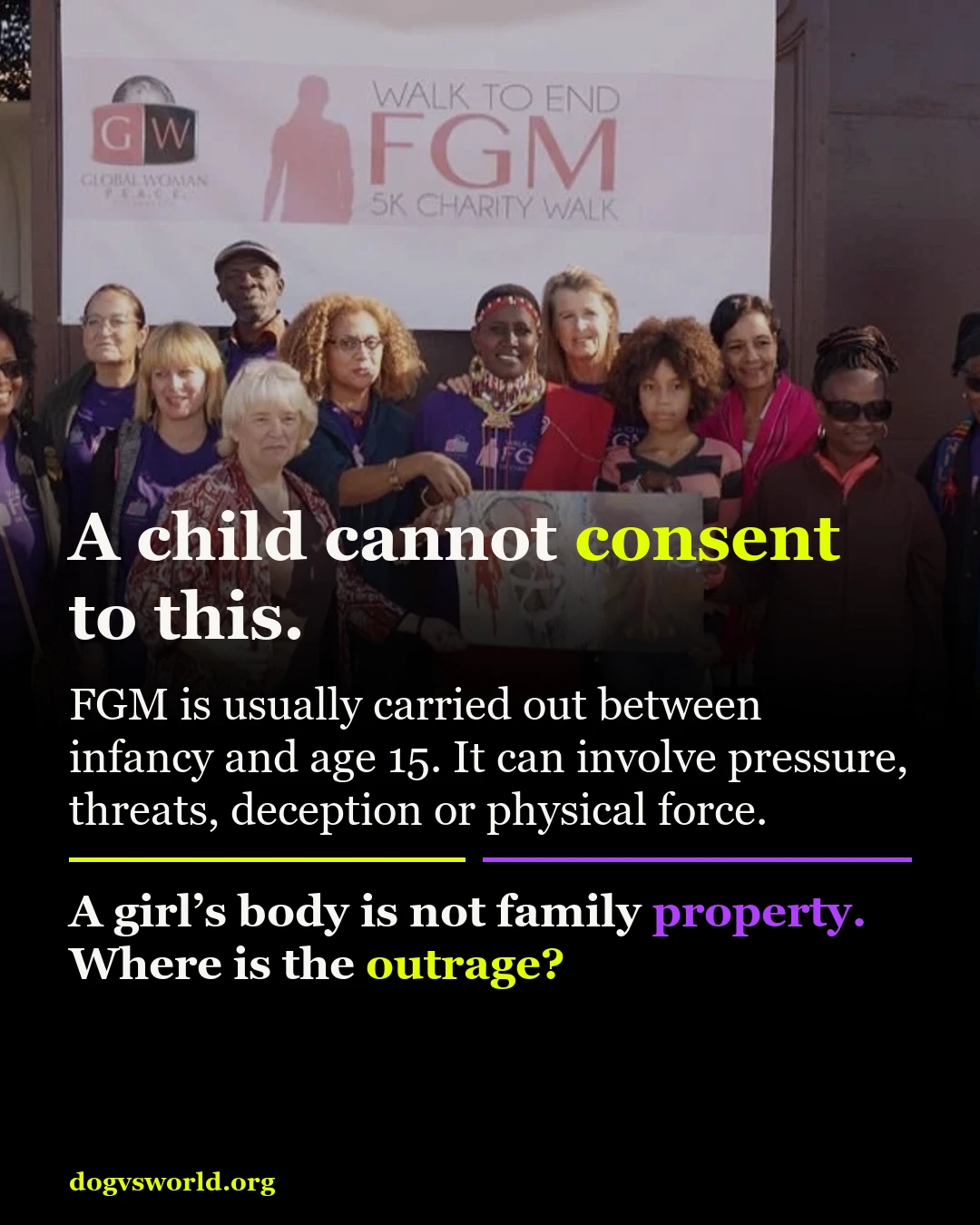
A child cannot consent to this
WHO says FGM is usually carried out between infancy and age 15. Pressure, threats or force cannot turn it into a meaningful choice. The NHS information on FGM explains the practice and available support.
A girl’s body is not family property. An adult’s wish to preserve a custom does not outweigh her right to be protected from injury.
The harm can last for decades
Possible complications include severe pain, bleeding, infections, urinary difficulties, sexual-health problems, childbirth complications and psychological trauma. FGM can also be fatal. The WHO factsheet sets out the risks. Survivors’ experiences differ; not every person experiences every complication.
There is no medical benefit to balance against those harms. What exactly is worth preserving?
Afraid of judging a cultural practice?
The paediatrician survey also recorded concerns about judging cultural practices, legal consequences for families and damage to relationships as potential barriers to reporting. These were reported concerns, not proof that every clinician failed to report. In fact, 83% said reporting would not be difficult. The survey did not establish respondents’ political affiliations.
My opening question is an editorial challenge. It is not a research finding that liberals universally ignore FGM. I want anyone who speaks about bodily autonomy to apply that principle consistently, including when challenging a harmful custom makes the conversation uncomfortable.
Safeguarding should not depend on whether the adults in the room find the subject awkward.
This is why I do this
Equal human worth does not mean every belief or cultural practice deserves equal respect. The hard part is raising the harm and watching the conversation become a judgement of you for mentioning it.
FGM occurs in some Muslim communities, but WHO notes that religious texts do not prescribe it. It also occurs in other religious communities. My criticism is directed at the practice and anyone defending or committing it, not every member of a religion or ethnicity.
How do we protect girls if challenging the tradition becomes more controversial than what it does to them?
I research the subject, check the sources and put the evidence where people can see it. If you value that work, supporting me helps me keep doing it.
Sources and photo context
- CDC: Female Genital Mutilation/Cutting, background and Women’s Health Needs Study overview.
- NORC: Women’s Health Needs Study factsheet, the 1,132-participant study and 55% finding.
- Besera and colleagues: WHNS design, methods and participant characteristics.
- Pipes, Dunleavy and Brown: survey of child-abuse paediatricians, 2024; survey conducted in 2020. Item-specific denominators vary.
- WHO: Female genital mutilation and NHS: FGM.
Slide 1’s inset shows Hibo Wardere, a publicly identified survivor and campaigner, from a Sky News interview published on 16 February 2024. Slide 2’s inset shows survivor and campaigner Jaha Dukureh speaking at the United Nations on 6 February 2015, photographed by UN Photo/Mark Garten and accompanying UN reporting. Neither woman is presented as a participant in the US study.
The hand photographs on slides 3 and 6 are symbolic, credited to AithneG via the Global Woman P.E.A.C.E. Foundation; the pictured person is not identified as a survivor. Slide 5 shows Walk to End FGM campaigners from the foundation’s photo archive, not an identified group of victims or study participants.
The US Capitol and flag photographs are illustrative civic images from my existing carousel archive, not photographs of offences or surveyed clinicians. Their original photographer and licence details were not recorded in this carousel’s source file. Slide 8 uses my supplied dog photograph. Images were cropped, resized and combined with fades and text; rights remain with their original owners.
More exclusive independent research
Explore my research and commentary, send a correction or source suggestion, or support my work on Buy Me a Coffee.