

How many warnings does America need? Before defending a party, look at its policies, its alliances and its record. My carousel looks at Iran’s 1979 revolution and the political timelines of France, Germany and Spain. Here is the history behind the images, and why I think Americans should pay attention.
By Doggy. Published 4 November 2026. Political commentary adapted from my original Instagram carousel.
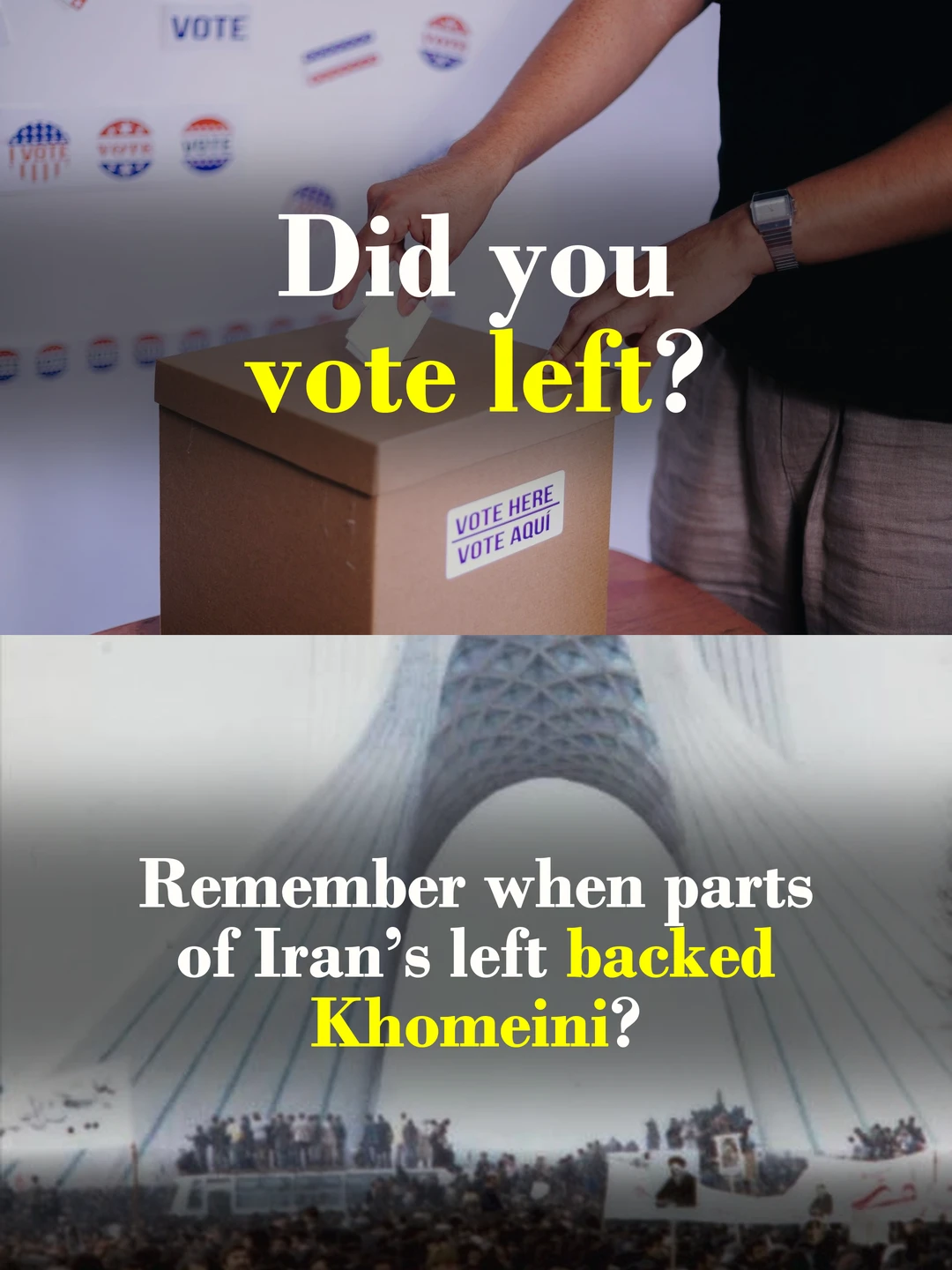
Look beyond the party badge
I am tired of political arguments that begin and end with a label. A party badge does not tell you whether a policy works, whether an alliance is sensible or whether the people making promises will protect the freedoms you care about.
That is the question behind this carousel. What are you actually supporting? Not the slogan. Not the image. The decisions, the alliances and the record.
Iran and these European countries have very different histories. I am drawing a political warning from them, not claiming they followed the same path. The photographs show particular places and events. They are not a statistical measure of an entire country’s decline.
Iran: an alliance is not an endorsement of your future
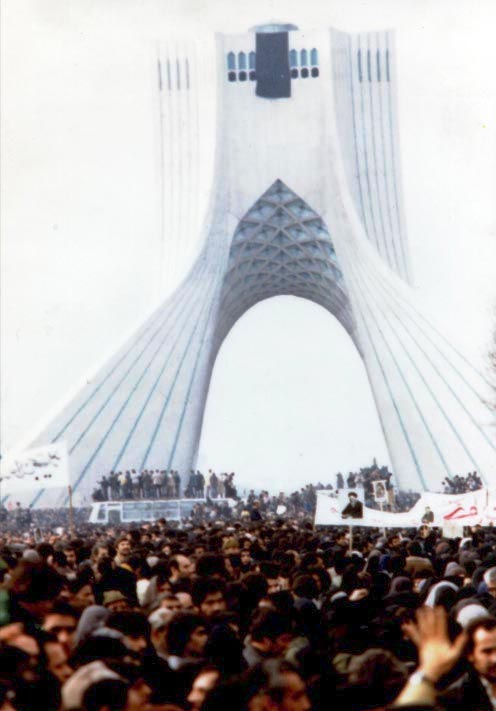
Parts of Iran’s left joined the struggle against the Shah alongside the Islamist movement led by Ayatollah Khomeini. Their common opponent did not mean they shared a vision for the country that would follow. The revolutionary coalition and the rise of leftist and Islamist movements are examined in Janet Afary’s history of sexual politics in modern Iran.
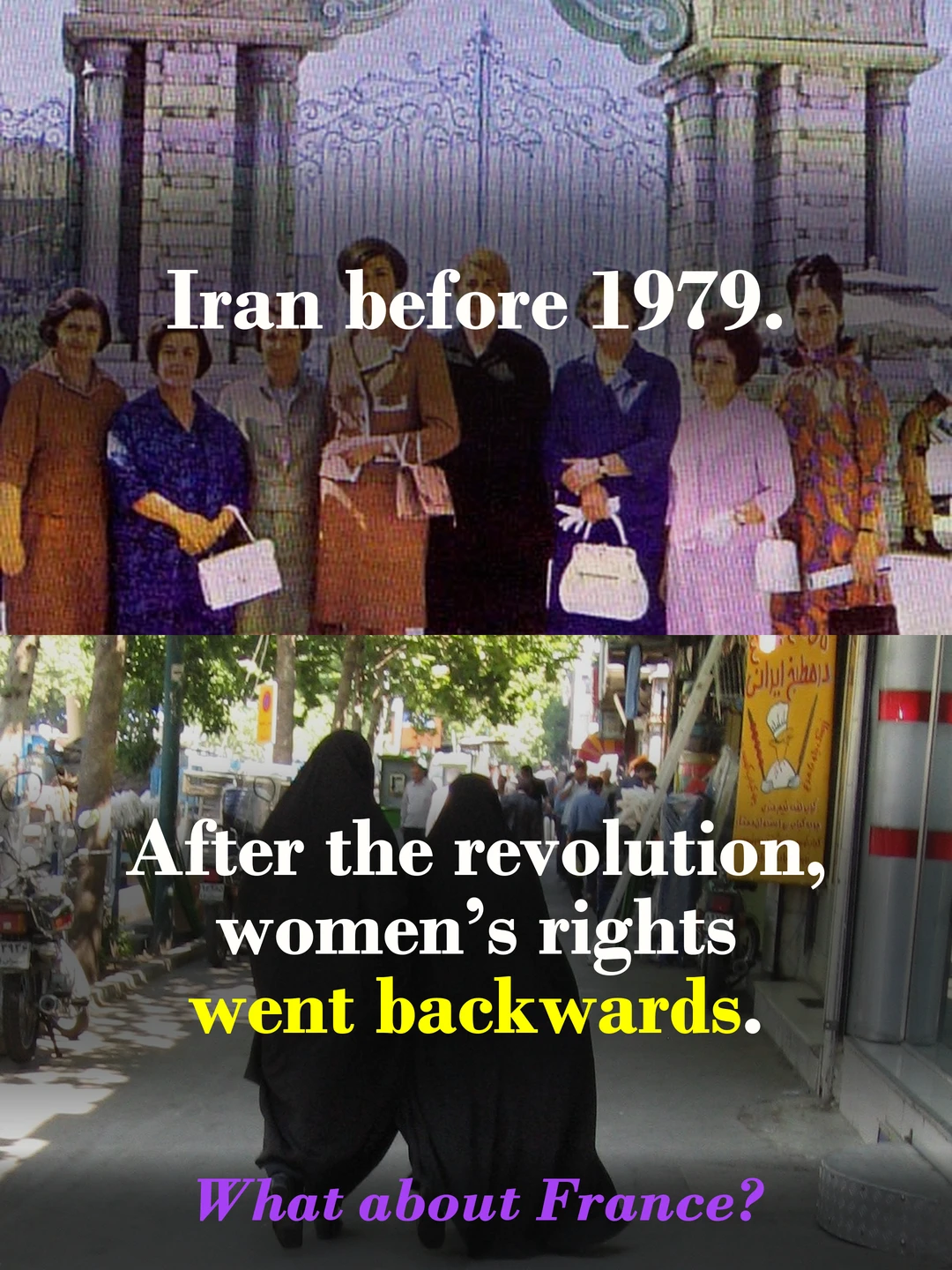
After the 1979 revolution, women faced major restrictions on their rights and public lives. Haleh Esfandiari’s account for the Wilson Center describes the shift from revolutionary participation to resistance against the Islamic Republic’s treatment of women.
This was a revolution, not a case of voters electing a left-wing government that simply changed its mind. Nor does a photograph of women parliamentarians prove that every Iranian woman enjoyed freedom under the Shah. It shows a part of public life before the revolution. The later photograph shows women near Tehran’s bazaar in 2005.
My point is about alliances. If the movement you help empower does not believe in your freedoms, sharing an enemy will not protect you.
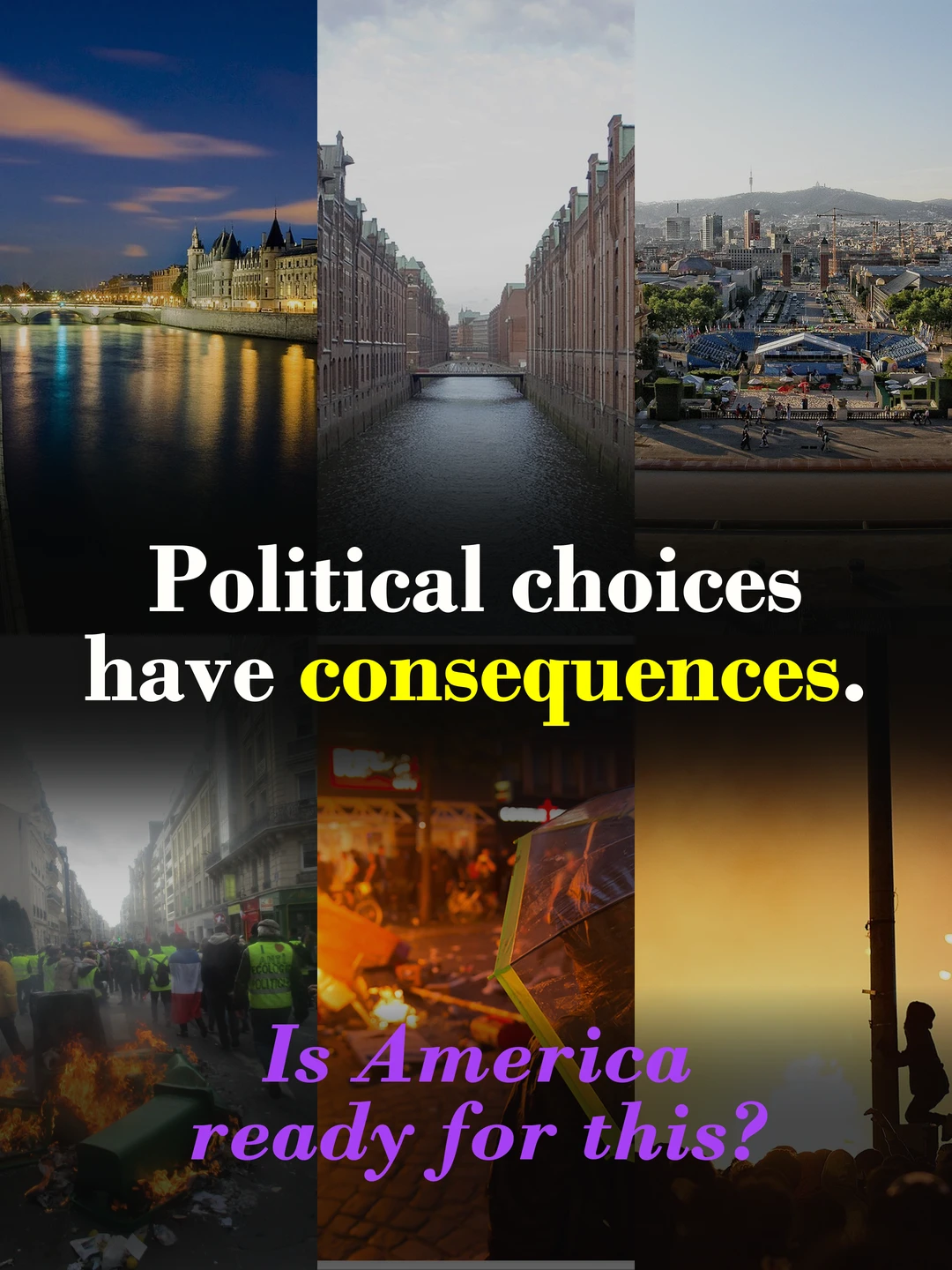
France: what the fourteen-year timeline means
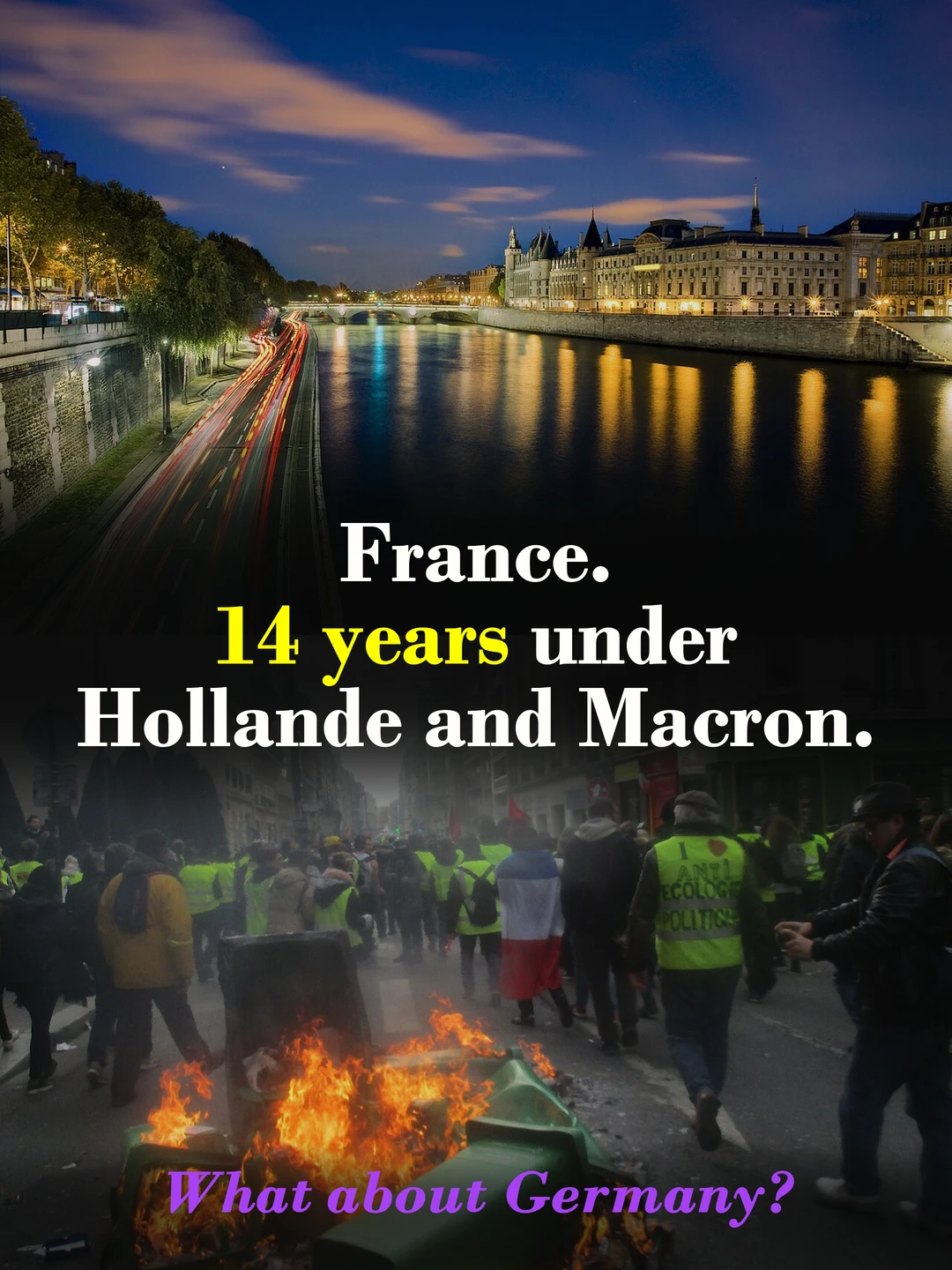
François Hollande became president in 2012 and served until 2017. Emmanuel Macron succeeded him in 2017. Together, those presidencies span roughly fourteen years to this article’s publication date. The Élysée’s presidential history provides the dates.
Hollande was a Socialist president. Macron’s political project is distinct and generally described as centrist. The slide does not establish fourteen uninterrupted years of Socialist government.
The lower photograph shows burning bins on rue de Vaugirard in Paris during the Yellow Vest protests on 9 February 2019. It is not a photograph of a new riot in 2026. I use it to challenge the distance between political presentation and what people see on their streets. The photograph alone cannot establish which policies caused the unrest.
Germany: participation in government is the important distinction
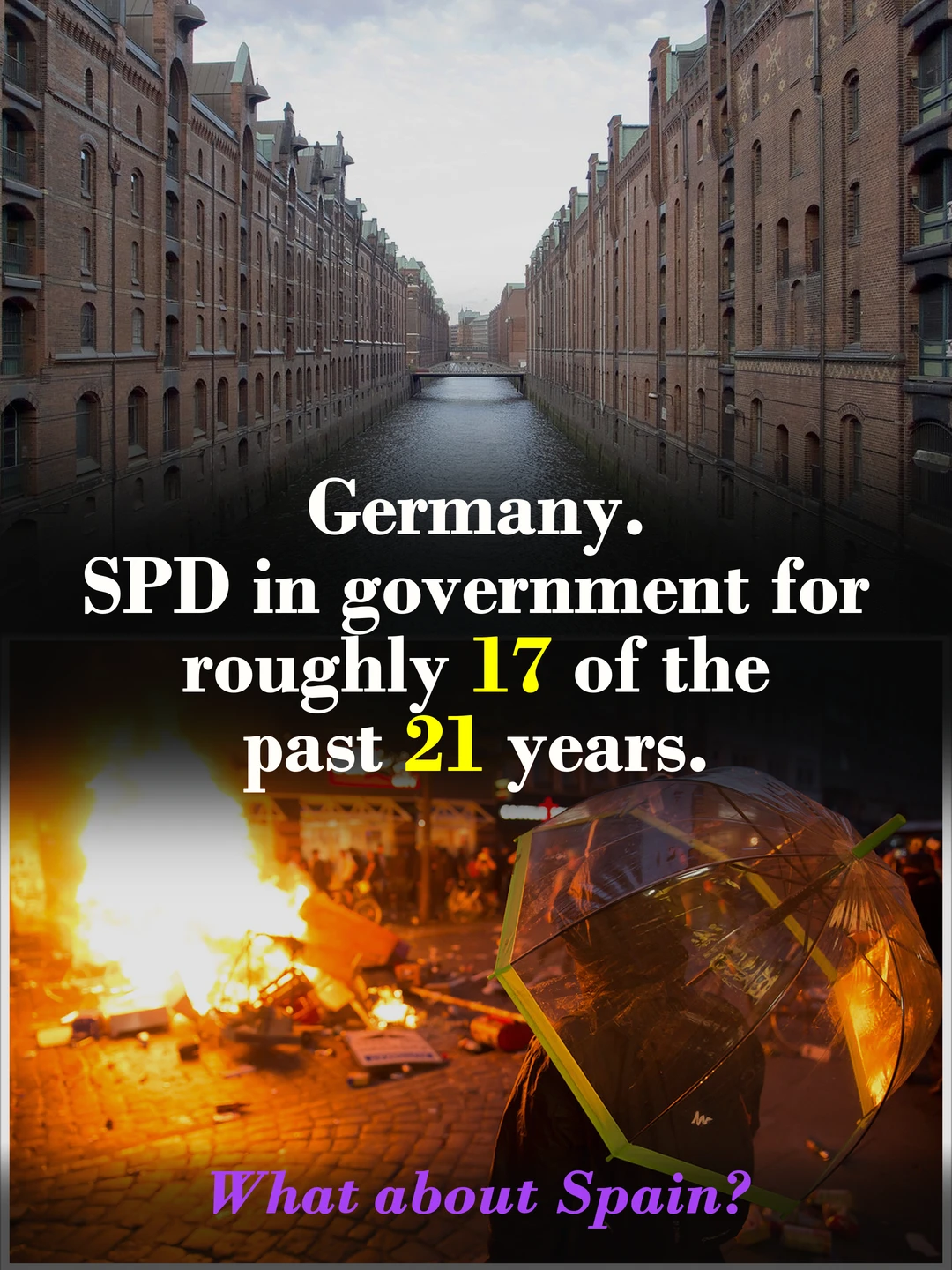
The SPD was in federal government from 2005 to 2009, from 2013 to 2021, from 2021 to 2025, and again in the coalition formed in 2025. That adds up to roughly seventeen of the preceding twenty-one years.
That is participation in government, not seventeen years of exclusively SPD-led or left-wing rule. Angela Merkel was a CDU chancellor. The SPD served as a coalition partner for much of that period, led the government under Olaf Scholz, and joined the CDU/CSU-led coalition in 2025.
The Federal Agency for Civic Education’s review of the Merkel era and the official 2025 CDU, CSU and SPD coalition agreement provide the background.
The lower photograph is from the G20 unrest in Hamburg’s Schanzenviertel on 7 July 2017. The upper photograph shows Hamburg’s Speicherstadt in 2010. They are archival images of different parts of the city, not a controlled before-and-after comparison of the same street.
If a party has spent years helping govern, I think it is fair to scrutinise its record. Coalition participation still comes with responsibility, even when that party did not hold the chancellorship.
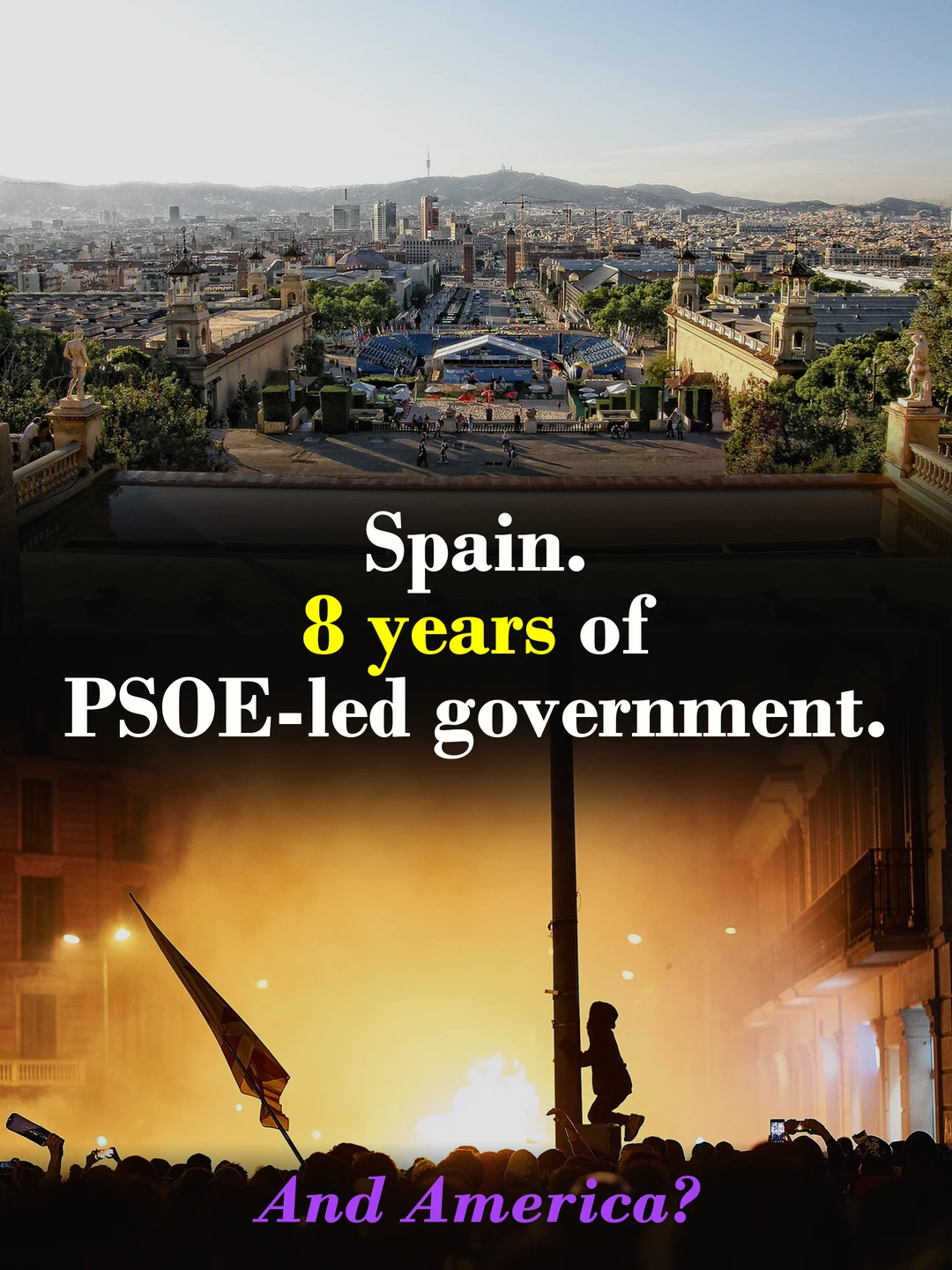
Spain: eight years of PSOE-led government
Pedro Sánchez became prime minister in June 2018. By November 2026, that is approximately eight years of PSOE-led government. His official biography on La Moncloa records the start of his premiership.
The lower image shows protests in Barcelona’s Plaça Urquinaona on 18 October 2019, connected to the Catalan independence conflict. It does not show an unspecified current riot or prove that PSOE caused it. The upper image is a panoramic Barcelona photograph uploaded in 2010.
Again, the question is about examining a governing record rather than treating a political label as an answer. What did the government promise? What did it do? What can the evidence actually establish?
And America?
I think America has been far too quick to look away. Not because every foreign political crisis will be repeated in exactly the same way, but because people can become remarkably incurious when the warning is inconvenient for their own side.
Before defending a party, examine the policies. Before defending an alliance, ask what its members believe. Before dismissing criticism, look at the record.
The three European protest photographs date from 2017 and 2019. They are selected historical examples, not evidence that every European city is in constant disorder. My argument is that political choices deserve scrutiny. The images do not replace that scrutiny.
Not everyone sees a warning until it reaches their doorstep
I dig into the history. I challenge the slogans. The battle is getting people to look.
You do not have to agree with every conclusion I draw. But I want the argument to be about the evidence and the decisions, rather than whether a question is allowed to be asked.
Are Americans paying attention, or waiting until the warning reaches their doorstep?
Photo credits, dates and licences
Photographs were cropped, resized and combined with dark overlays and text. The historical events have not been generated. The political argument is mine; the photographs are credited below.
- Slide 1 upper: Eduardo Ramos / Unsplash, via Independent Voter News. Illustrative ballot-box photograph, not identified as a particular US election or polling location.
- Slide 1 lower: unknown author, February 1979, 1979 Iranian Revolution, GNU Free Documentation License. Original photograph and full GFDL 1.3 licence text. The adaptation of this photograph is available under the GFDL, with no added invariant sections or cover texts.
- Slide 2 upper: unknown author, mid-1970s, Iranian women parliamentarians, public domain.
- Slide 2 lower: Fabienkhan, April 2005, Iranian women near the bazaar of Tehran, CC BY-SA 2.5.
- Slide 3 upper: SoWhat, 4 October 2010, Seine River at night, Paris, CC BY-SA 2.0.
- Slides 3 lower and 6: Thomon, 9 February 2019, Paris z3, CC BY-SA 4.0. Yellow Vest protest, rue de Vaugirard.
- Slides 4 upper and 6: Gunnar Klack, 16 September 2010, Speicherstadt, Hamburg, CC BY-SA 4.0.
- Slides 4 lower and 6: Montecruz Foto, 7 July 2017, Riots against G20 in Hamburg, CC BY-SA 2.0.
- Slides 5 upper and 6: Andrei Dan Suciu, uploaded 15 October 2010, Panorama Barcelona, CC BY 3.0.
- Slides 5 lower and 6: Masha Gladkova, 18 October 2019, Protests in Catalonia, Barcelona, CC BY 2.0.
- Slide 7: my supplied dog and laptop photograph, cropped for the carousel.



Adaptations incorporating CC BY-SA photographs are available under CC BY-SA 4.0; the GFDL material retains its separate licence as noted above.
More exclusive independent research
Explore my research and commentary, send a correction or source suggestion, or support my work on Buy Me a Coffee. I research and create this content myself.