

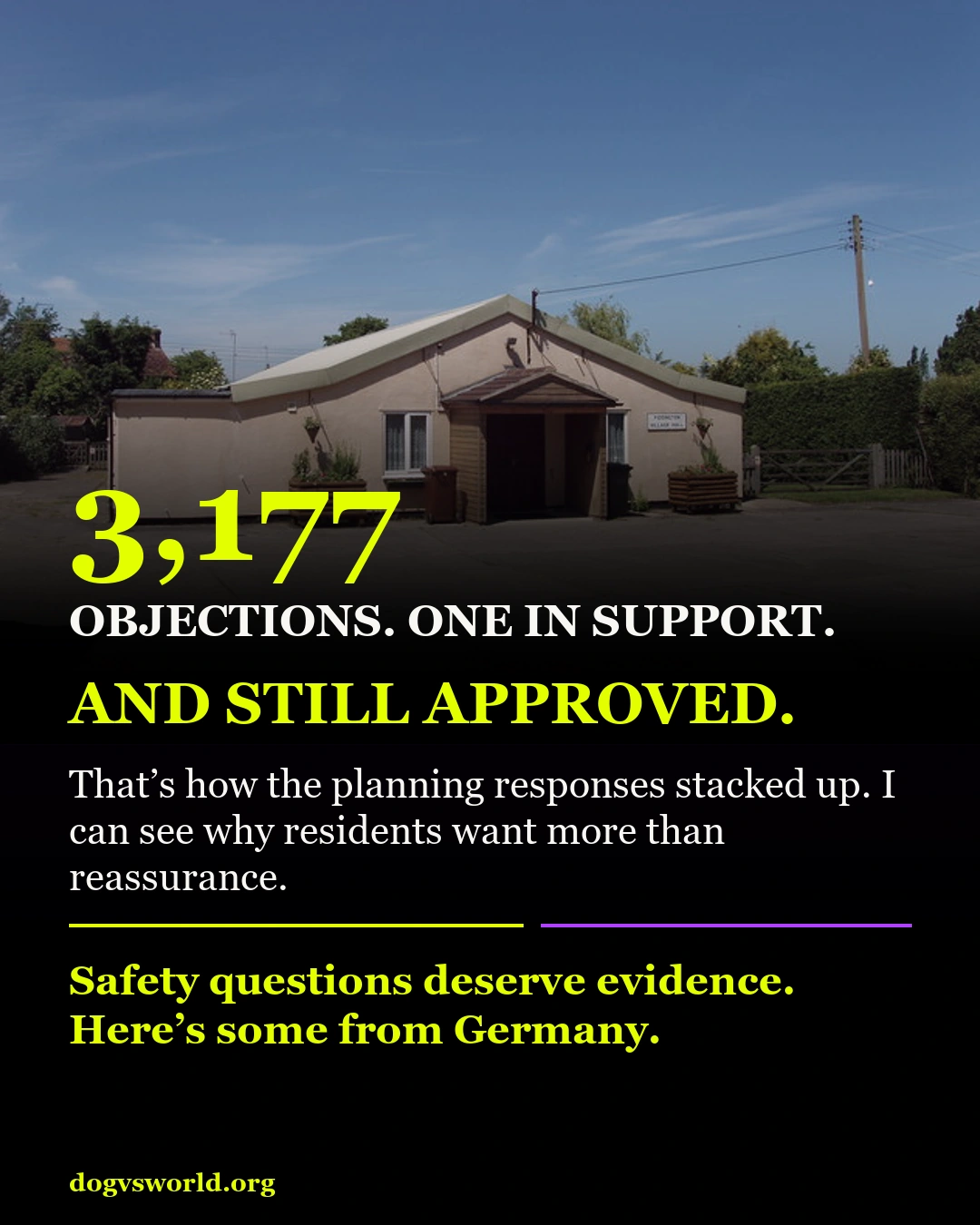
3,177 objections. One response in support. Piddington’s asylum-centre plans still got approval.
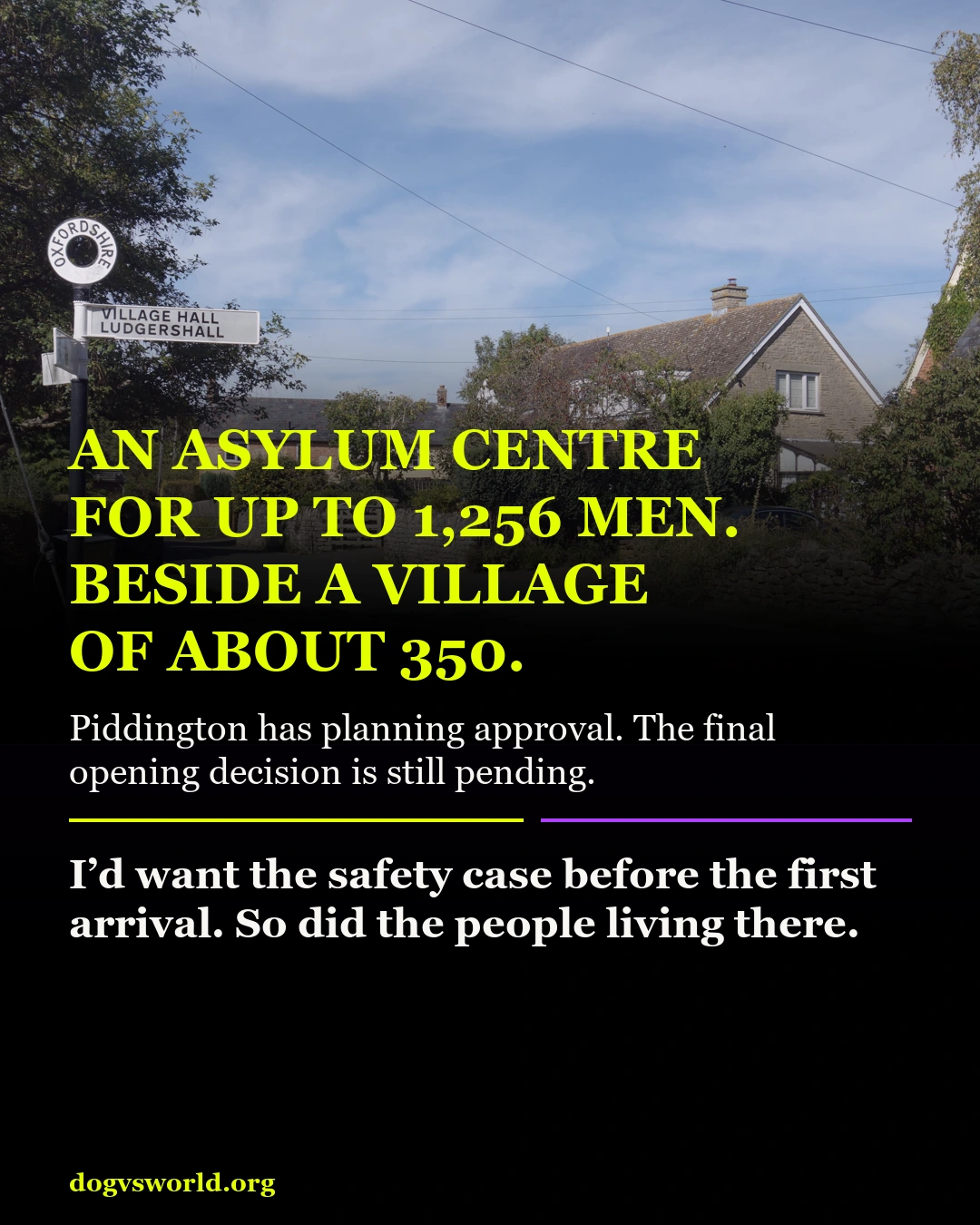
A village of about 350 people beside a proposed centre for up to 1,256 men. I can see why residents want more than reassurance. I would want the safety case, the funding and the person responsible identified before the first arrival.
What has actually been approved?
Planning permission has been approved for accommodation for up to 1,256 single adult male asylum seekers at the former MoD Bicester site near Piddington. The Home Office says a final decision to proceed has not yet been taken. Capacity, approval and actual occupancy are different facts: this report does not claim 1,256 men have arrived.
Piddington is commonly reported as a village of about 350 residents. Its civil parish recorded 358 people in the 2021 Census. The site is nearby, between Piddington and Upper Arncott, rather than accommodation for 1,256 men inside the village itself. Capacity would be around 3.5 times the parish's 2021 population, but these are different geographic areas and dates.
Sources: Cherwell District Council; BBC reporting syndicated by AOL, updated 13 November; 2021 population dashboard.
What happened to the objections?
Reporting of the government decision records 3,177 representations against and one in support. These are representations received through the process, not a verified count of distinct Piddington voters. I want to know what those objections actually changed. If a decision proceeds despite opposition on this scale, residents deserve to see how their concerns were assessed and which enforceable conditions answer them.
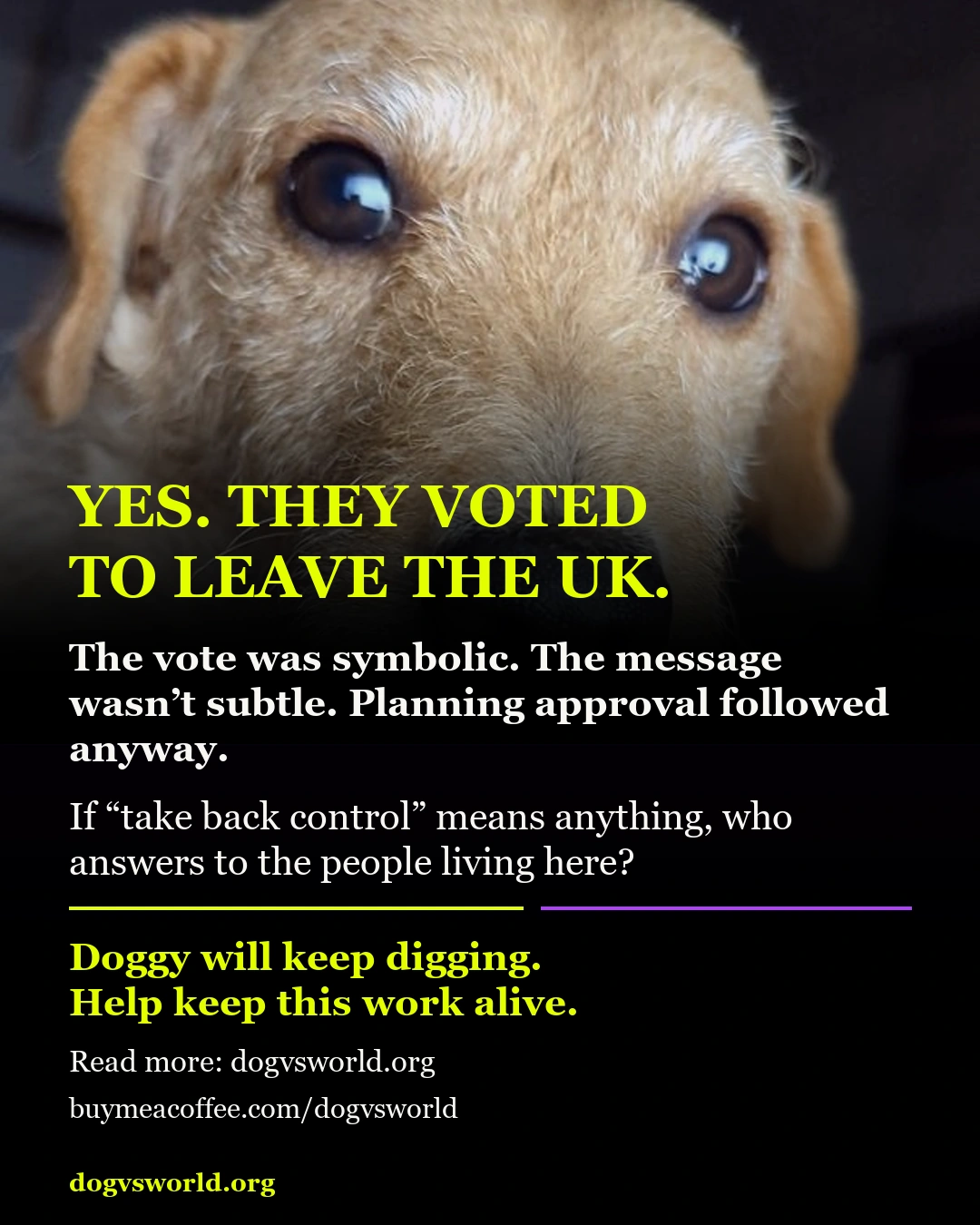
The village's September independence vote was symbolic. It had no legal power to secede or veto a planning decision. The reported result was 285 in favour and 26 against. The slogan about taking back control sounds rather different when a community is asking who will answer to the people living beside the site.
Sources: BBC/AOL decision report; AP referendum report.
Germany publishes a table. Britain should answer the safety questions
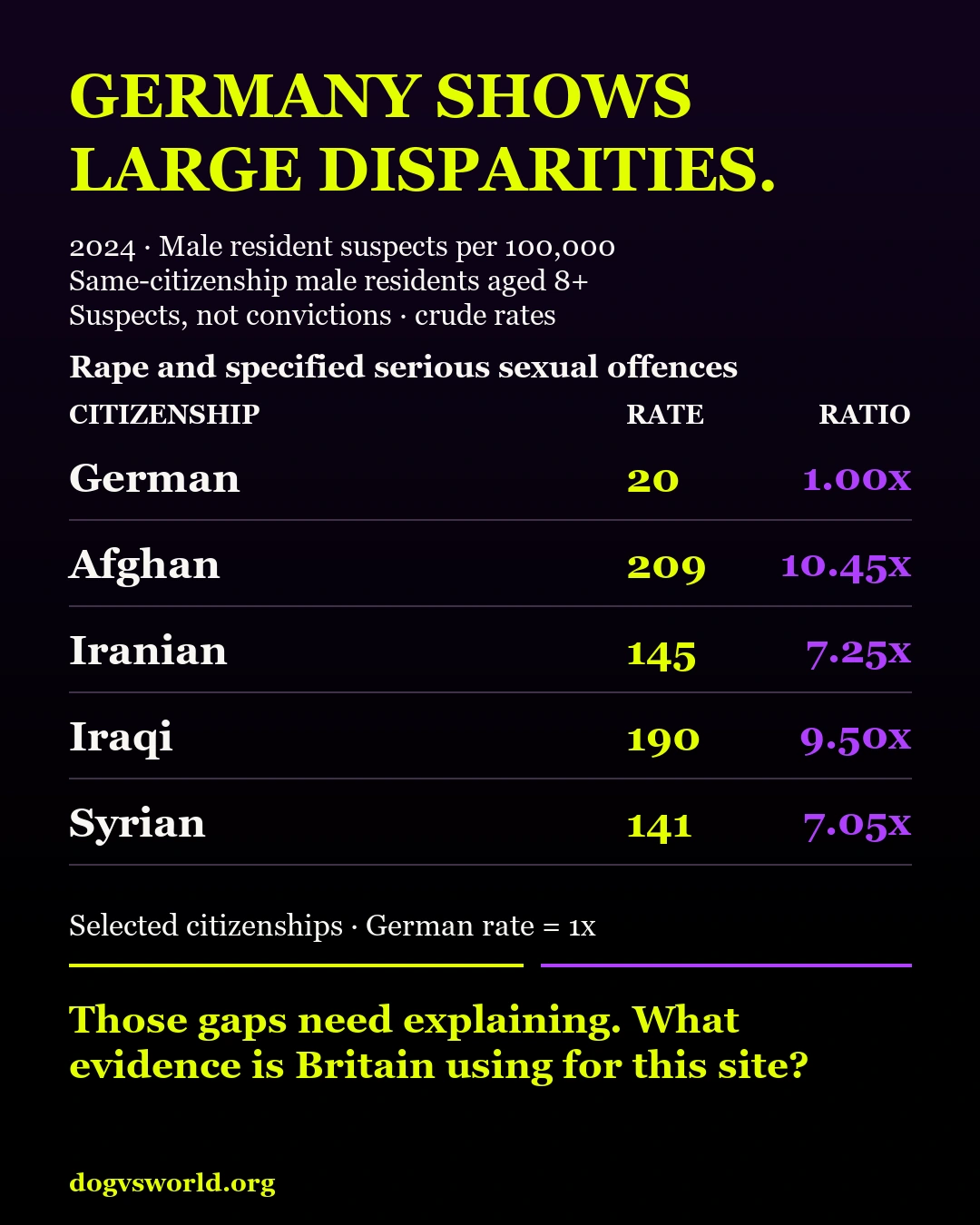
Germany's government published 2024 resident-suspect rates by citizenship. For male residents aged eight and over, the selected PKS 111000 rates per 100,000 were German 20, Afghan 209, Iranian 145, Iraqi 190 and Syrian 141. Relative to the published rounded German rate, the ratios are 10.45, 7.25, 9.50 and 7.05 respectively.
PKS 111000 covers rape and specified especially serious sexual coercion/assault, including offences resulting in death. These are suspects in attempted or completed offences, not convictions or rates of all sexual offences. Citizenship is not religion or asylum status. The comparison is sex-specific but not age-standardised. The population denominator is dated 31 December 2023. The source cautions about population measurement and differing social circumstances. The displayed citizenships are selected examples, not a ranking.
| Citizenship | Male resident suspects per 100,000 | Ratio to German rate |
|---|---|---|
| German | 20 | 1.00× |
| Afghan | 209 | 10.45× |
| Iranian | 145 | 7.25× |
| Iraqi | 190 | 9.50× |
| Syrian | 141 | 7.05× |
Working: each published rounded citizenship rate ÷ 20. For example, 209 ÷ 20 = 10.45. Population-adjusted rates are more useful than raw totals, but these crude rates are not age-standardised. Read the original Bundestag document, question 3, printed pages 6–7.
I have not obtained a verified allocation list establishing the nationalities of future Piddington residents. These German figures cannot calculate a crime forecast or the risk posed by an individual assigned to a British site. They also do not establish citizenship as a cause of offending.
Source: Bundestag 21/145, question 3, printed pages 6–7. Ratios calculated from the published rounded male rates.
Women’s concerns and concrete safeguards
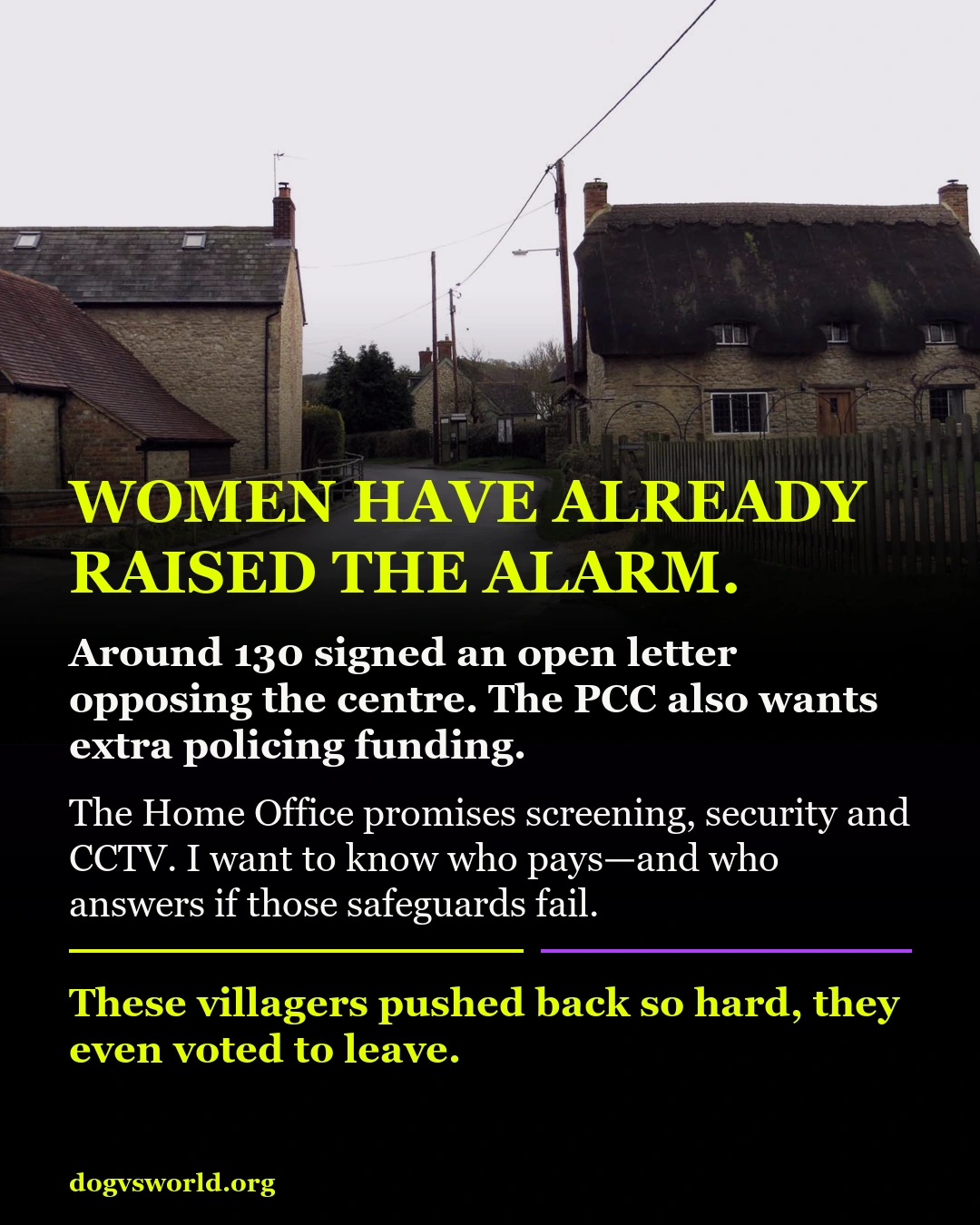
Around 130 women reportedly joined an open letter opposing the centre. That number is not a verified census count of every woman in the village. Thames Valley's Police and Crime Commissioner raised concerns about public safety and requested full recovery of additional policing costs. Those are attributed warnings and funding demands, not observed crime at an unopened centre.
The Home Office describes database and biometric screening, permanent security staff, CCTV and sign-in/out arrangements. The accommodation would not be detention. Scrutiny should focus on implementation, funded staffing, incident reporting, oversight and clear responsibility. The existence of a stated safeguard does not establish its effectiveness in advance; nor should it be described as nonexistent.
Sources: The News Agents on the letter; PCC statement, 16 October; Home Office factsheet, updated 9 November.
I want specific answers: who pays for the safeguards, who checks they work, and who answers to the people living nearby? Publish the local assessment, the policing commitment and the arrangements for reporting incidents. Reassurance is easy to issue. Accountability takes rather more work.
Support the research: buymeacoffee.com/dogvsworld.
The German data show disparities that deserve examination. They do not supply a forecast for an unopened British centre. What I want from the government is the evidence and practical assessment used for this specific site, rather than an assurance that the question has somehow answered itself.
Photographs and credits
The photographs illustrate Piddington, not a current protest, a crime or the proposed accommodation. All are existing real photographs. No AI-generated photographs were used.
Slide 1: Des Blenkinsopp, Signpost in Piddington, 14 September 2019. Original photograph. CC BY-SA 2.0. Cropped, colour graded and combined with fades and typography. The adapted slide is available under the same licence; no photographer endorsement implied.

Slide 2: David Hawgood, Piddington village hall. Original photograph. CC BY-SA 2.0. Cropped, colour graded and combined with fades and typography. The adapted slide is available under the same licence; no photographer endorsement implied.
Slide 4: Steve Daniels, Thame Road in Piddington. Original photograph. CC BY-SA 2.0. Cropped, colour graded and combined with fades and typography. The adapted slide is available under the same licence; no photographer endorsement implied.
Slide 3 presents public statistics in original typography. Slide 5 uses my supplied Doggy photograph.