

Why does asking about women’s safety turn into an argument about your character? I went digging through the official records on conviction data, nationality and sexual violence. The documents give us real questions to investigate, not a reason to stop asking.
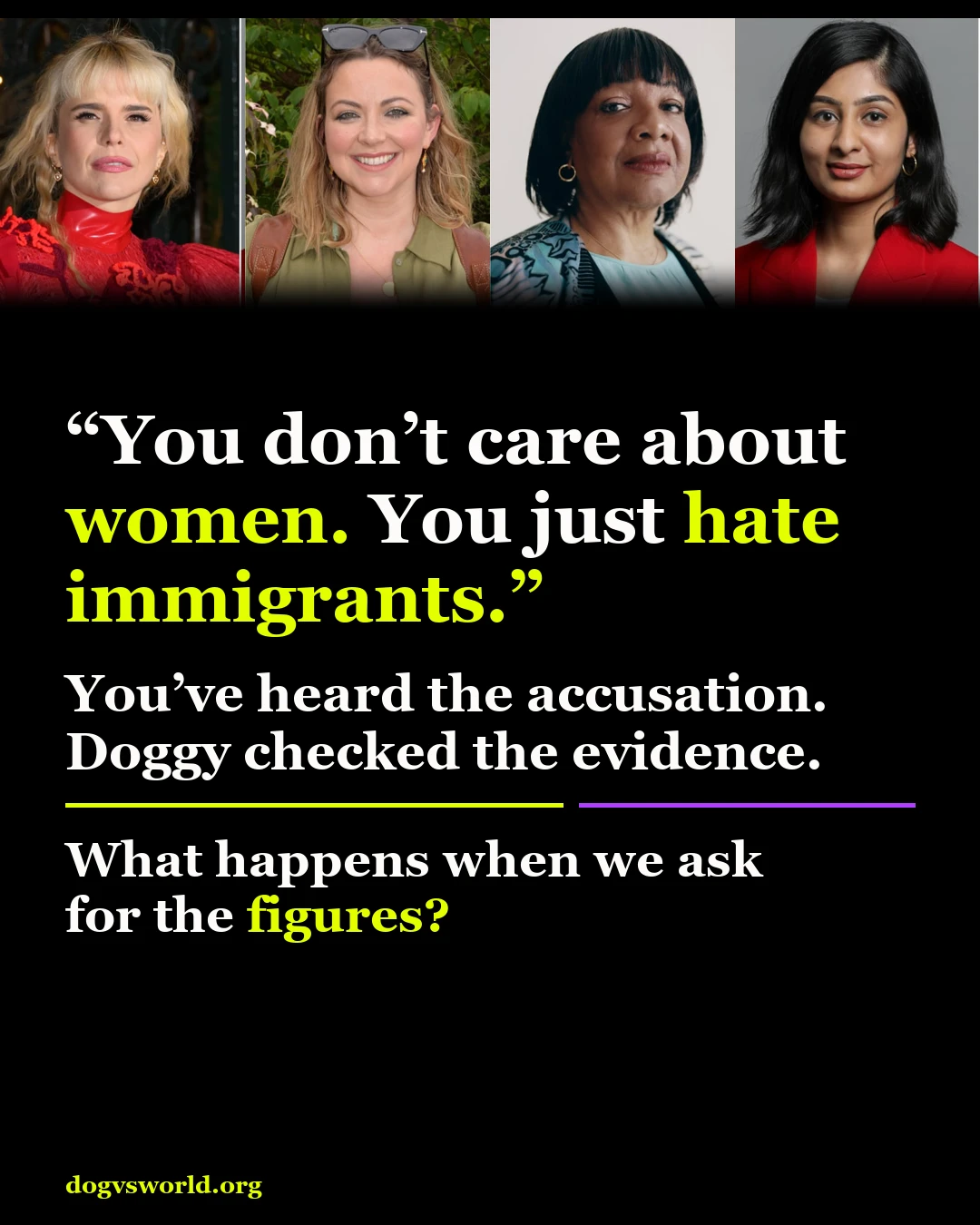
You ask for the figures. Suddenly, the conversation is about whether you hate immigrants. Somebody tell Doggy how that answers the question.
The opening line in my carousel describes that accusation in my own words. It is not a verbatim quotation attributed to the women pictured. I want the discussion to turn back to evidence, disclosure and prevention.
Britain: why fight disclosure?
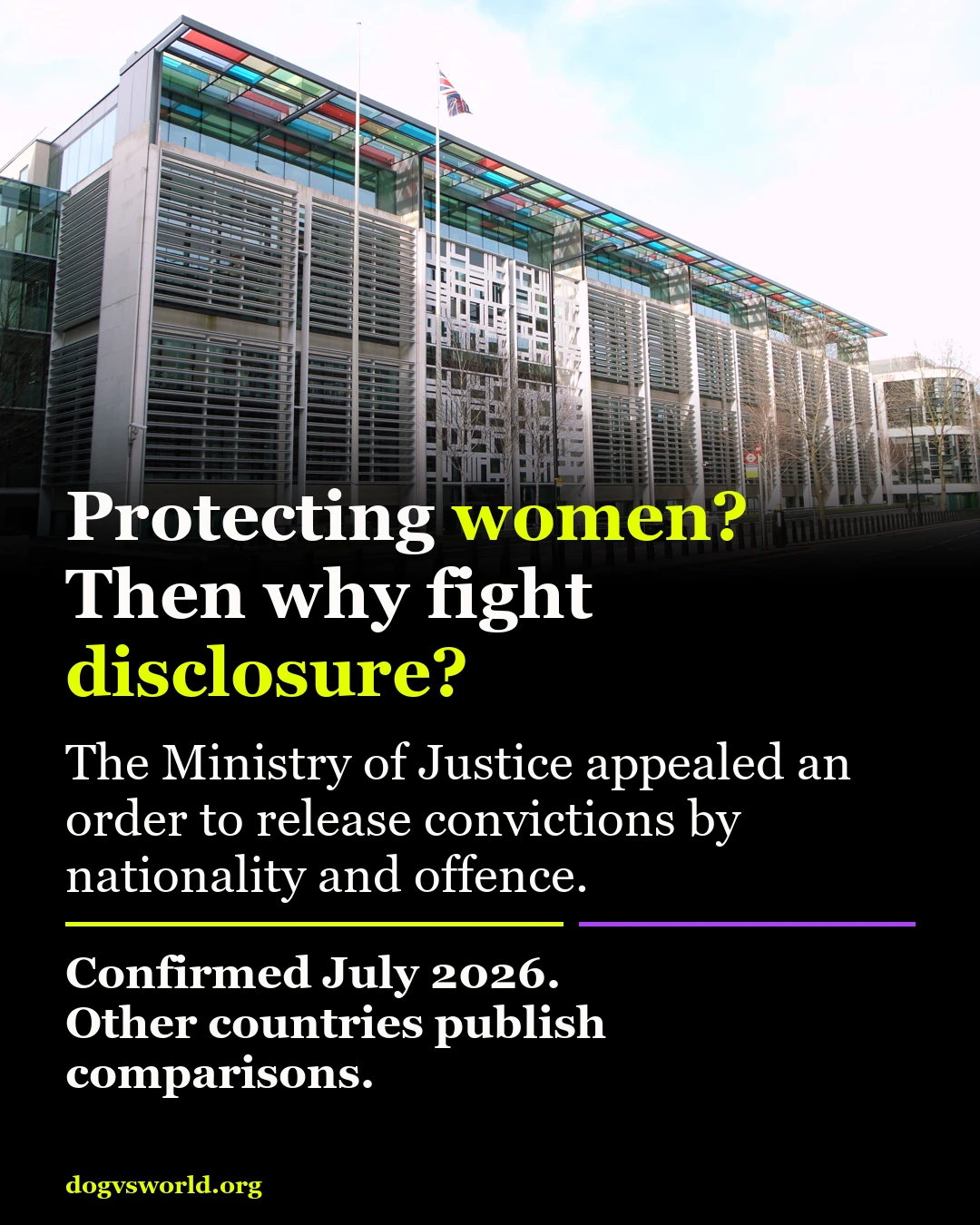
On 27 July 2026, the Ministry of Justice confirmed in a parliamentary answer that it was appealing the Information Commissioner’s decision concerning foreign-national offending data for 2018–2024. The department said releasing the requested information would prejudice live proceedings.
That establishes the appeal at that date. I have not independently established its later outcome. My question is why publishing nationality-by-offence conviction figures should require this fight in the first place.
Officials can explain definitions, small counts and limits alongside the numbers. My position is that the public should be able to examine the evidence and question policy.
An accusation is not an analysis
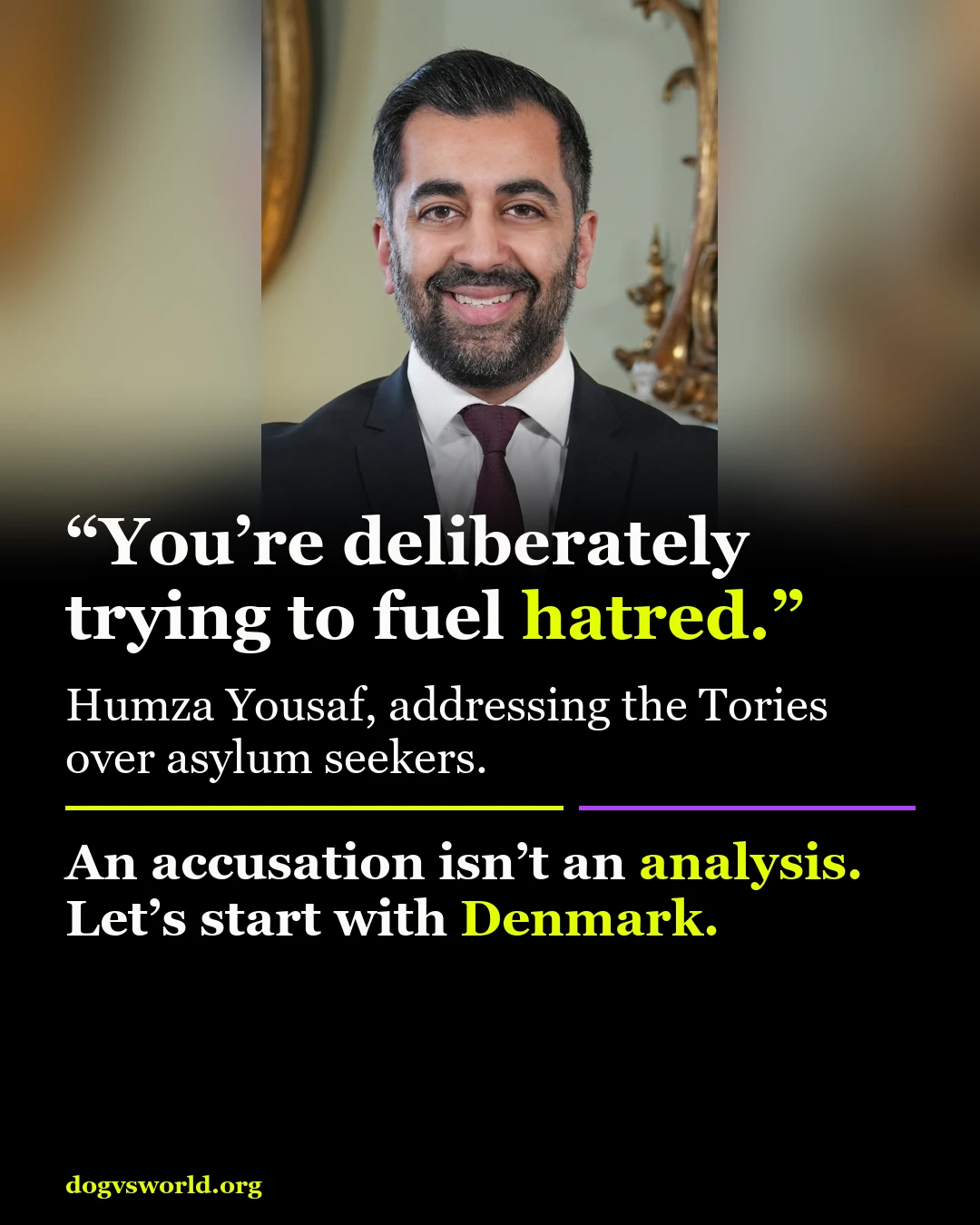
Humza Yousaf accused the Conservatives of deliberately fuelling hatred against asylum seekers, as reported by the Press Association in The Standard. His remarks addressed the Tories’ treatment of asylum seekers, not me personally or every person asking for statistics.
Politicians can challenge how an argument is made. That still leaves the underlying questions about recorded offending and prevention to answer. So I looked at what other countries actually publish.
Denmark: 145% above the male average
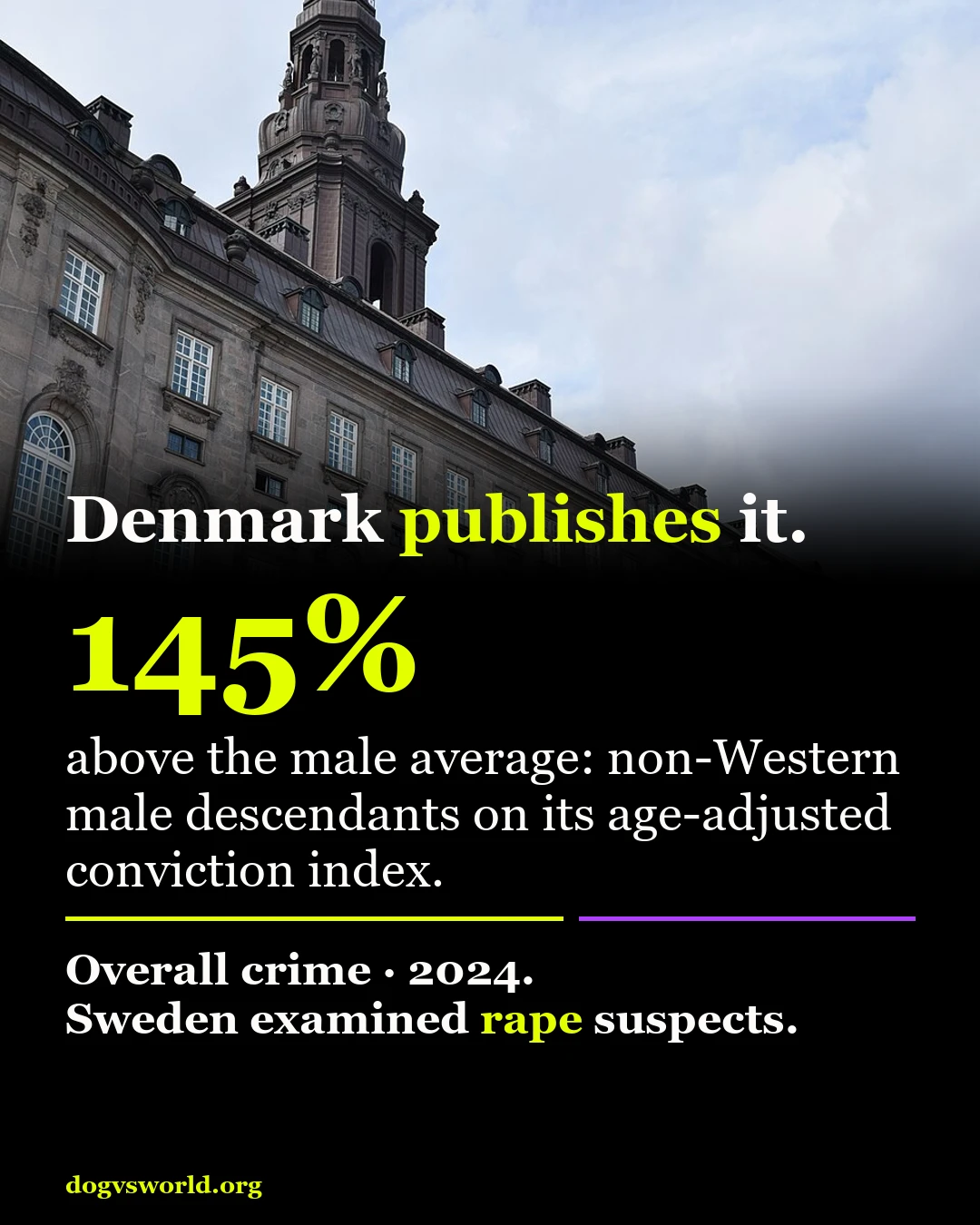
Statistics Denmark’s Immigrants in Denmark 2025 reports a 2024 age-adjusted conviction index of 245 for non-Western male descendants aged 15–79. All males are the reference, indexed to 100.
The calculation is (245 ÷ 100 − 1) × 100 = 145% above the male average, or 2.45 times that reference.
This is overall crime, including traffic and special-law offences, not a rape index. “Descendants” and “non-Western” are Danish statistical classifications, not measures of religion or asylum status. The quoted adjustment is for age. See chapter 6 and table 6.9.
Sweden: 3.2 times, falling to 2.2 after adjustment
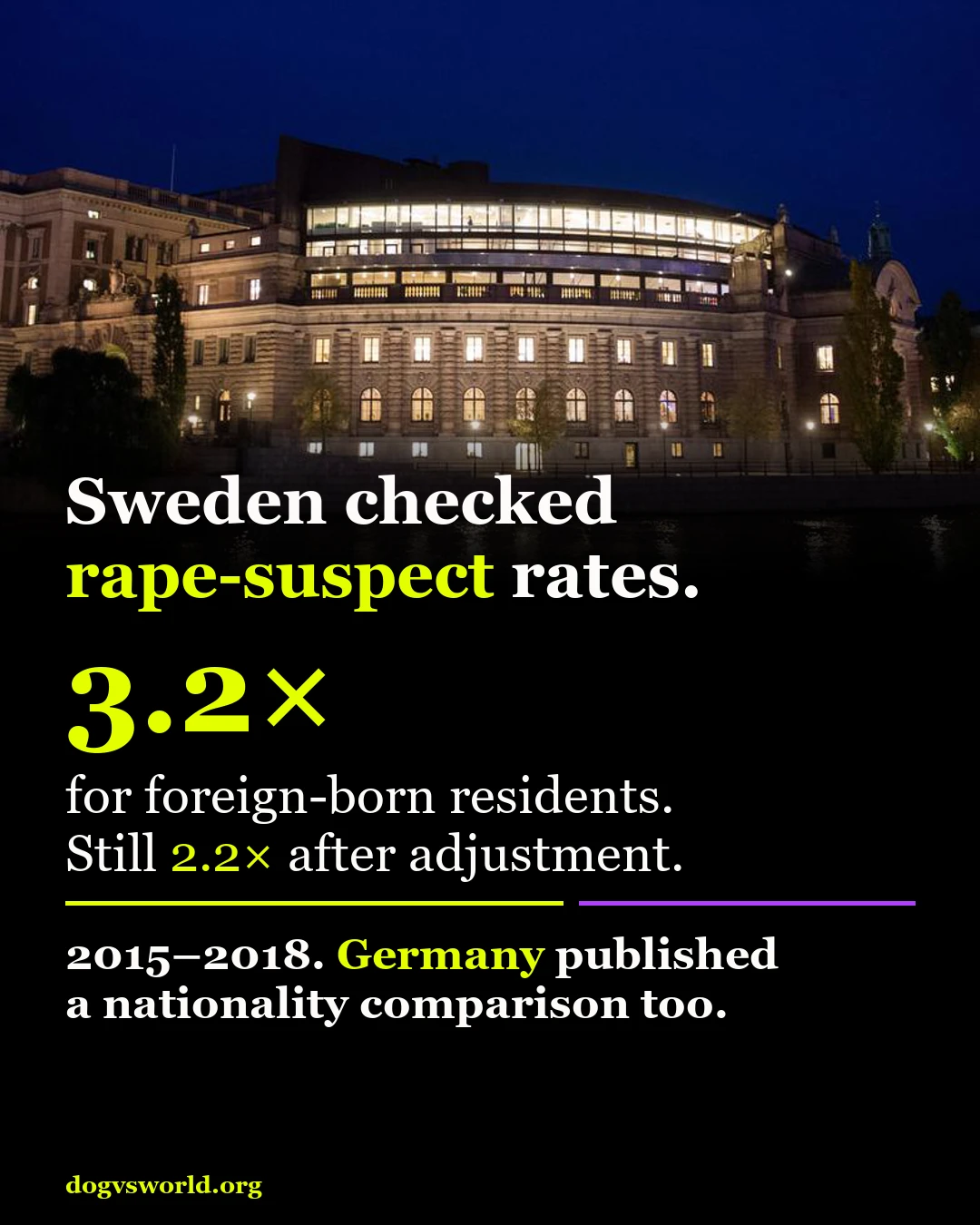
Brå report 2021:9 examined registered residents aged 15 and over at the end of 2014, using offences committed during 2015–2018. Foreign-born residents had 3.2 times the reference rate of being registered as a rape suspect, falling to 2.2 after measured demographic and socioeconomic adjustments.
The reference is Swedish-born residents with two Swedish-born parents. These are suspect records, not convictions, and historical study years rather than current-year figures. The remaining association does not itself identify its cause.
The adjustment matters, and so does the difference that remains. Both belong in a serious discussion. The relevant findings are in the English summary, particularly pages 3–6.
Germany: 92 versus 11 per 100,000
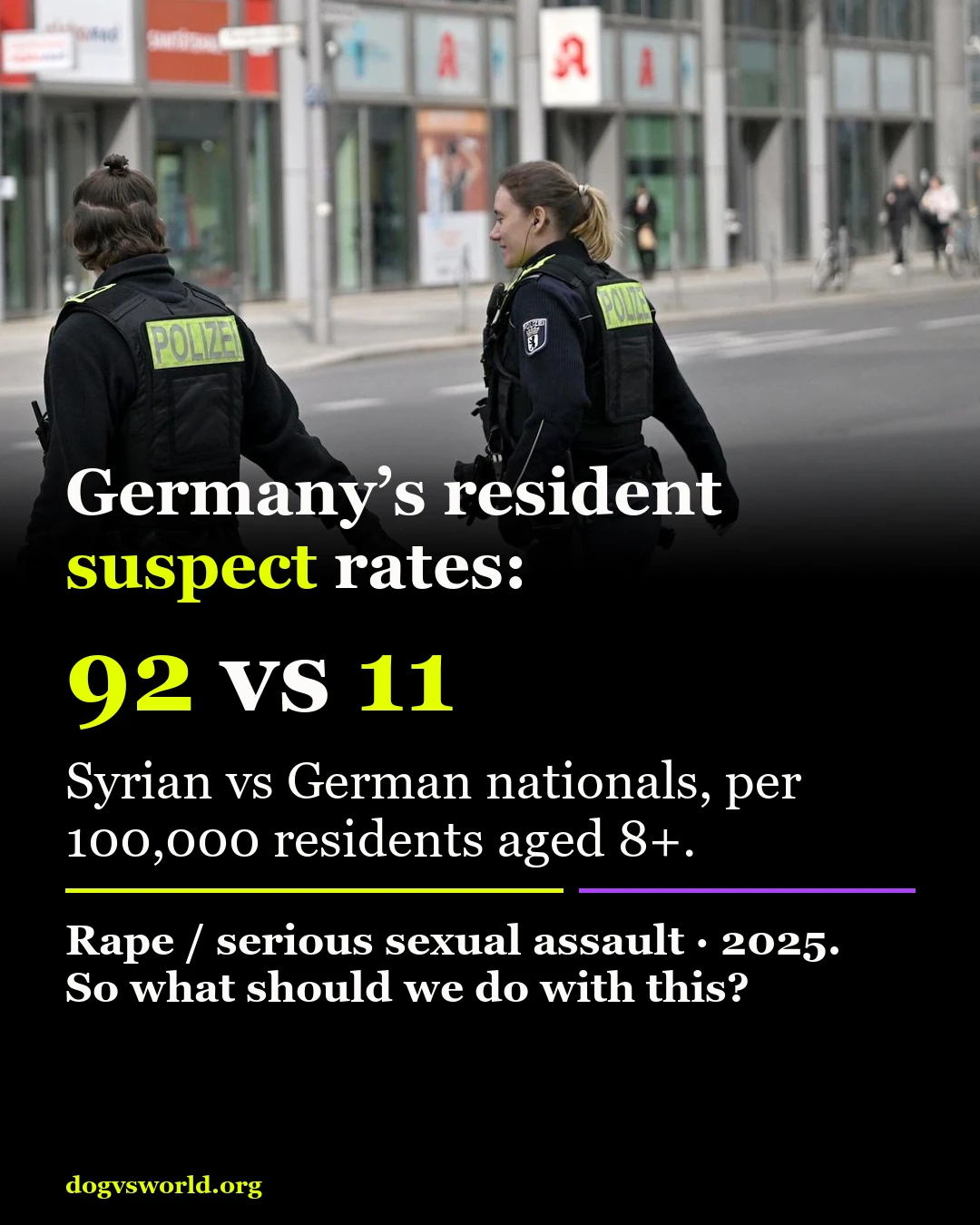
The German government’s 8 May 2026 answer, Bundestag paper 21/5881, reports 2025 resident suspect rates of 92 for Syrian citizens and 11 for German citizens per 100,000 corresponding residents aged eight and over.
| Citizenship | Resident suspects per 100,000 |
|---|---|
| German | 11 |
| Syrian | 92 |
92 ÷ 11 = 8.36, approximately 8.4 times. Because the source rates are rounded, the ratio is approximate.
Page 5, offence key 111000, covers rape, sexual coercion and especially serious sexual assault, including resulting in death. These are all-sex crude suspect rates, not convictions or age- and sex-standardised rates. The population reference is 31 December 2024. Citizenship is not birthplace or asylum status.
Protect women. Publish the evidence.
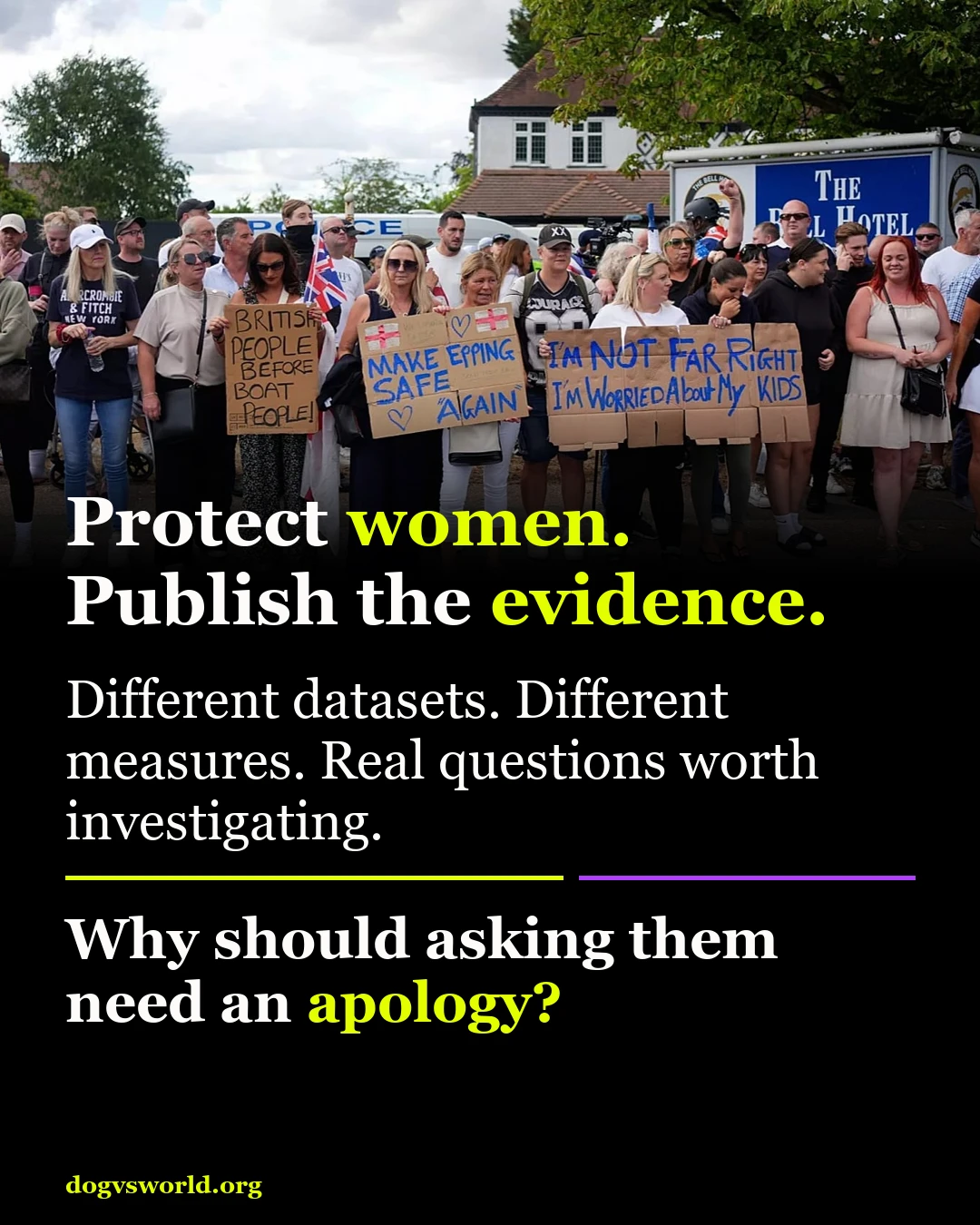
Different datasets. Different measures. Real questions worth investigating.
I am not combining these figures into a single European crime rate. They concern different years, populations, definitions and stages of the justice system. None measures asylum seekers specifically or establishes the causal effect of an immigration policy.
What I want is straightforward: publish usable data, investigate the differences and judge prevention by whether it protects women. An explanation should be tested against the evidence. An accusation should not replace one.
We can reject collective blame while still examining group-level records. People should be judged for their own actions, and public policy should be open to scrutiny.
Apparently Doggy has to ask

If you are tired of defending your character just to ask a question, I get it. That is why I keep finding the documents, checking the figures and putting the workings where you can read them.
Which question would you want officials to answer first? Send me a source or research suggestion.
Doggy digs. But coffee helps.

I research and create this work myself. Finding official documents and checking their definitions takes hours. If you value having Doggy do the digging, a one-off coffee or monthly contribution helps me keep doing it. Thank you to everyone who supports the work.
Image context and credits
The photographs illustrate the debate and institutions. They do not identify people counted in the statistical tables or establish their involvement in an offence.
- Slide 1: Guardian composite of open-letter signatories. The opening text is my rhetorical summary, not their verbatim quotation.
- Slide 2: Marsham Street/Home Office building. Illustrative UK government architecture; not the Ministry of Justice headquarters.
- Slide 3: Humza Yousaf portrait, Scottish Government/Wikimedia Commons.
- Slide 4: Christiansborg Palace, Jorge Franganillo/Wikimedia Commons.
- Slide 5: Swedish Parliament, Johannes Jansson/Nordic cooperation, via Nordicom.
- Slide 6: Berlin police photograph, dpa/Britta Pedersen, via Berliner Morgenpost.
- Slide 7: Epping protest photograph, via The Independent. The people shown are not identified as suspects.
- Slides 8–9: supplied Doggy photographs.


The carousel’s source pack records these third-party editorial-photo credits; their reuse permissions were not independently established in that pack.
Original Instagram carousel · More exclusive independent research · Corrections and source suggestions.