
A 2012 study found the highest adjusted intelligence scores among centre-right and centrist respondents in a Brazilian sample. Here are the results and the limits behind my carousel.
By Doggy. Adapted from my original Instagram post.
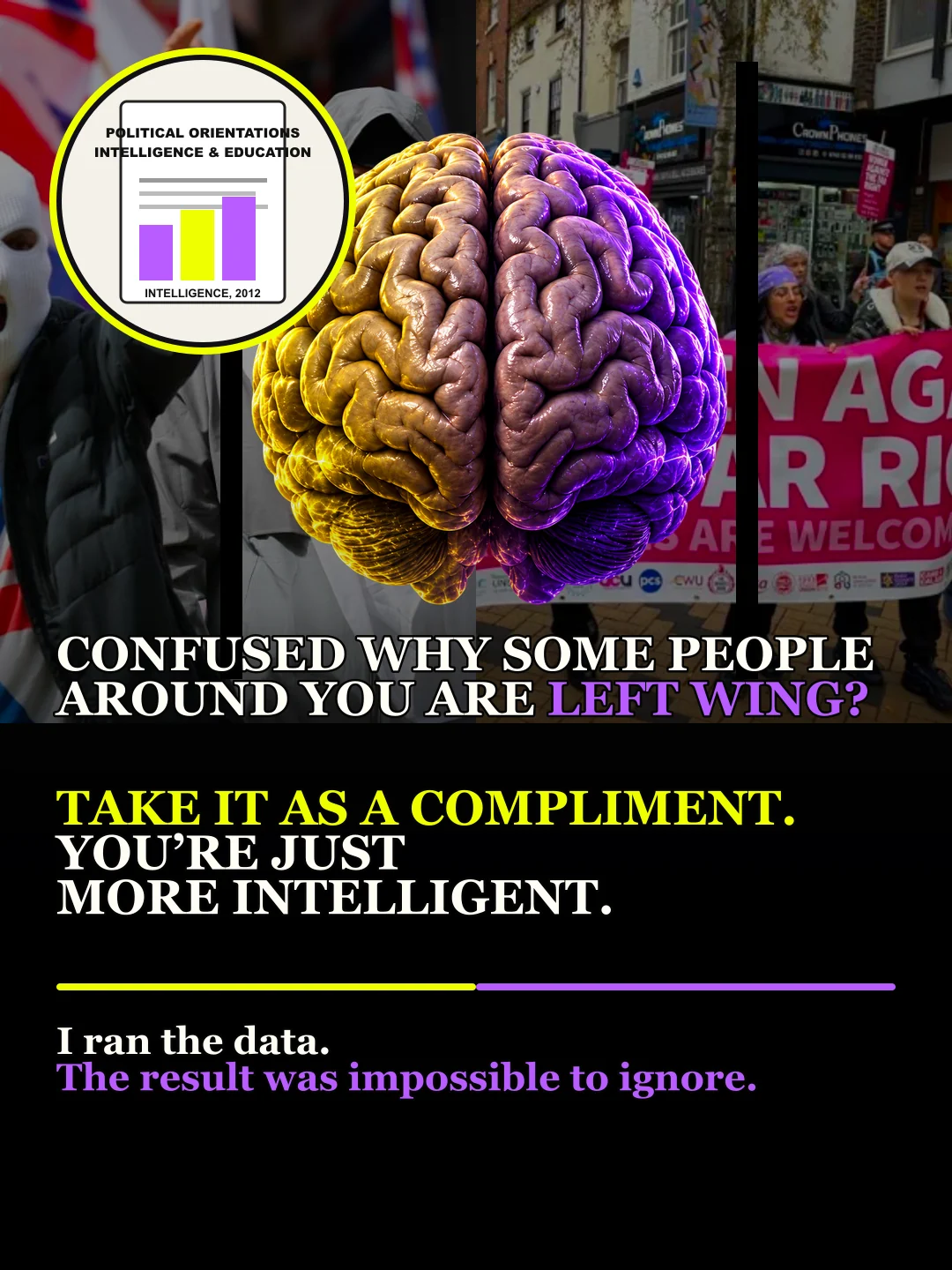
The study and its sample
Heiner Rindermann, Carmen Flores-Mendoza and Michael A. Woodley studied 586 people in Brazil. Participants completed Raven’s Standard Progressive Matrices and reported political orientation alongside demographic information. The paper appeared in Intelligence, volume 40, issue 2, pages 217–225.
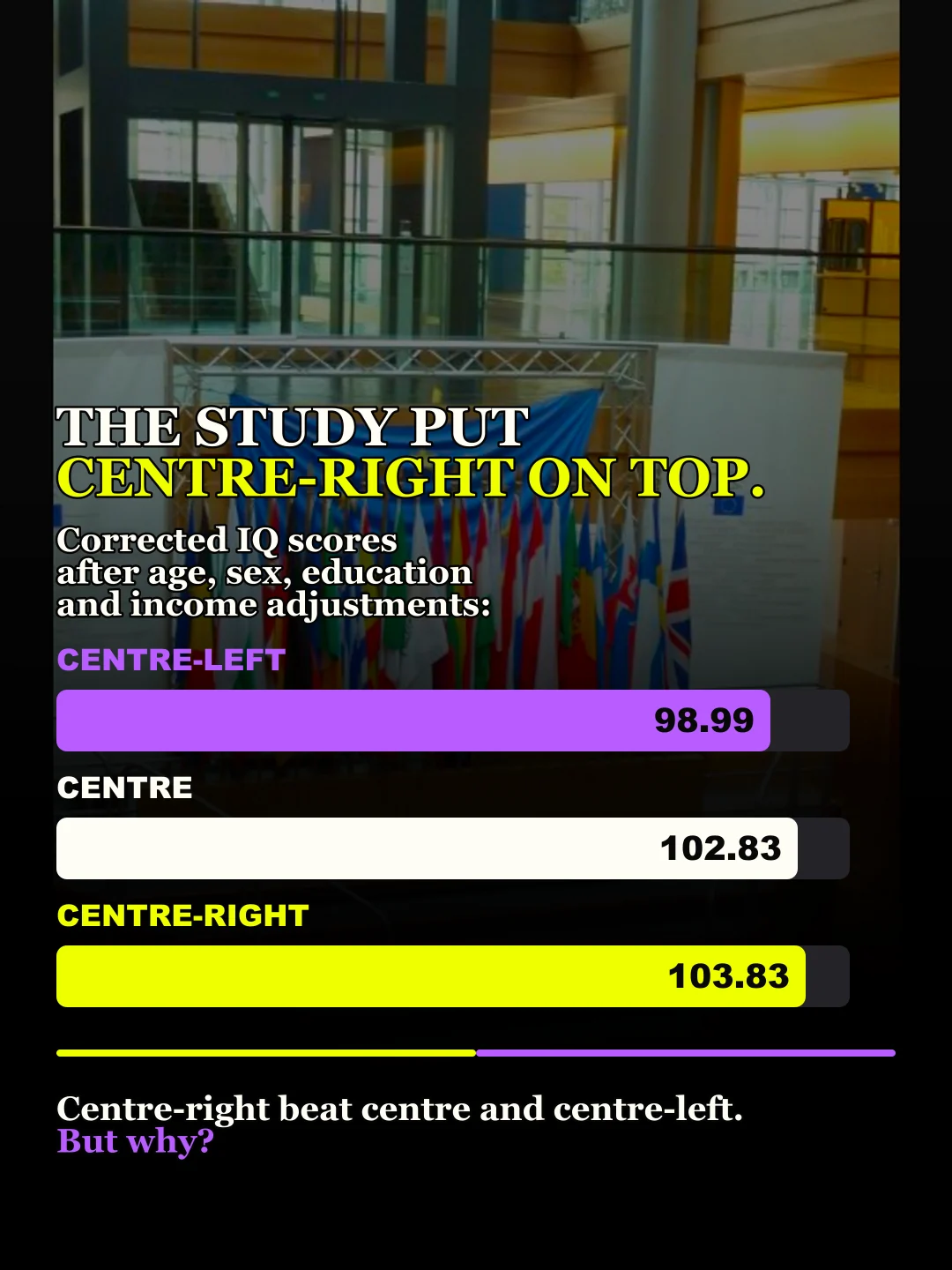
The authors reported that the centre-right and centre groups had the highest scores, and that the pattern remained after adjustment for age, sex, education and income. This is an association in one sample, not an experiment showing that political affiliation causes intelligence.
Include all the categories
The corrected means recorded in my source notes are: no preference 94.13; left 98.38; centre-left 98.99; centre 102.83; centre-right 103.83; right 94.36. My carousel focuses on the middle three groups, so the complete list is important context.
What it does not establish
A group average cannot determine an individual’s intelligence. Political categories also vary between countries and historical periods. A Brazilian sample cannot simply be treated as representative of every current British, American or European party.
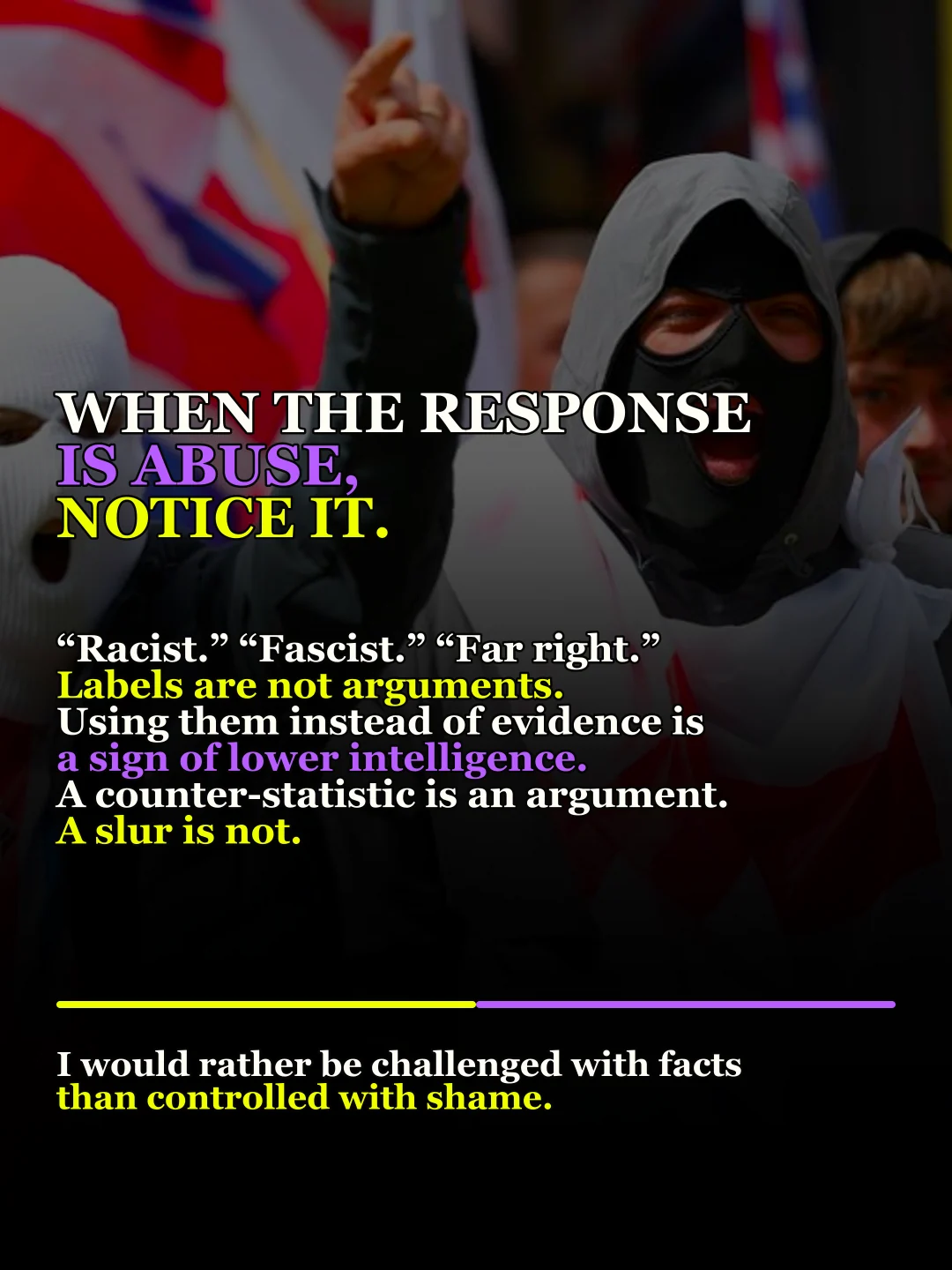
The study did not establish that using a political label in an argument indicates low intelligence. That line in the original carousel is commentary, not a tested result of this paper. The more defensible principle is that factual arguments should be answered with evidence.
Sources and further reading
The original carousel
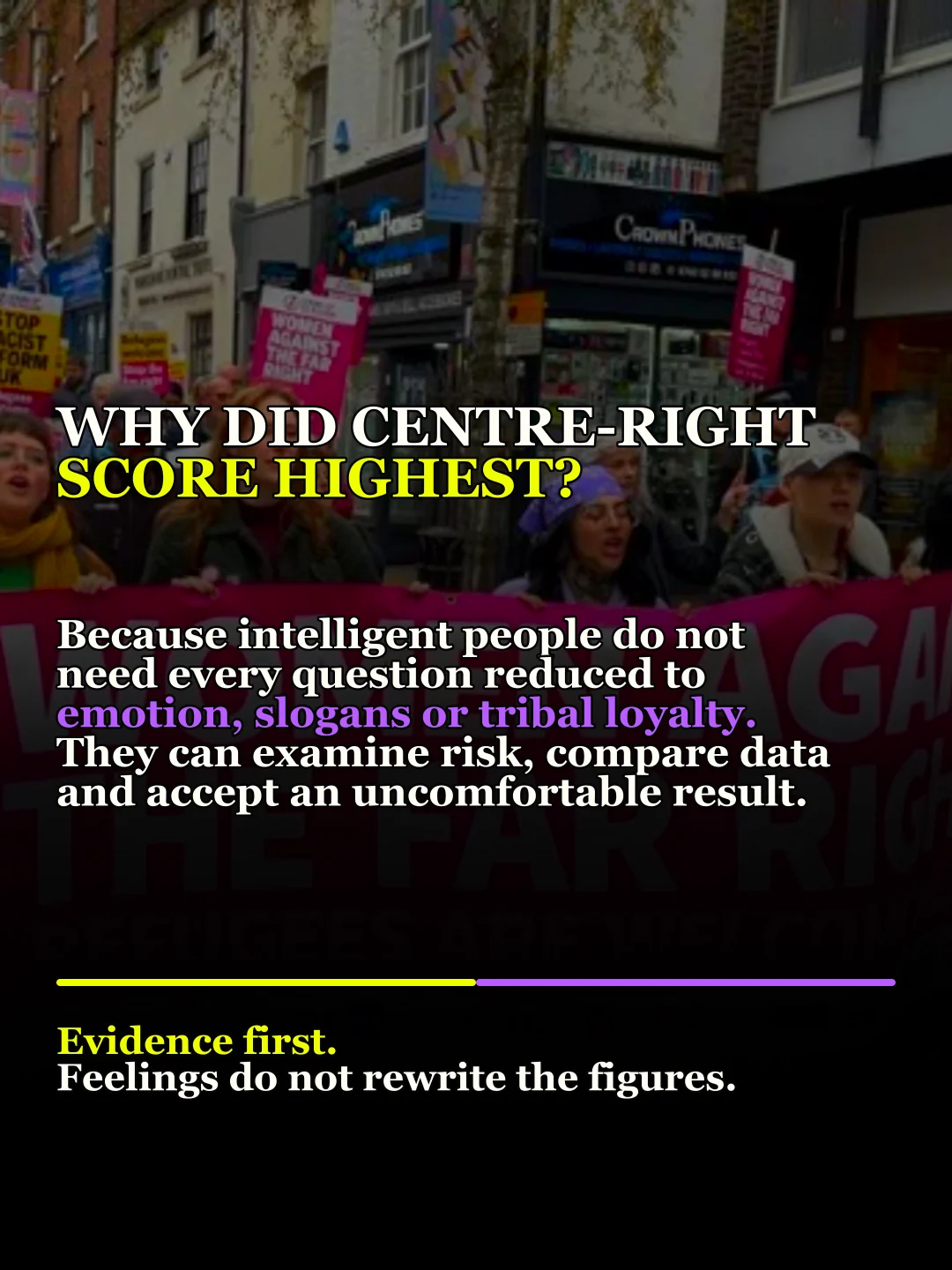
The remaining slides preserve my original presentation. The article above provides the definitions, source context and limitations.


Explore more
More research reports · About my research
I research and create these posts myself. Support my work on Buy Me a Coffee, or send a correction or source suggestion.