
Five Spanish towns recorded between 10 and 16 sexual assaults with penetration in 2025, compared with one each in 2016. Here are the official counts, the percentage calculations and the local context behind my carousel.
By Doggy. Adapted from my original Instagram post.
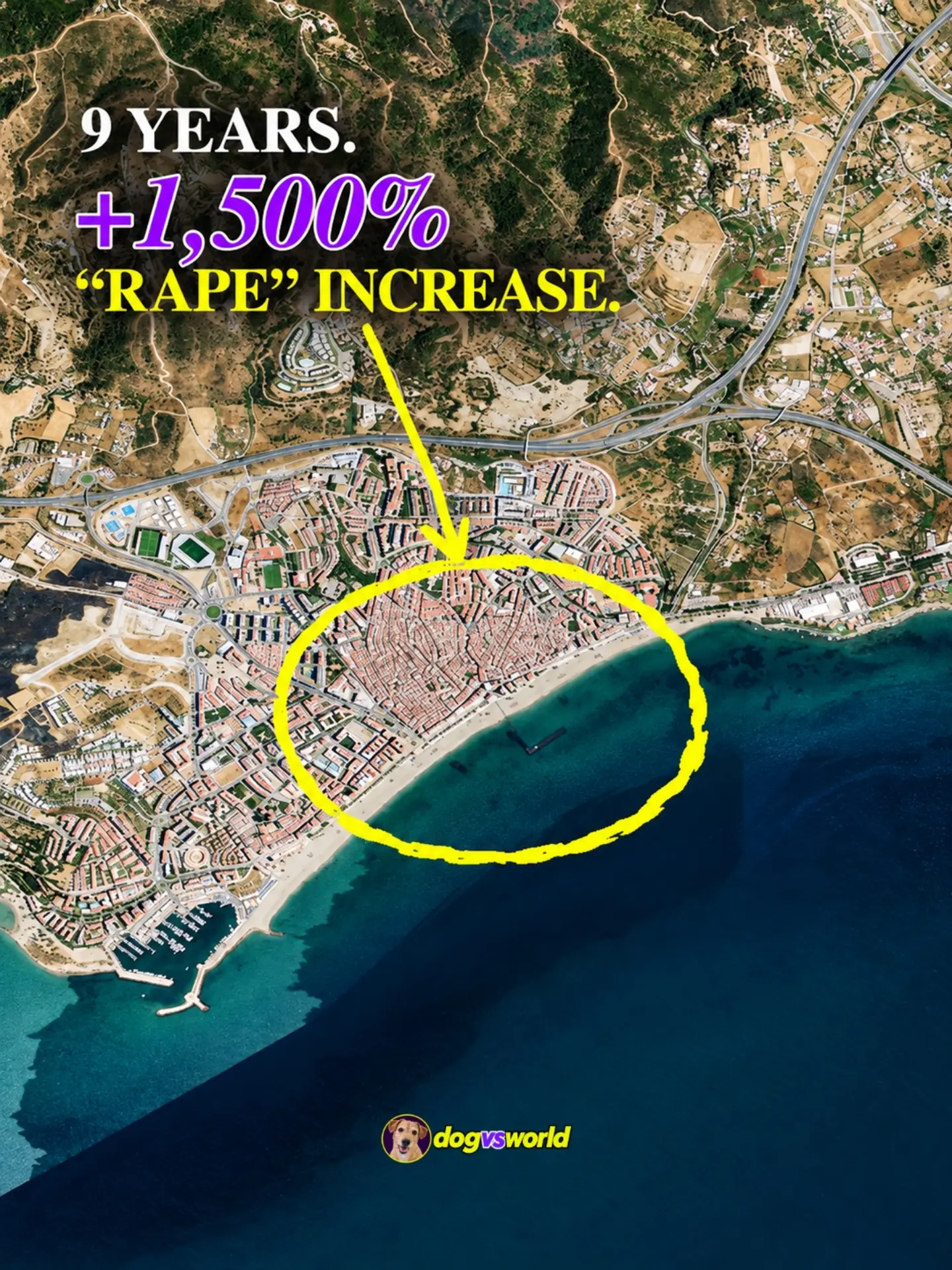
The figures behind the headlines
The comparison uses the Ministry of the Interior’s category “Agresión sexual con penetración”. The 2016 counts appear in the 2016 comparison column of its fourth-quarter 2017 report; the 2025 counts come from the fourth-quarter 2025 report. Both cover January to December.
| Town | 2016 | 2025 | Increase |
|---|---|---|---|
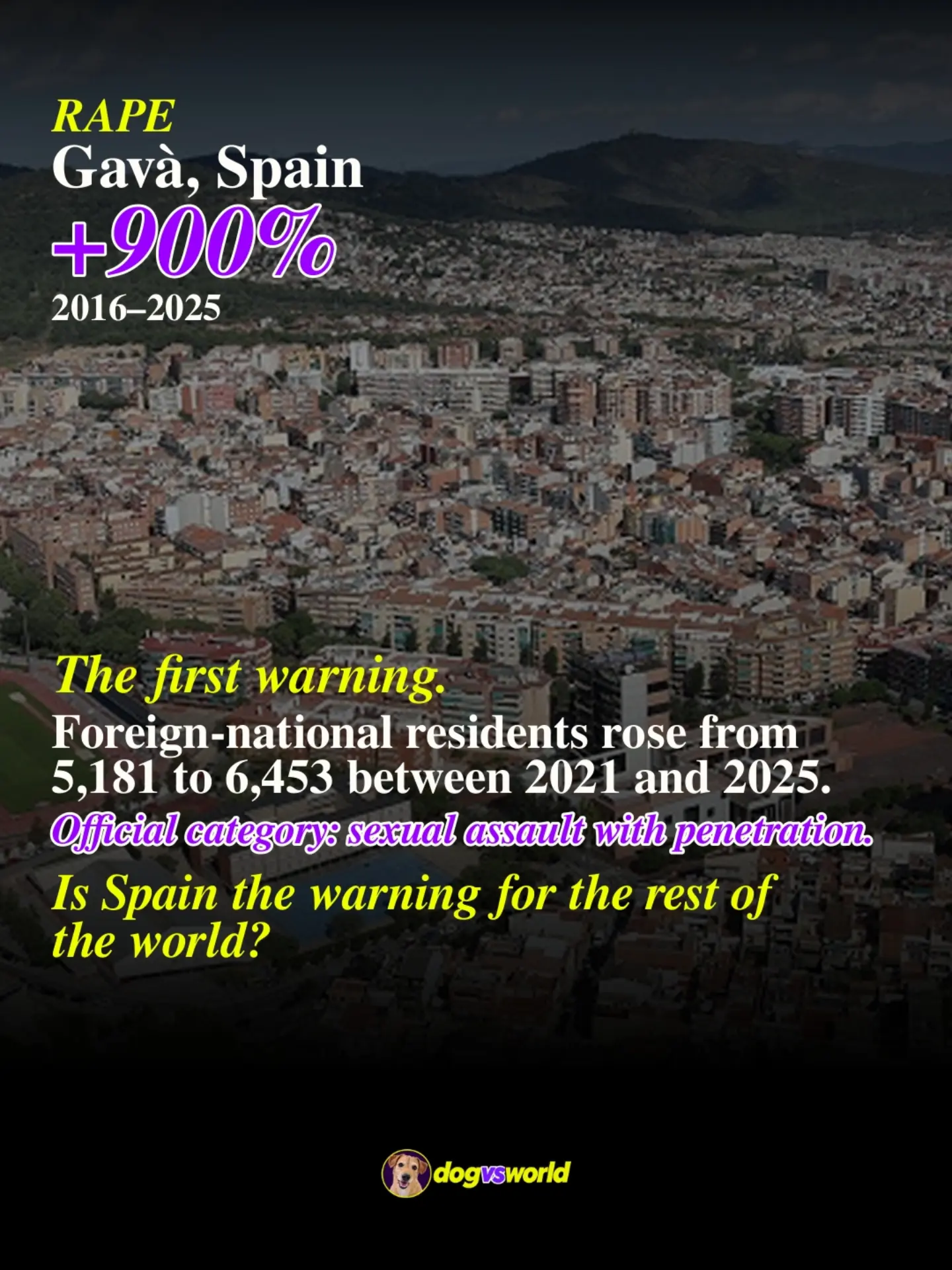
| Gavà | 1 | 10 | +900% |
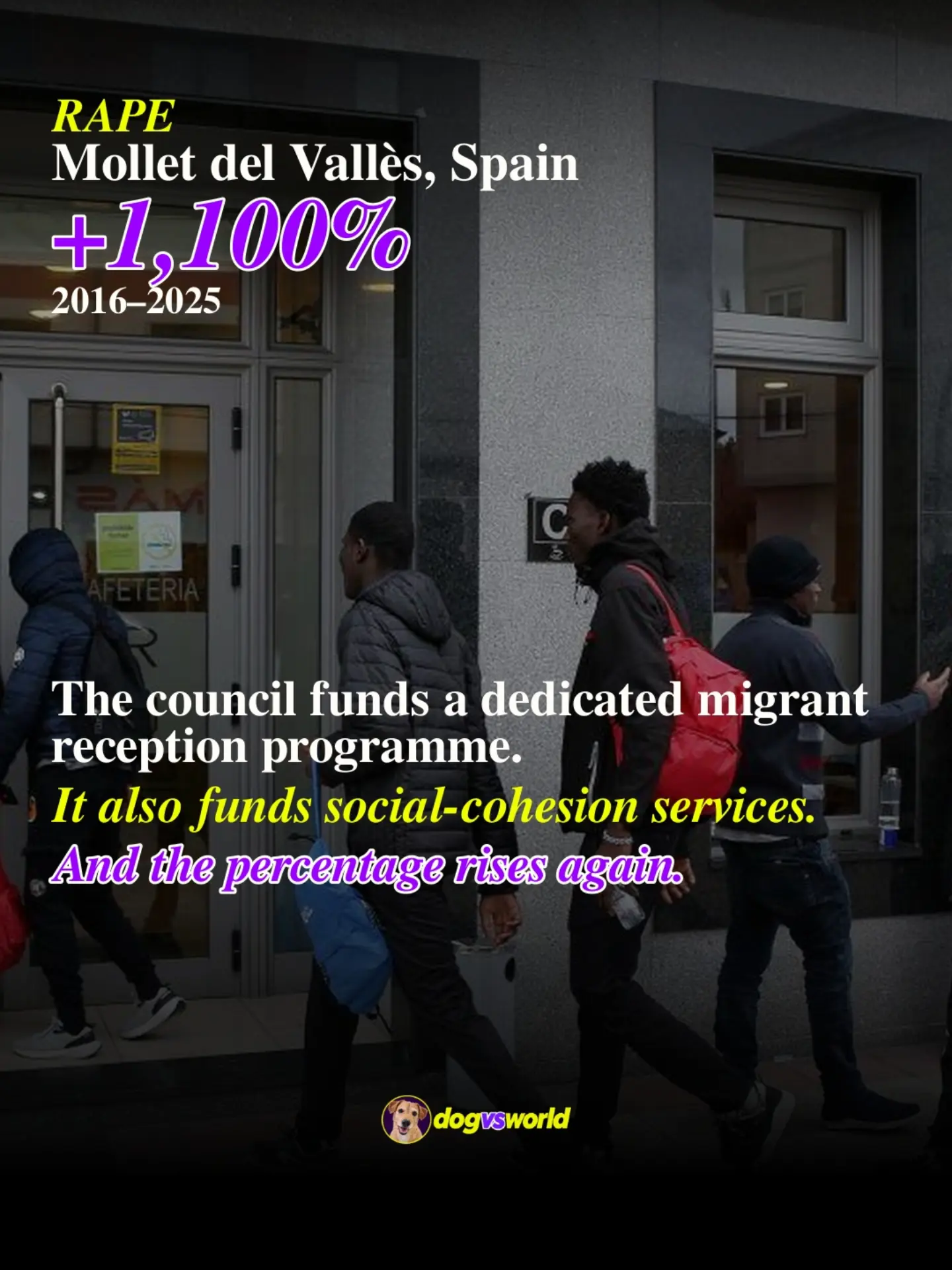
| Mollet del Vallès | 1 | 12 | +1100% |
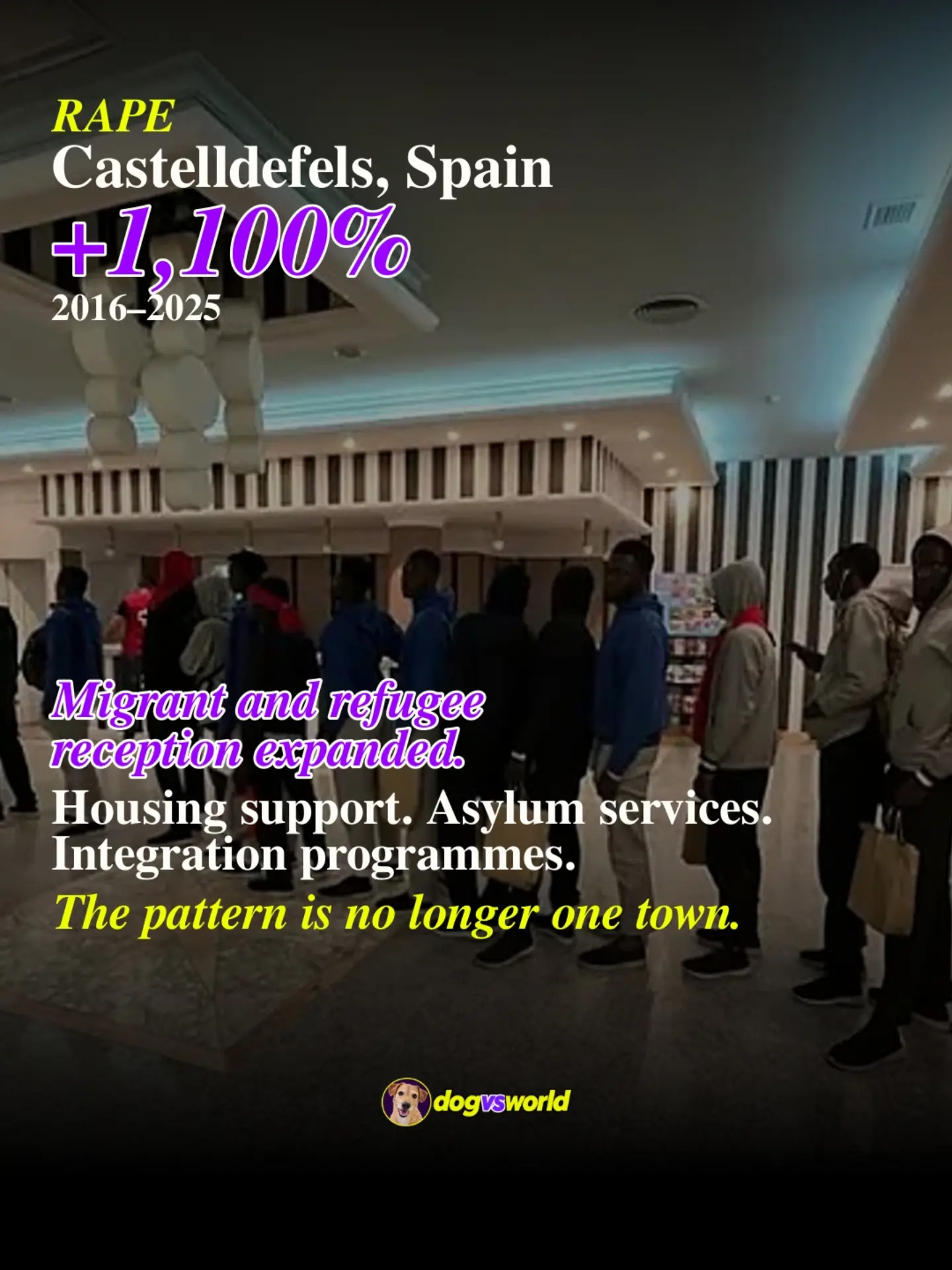
| Castelldefels | 1 | 12 | +1100% |
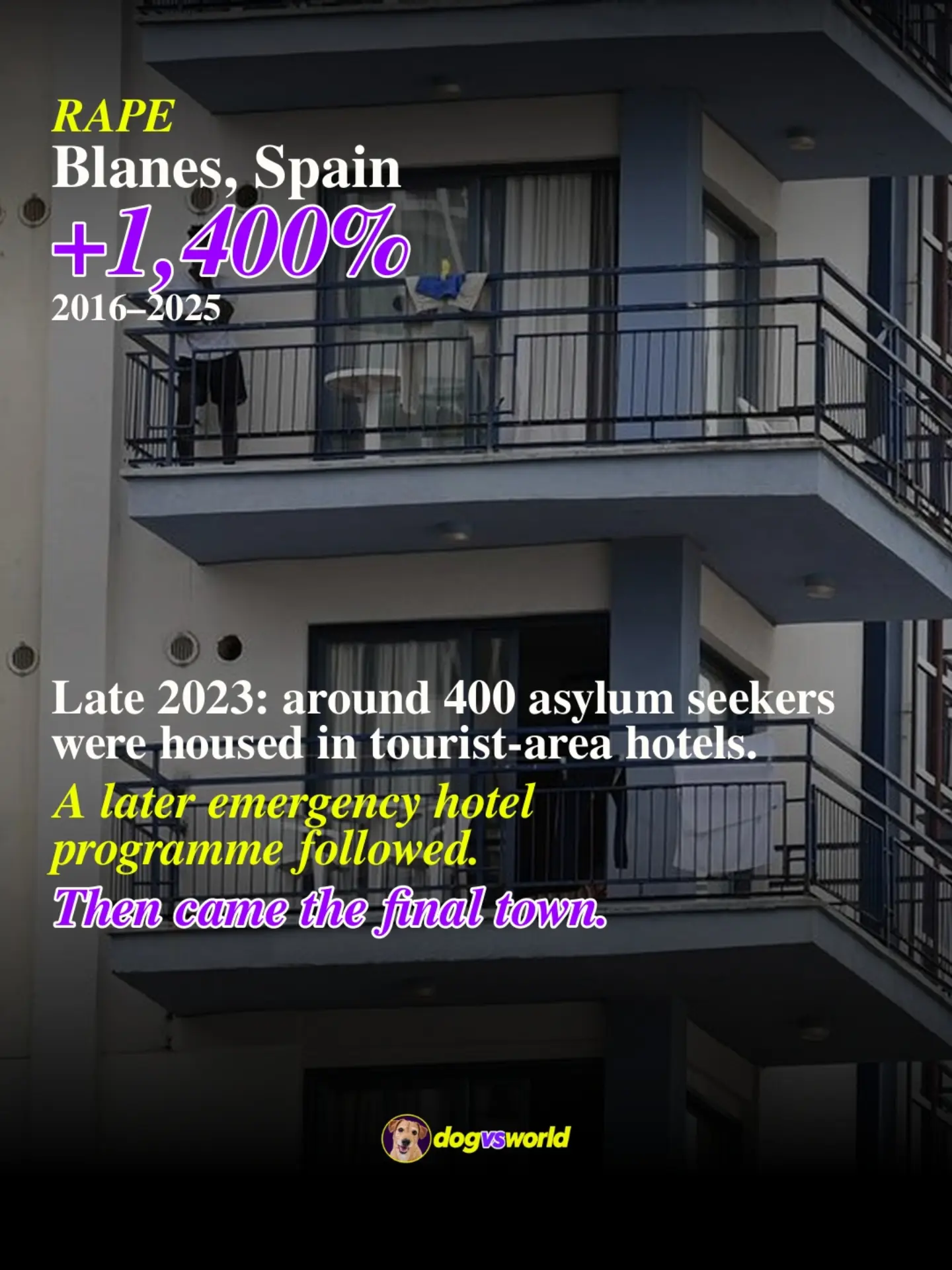
| Blanes | 1 | 15 | +1400% |
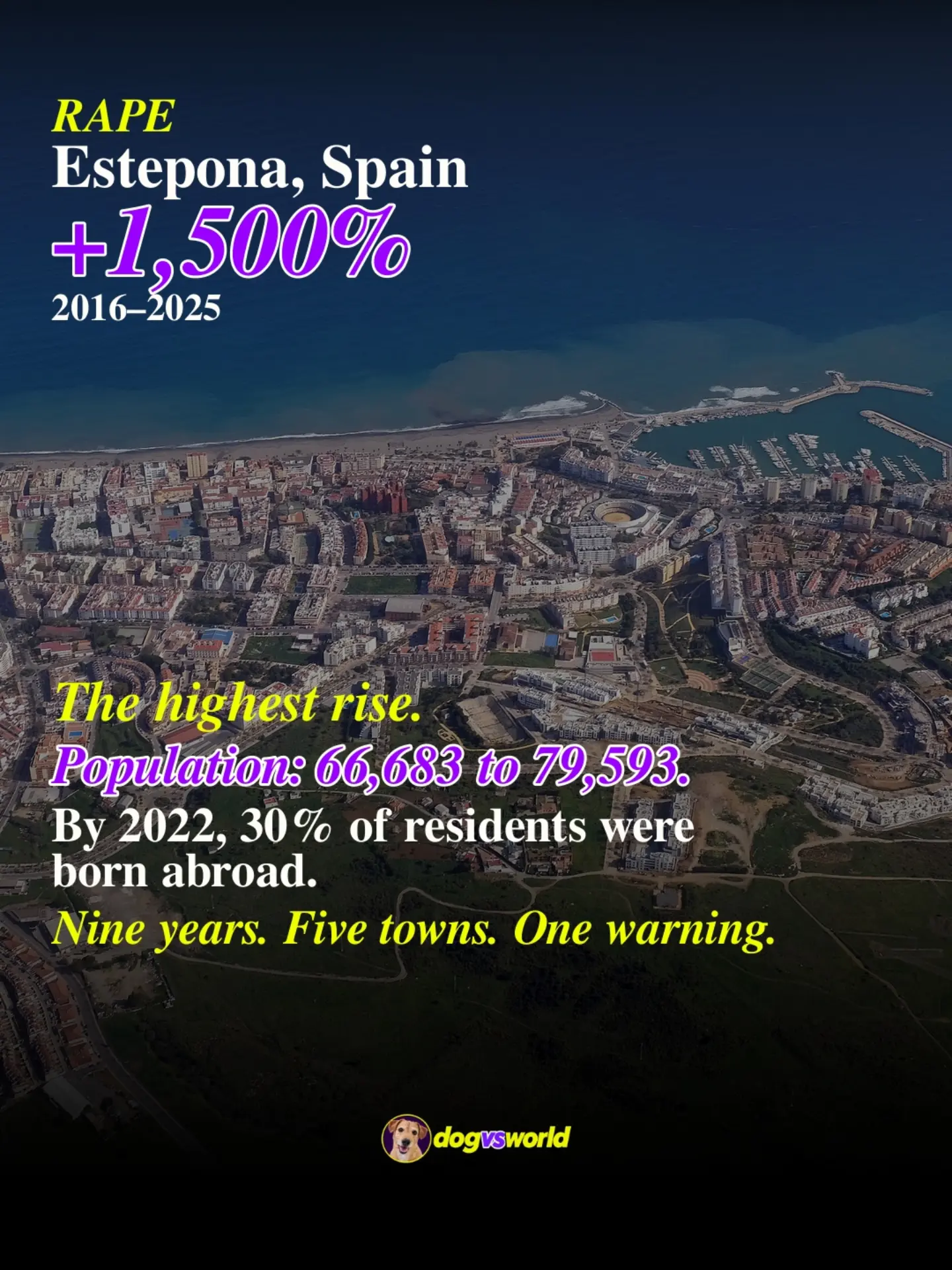
| Estepona | 1 | 16 | +1500% |
How the percentage is calculated
Percentage change = ((2025 count ÷ 2016 count) − 1) × 100. Estepona’s calculation is ((16 ÷ 1) − 1) × 100 = 1,500%. That is an increase of 15 recorded offences, with the final count 16 times the starting count. A starting value of one makes percentage changes particularly large.
These are annual recorded-offence counts, not convictions, unique offenders or population-adjusted rates. The comparison concerns these five selected towns; it is not a national ranking or evidence that every intervening year increased.
The local context
The original slides also discuss demographic change and reception services. Those sources provide context, rather than identifying who committed the recorded offences.
- Gavà: Idescat’s foreign-national population series and the municipal reception service document population and services. Foreign nationality differs from birthplace and asylum status.
- Mollet del Vallès: the official procurement notice covers migrant reception, coexistence and social cohesion. It was published in February 2026, after the crime comparison period, so it cannot establish when earlier provision began.
- Castelldefels: the council describes first-reception and language services and refugee and asylum support. Their existence does not quantify a change over 2016–2025.
- Blanes: El País reported on hotel accommodation for around 400 asylum seekers; Cadena SER reported on the later programme and the political dispute surrounding it.
- Estepona: municipal population figures show 66,683 residents in 2016 and 79,593 in 2025. The municipal urban diagnosis reports that 30% of residents were born abroad in 2022. These are separate measures from nationality.
What the data can establish
The increase in recorded cases deserves scrutiny. Explaining it requires more than placing crime and demographic figures side by side: these tables do not connect individual offences to immigration status, reception programmes or any ethnic or religious group. Changes in reporting, recording and legal definitions can also affect a nine-year comparison. The Ministry notes that greater willingness to report contributes to the recorded national trend; its 2025 balance is provisional.
Official sources and page references
2017 fourth-quarter balance, including the 2016 baseline and 2025 fourth-quarter balance. Use row 5.1 in each municipal table. PDF page numbers, counting the first page as 1:
- Gavà: 2016 baseline, PDF page 163; 2025 count, PDF page 243.
- Mollet del Vallès: 2016 baseline, PDF page 169; 2025 count, PDF page 253.
- Castelldefels: 2016 baseline, PDF page 159; 2025 count, PDF page 237.
- Blanes: 2016 baseline, PDF page 188; 2025 count, PDF page 283.
- Estepona: 2016 baseline, PDF page 35; 2025 count, PDF page 74.
The original carousel
The remaining slides retain the original presentation. The source notes above distinguish the crime comparison from the demographic and policy context.

Related research
Keep the research going
I research and create these reports myself. Support my work on Buy Me a Coffee, or send a correction or source suggestion.