

UKHSA cites an estimate that 95% of new chronic hepatitis B diagnoses in the UK involve migrants who acquired the infection overseas. My report examines that estimate alongside England’s undiagnosed burden, London prevalence and pregnancy-screening figures.
By Doggy. Adapted from my original Instagram carousel, posted 1 November 2026. The main source is UKHSA’s Hepatitis B in England 2025, updated 19 October 2026. Its measures refer to different years and populations, explained below.
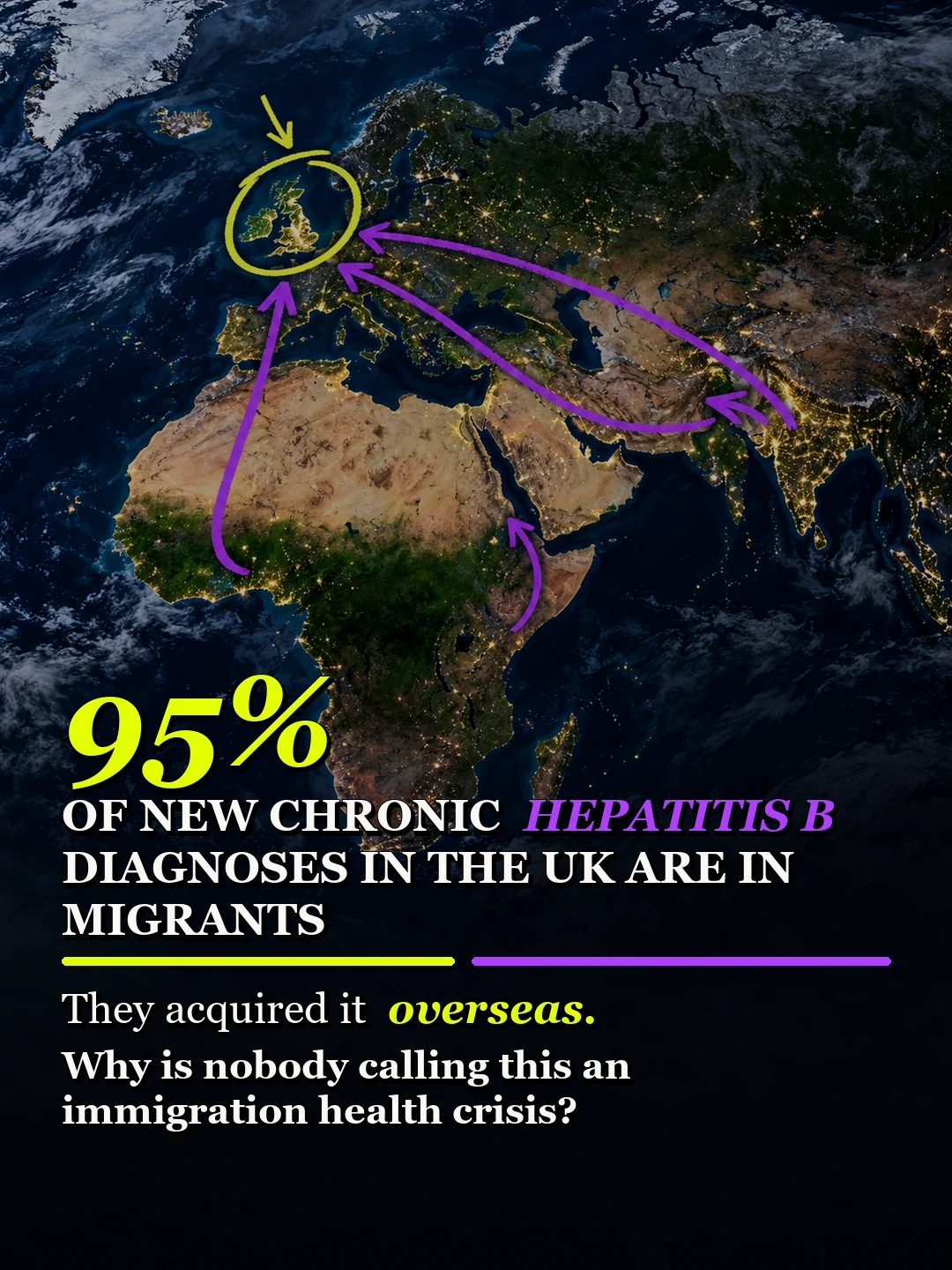
What the 95% estimate actually describes
UKHSA’s discussion of new diagnoses attributes this estimate to NICE guidance PH43, originally published in 2012 and updated in 2013. It is a longstanding estimate cited in the report, rather than a fresh calculation from a 2026 migration dataset.
The estimate concerns people newly identified with chronic hepatitis B. It does not mean 95% of migrants have hepatitis B, or that 95% of infections were transmitted within the UK. Diagnosis can occur years after infection. The original source describes acquisition overseas, often early in life.
Why an infection can go unnoticed
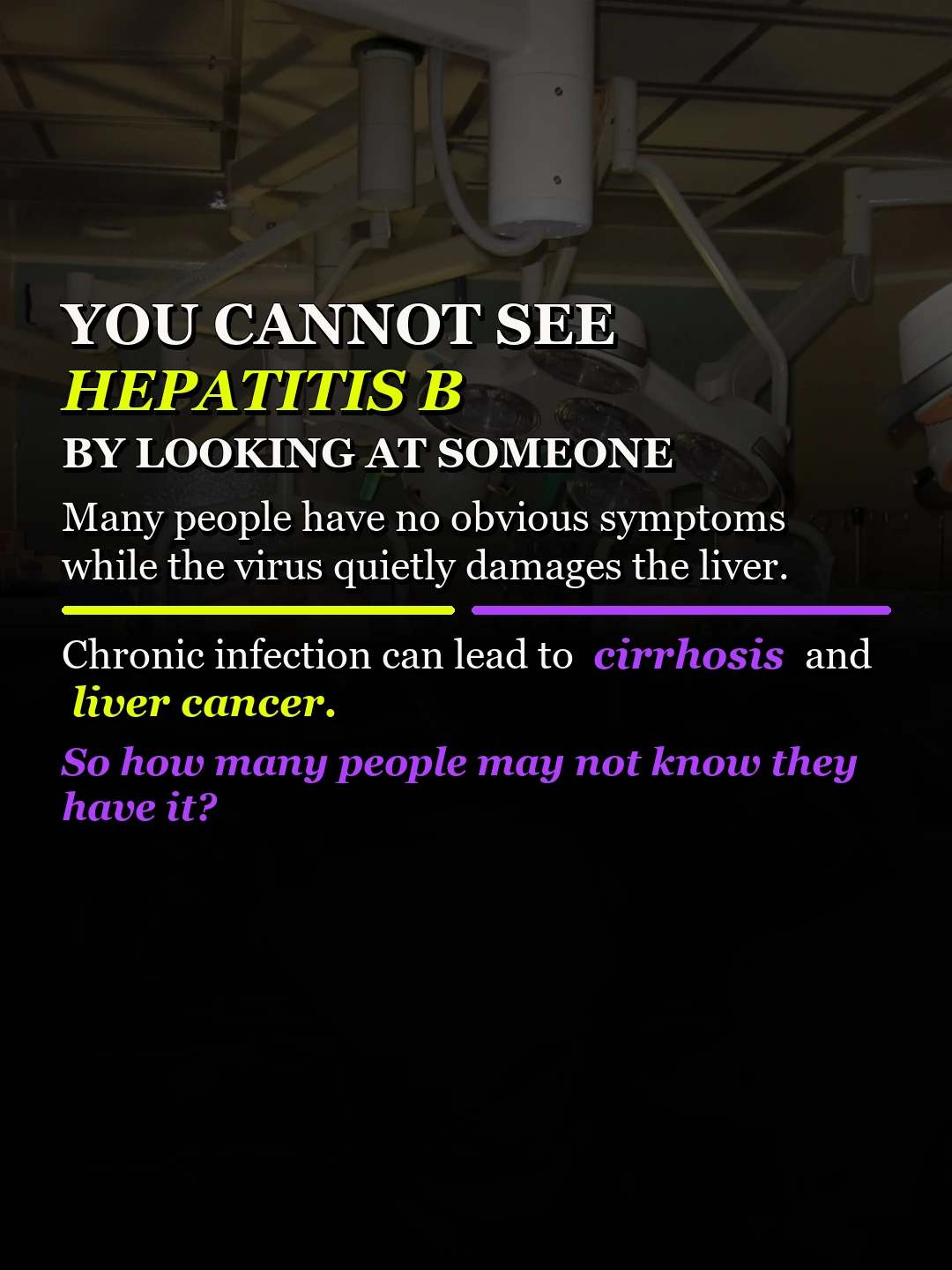
The NHS explains that hepatitis B spreads through infected blood and body fluids, including transmission during birth. Many people have no symptoms or only mild symptoms. Infection lasting more than six months is described as chronic; untreated chronic infection can cause cirrhosis and raise the risk of liver cancer.
The NHS also says the chance of acquiring hepatitis B in the UK is low. Vaccination, testing and treatment matter. These figures do not establish an individual’s health from their appearance or birthplace. If you think you may be at risk, the NHS advises speaking to a GP.
England: why the carousel says approximately 152,000 may be undiagnosed
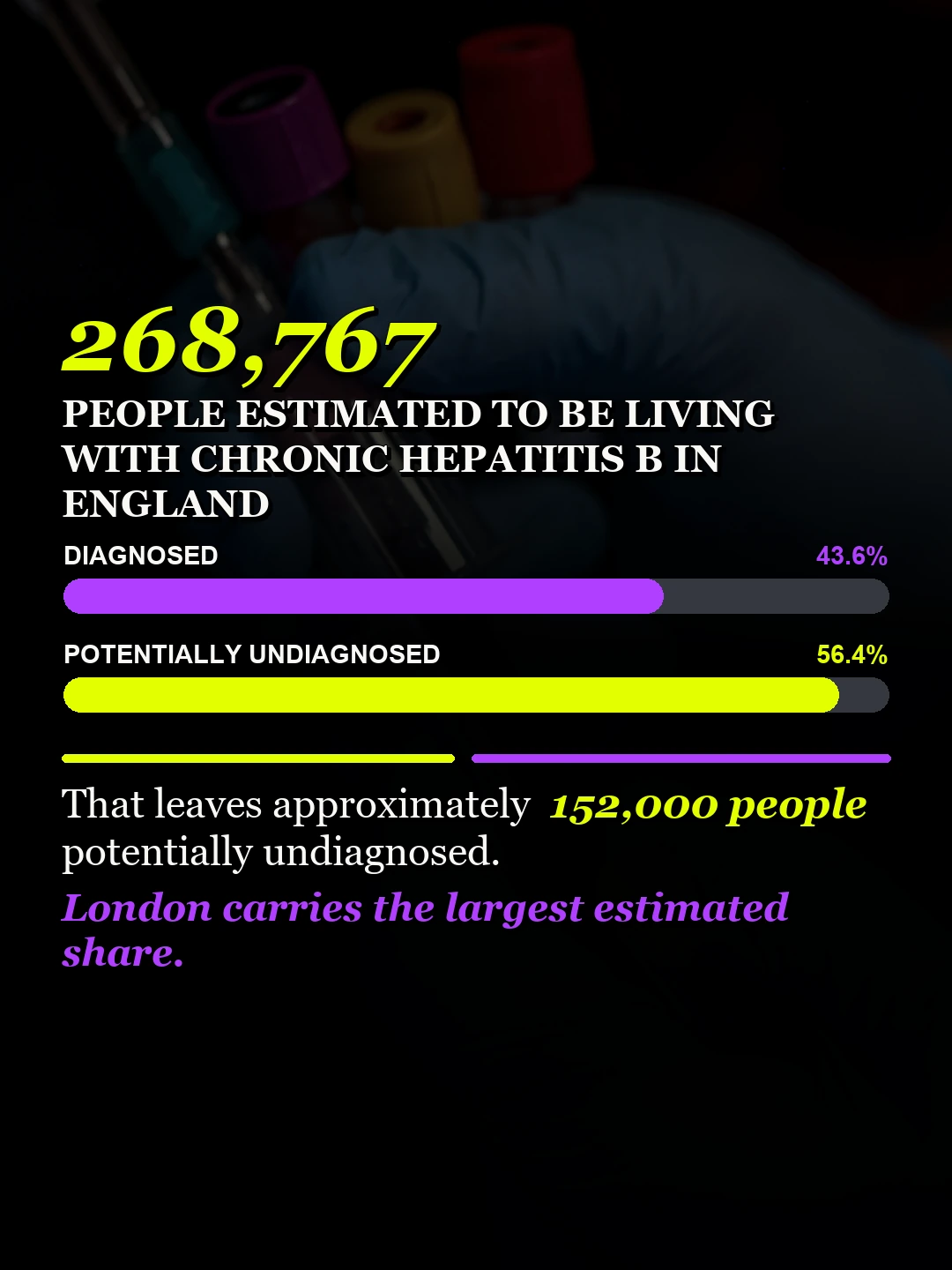
The report’s national model estimates 268,767 people living with chronic hepatitis B, with a 95% confidence interval of 227,896 to 314,004. The underlying prevalence baseline is 2021, not a direct count in November 2026.
UKHSA’s experimental diagnosis analysis estimates 117,079 people diagnosed by 2024, or 43.6% of the estimated burden. My carousel uses the rounded complement:
100 − 43.6 = 56.4%; 268,767 × 0.564 = 151,585, approximately 152,000.
Subtracting the unrounded counts gives 268,767 − 117,079 = 151,688, also approximately 152,000. The small difference comes from rounding. This is an estimate using the report’s model and diagnosis assumptions, not an observed register of undiagnosed people.
London: approximately one person in 72
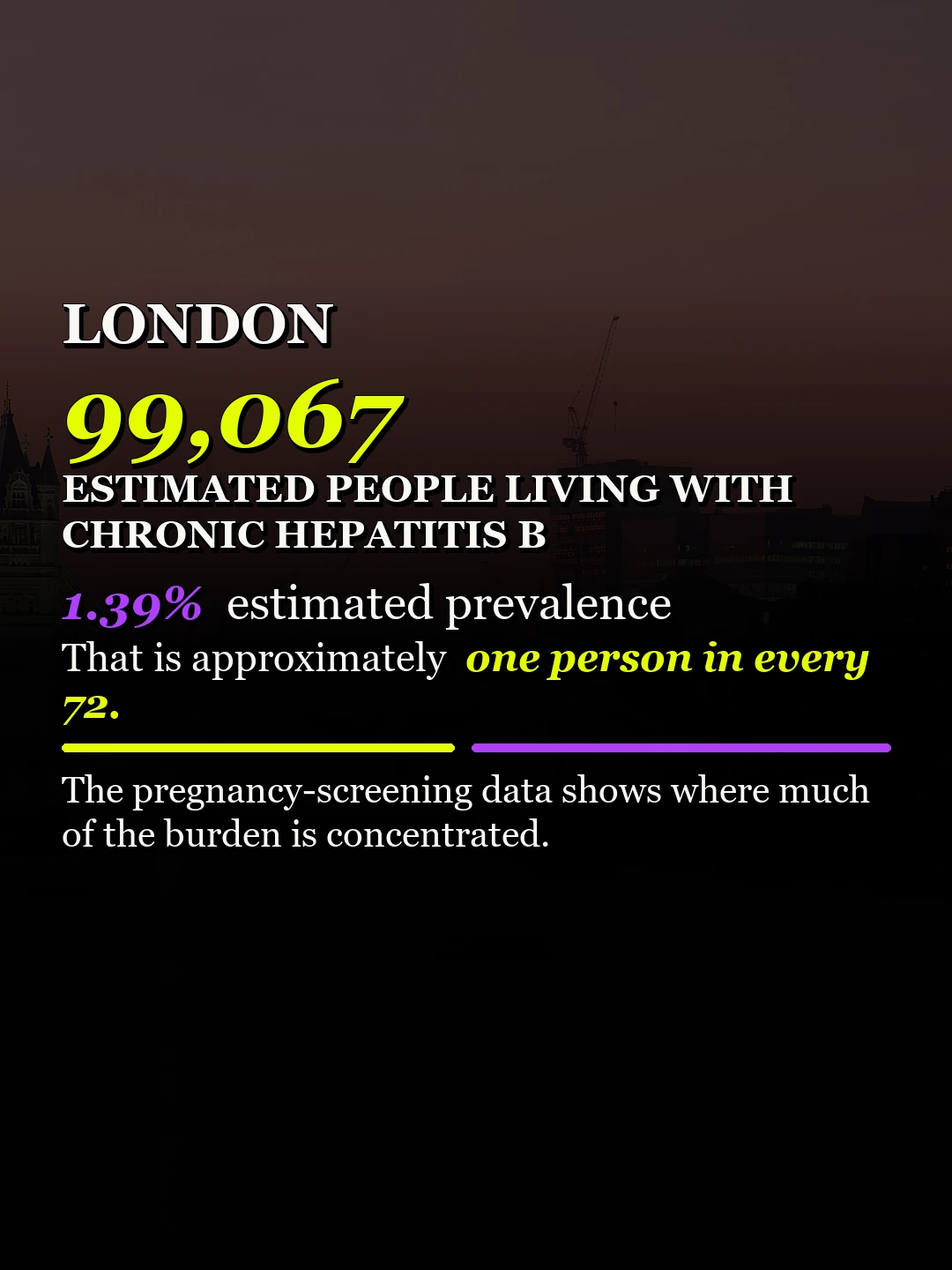
London’s estimate is 99,067 people and 1.39% prevalence. My conversion is 100 ÷ 1.39 = 71.94, or approximately one in 72. UKHSA cautions that regional estimates are less certain than the national estimate.
Pregnancy screening: shares of positive samples
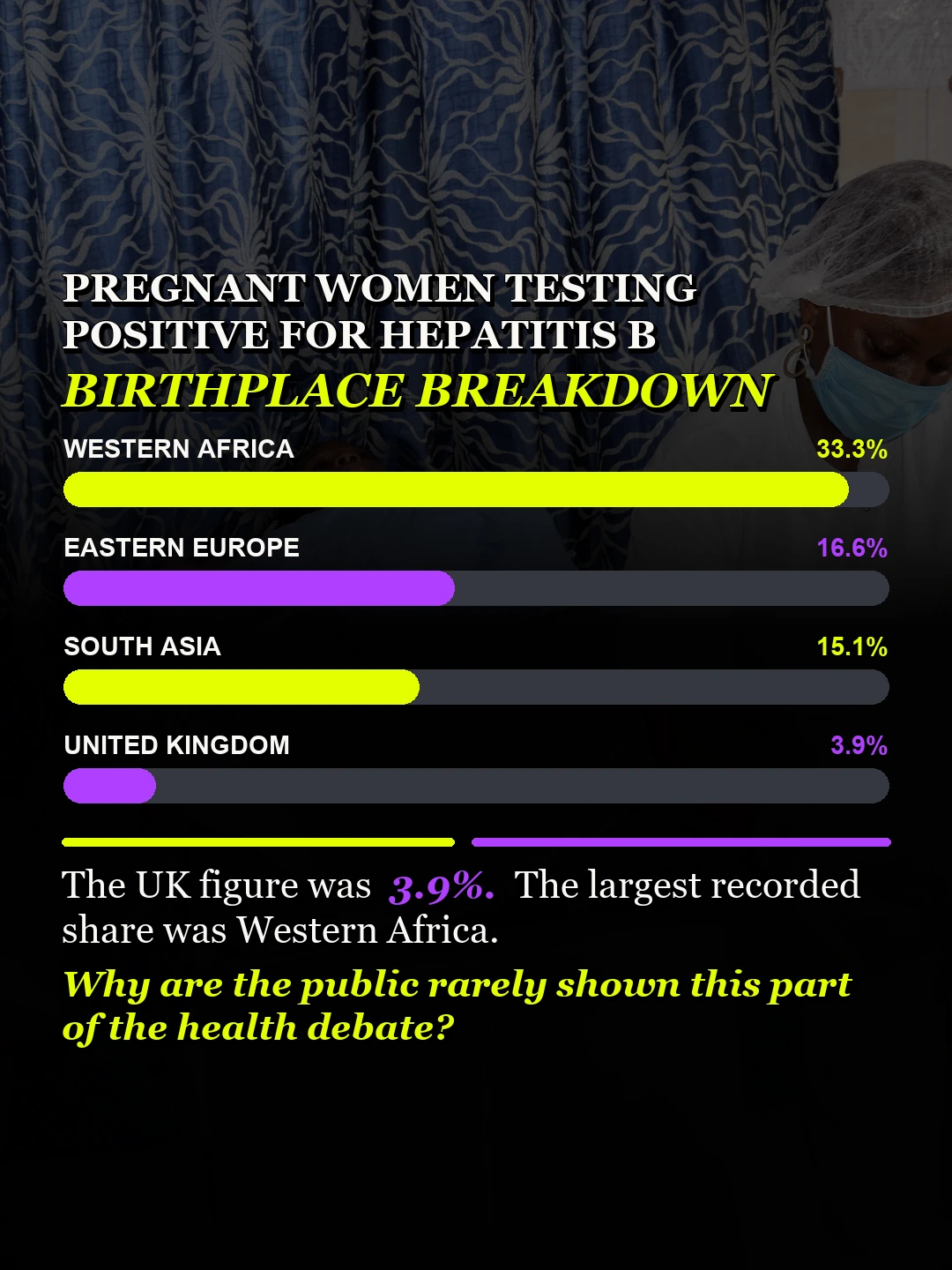
For 2023–2024, country of birth and infectivity information were available for 2,084 positive antenatal samples. The carousel selects Western Africa at 33.3%, Eastern Europe at 16.6%, South Asia at 15.1% and the UK at 3.9%.
These are shares among positive samples with those details, not the proportion of pregnant women from each region who tested positive. You would need the total screened in each birth-region group to calculate those rates. The four displayed categories are selected examples and do not exhaust the dataset.
The policy question I am asking
I want screening, prevention and treatment capacity discussed openly alongside migration policy. That is my argument, not a conclusion that every migrant poses a risk. The figures above describe different populations and cannot be combined into a single measure of risk.
The map arrows are an editorial illustration, not traced transmission routes. Photographs illustrate the topic and do not identify anyone pictured as infected. My question about the attention these findings receive is commentary; this article does not establish deliberate media suppression.
Sources and calculations
- UKHSA: Hepatitis B in England 2025, Table 1, sections 1.3.1, 2.4 and 2.5: prevalence, screening and diagnosis measures.
- NICE PH43: public health need and practice, for the background to the 95% estimate.
- NHS: hepatitis B, for transmission, symptoms, vaccination and complications.
The remaining original slides
Photographic credits
- File:5th Air Naval Gunfire Liaison Company hosts blood drive (10051282).jpg: U.S. Marine Corps photo by Lance Cpl. John Haubeil; Public domain.
- File:Hepato-pancreato-biliary surgery.jpg: Ethan Fox Surgery; CC0.
- File:London Thames Sunset panorama - Feb 2008.jpg: Diliff; CC BY 3.0.
- File:Au Laboratoire au Cameroun 16.jpg: John Mbenguè; CC BY-SA 4.0.


More research
Read my England tuberculosis report, my European HIV, TB and hepatitis B report, or browse all topics.
Keep the research going
I research and create these reports myself. Support my work on Buy Me a Coffee or send a correction or source suggestion.