
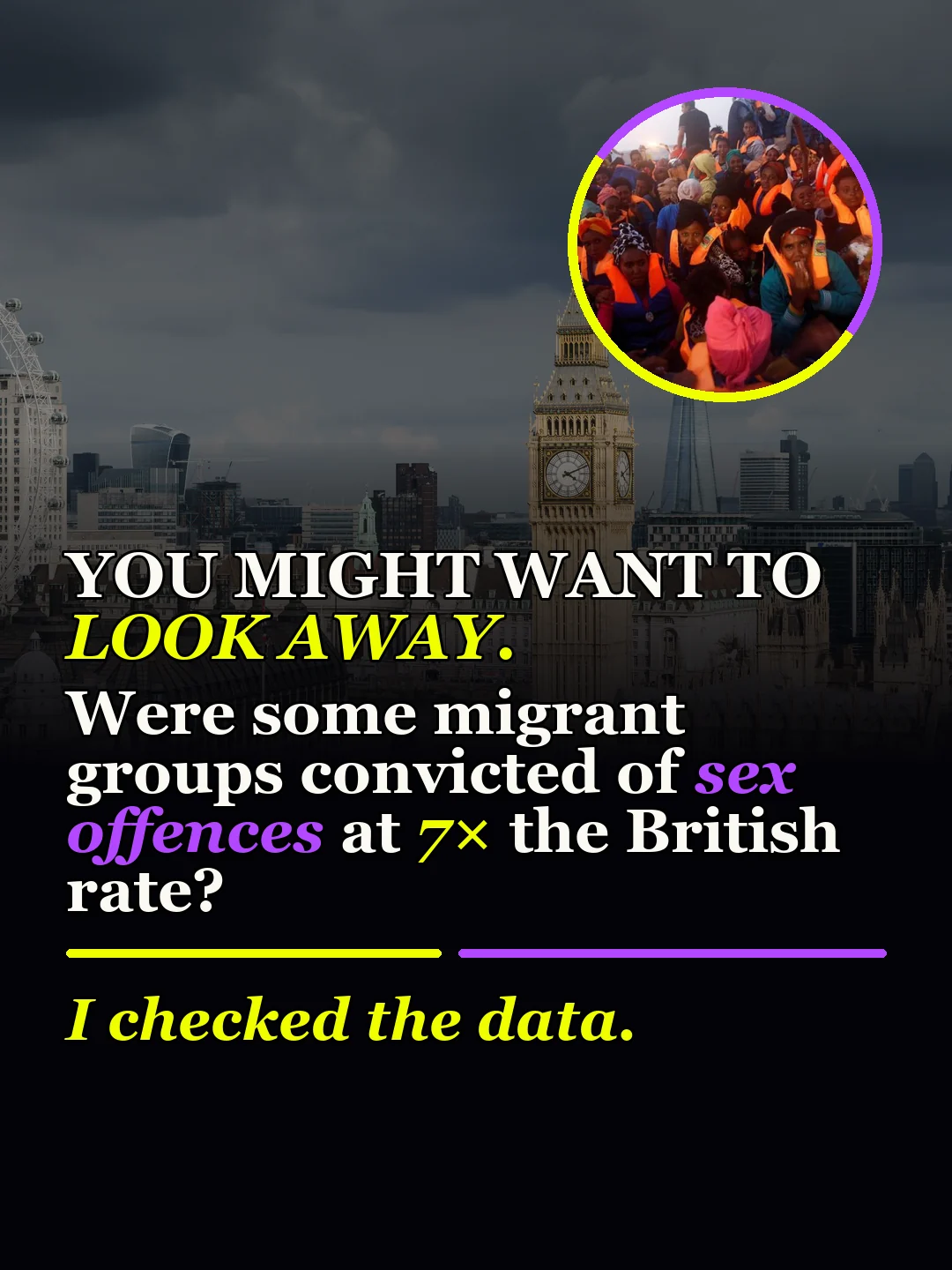
An age- and sex-adjusted analysis estimated that Afghan nationals’ sexual-offence conviction rate in England and Wales was seven times the British rate in 2020–2022. Here are the reported comparisons, sources and limits behind my carousel.
By Doggy. Adapted from my original Instagram carousel. The rate estimates discussed here are from The Economist’s analysis of Ministry of Justice records, rather than a new calculation by me.
The reported comparison
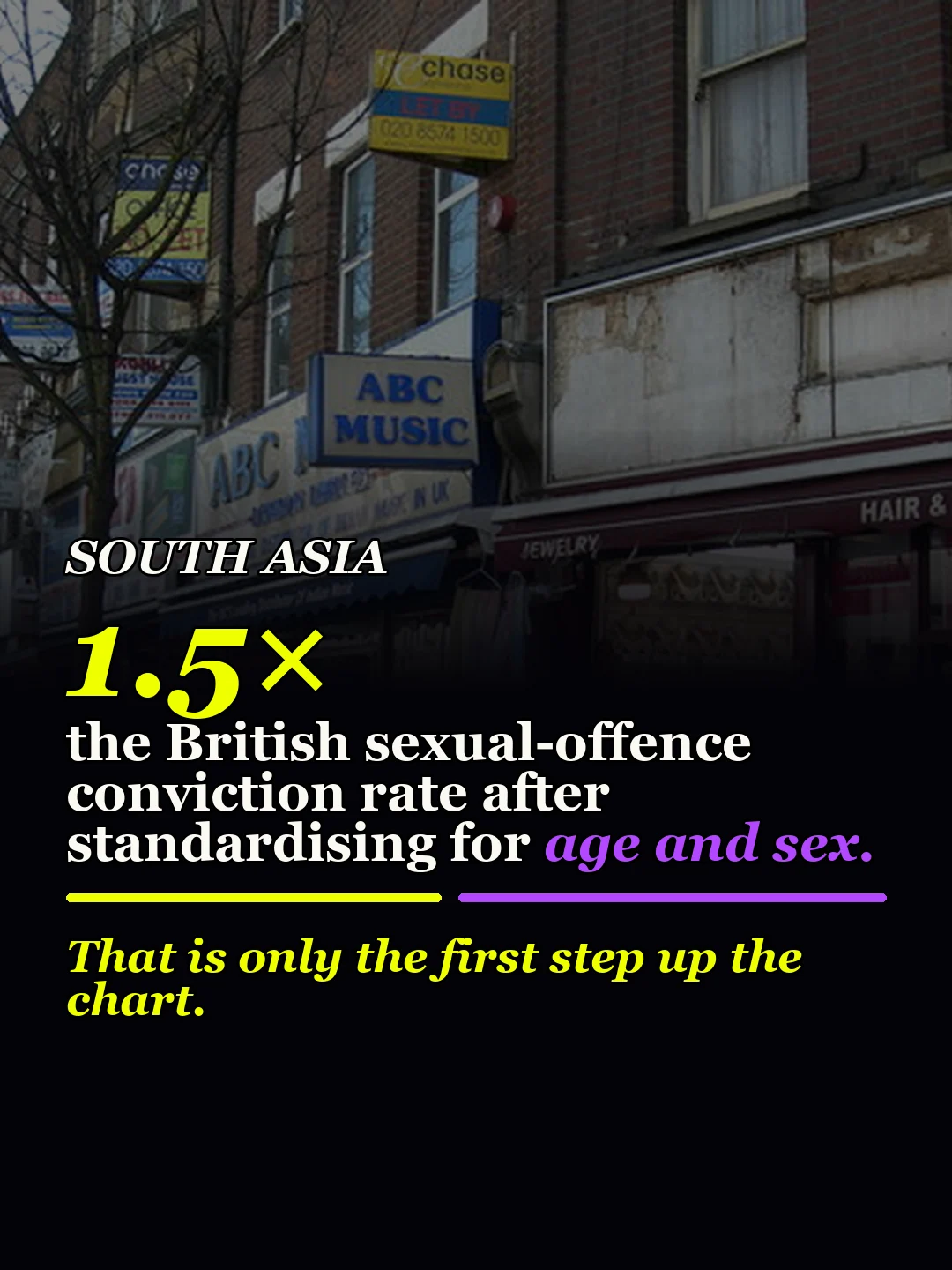
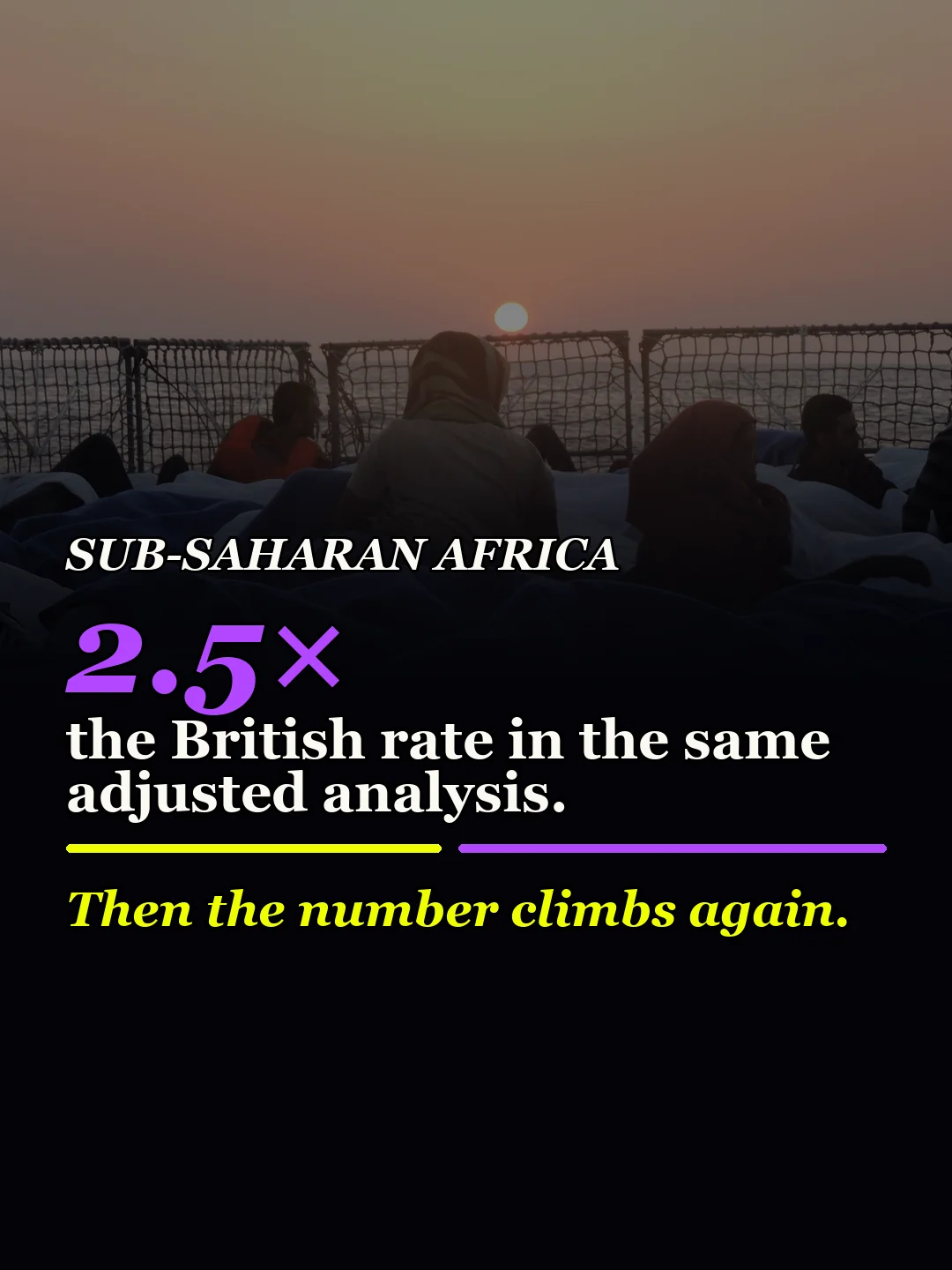
My carousel summarises the following relative rates, with British nationals as the reference group. These are estimates after age and sex standardisation, rather than raw population totals.
| Nationality grouping | Relative rate |
|---|---|
| British nationals | 1.0× |
| South Asian nationals | 1.5× |
| Sub-Saharan African nationals | 2.5× |
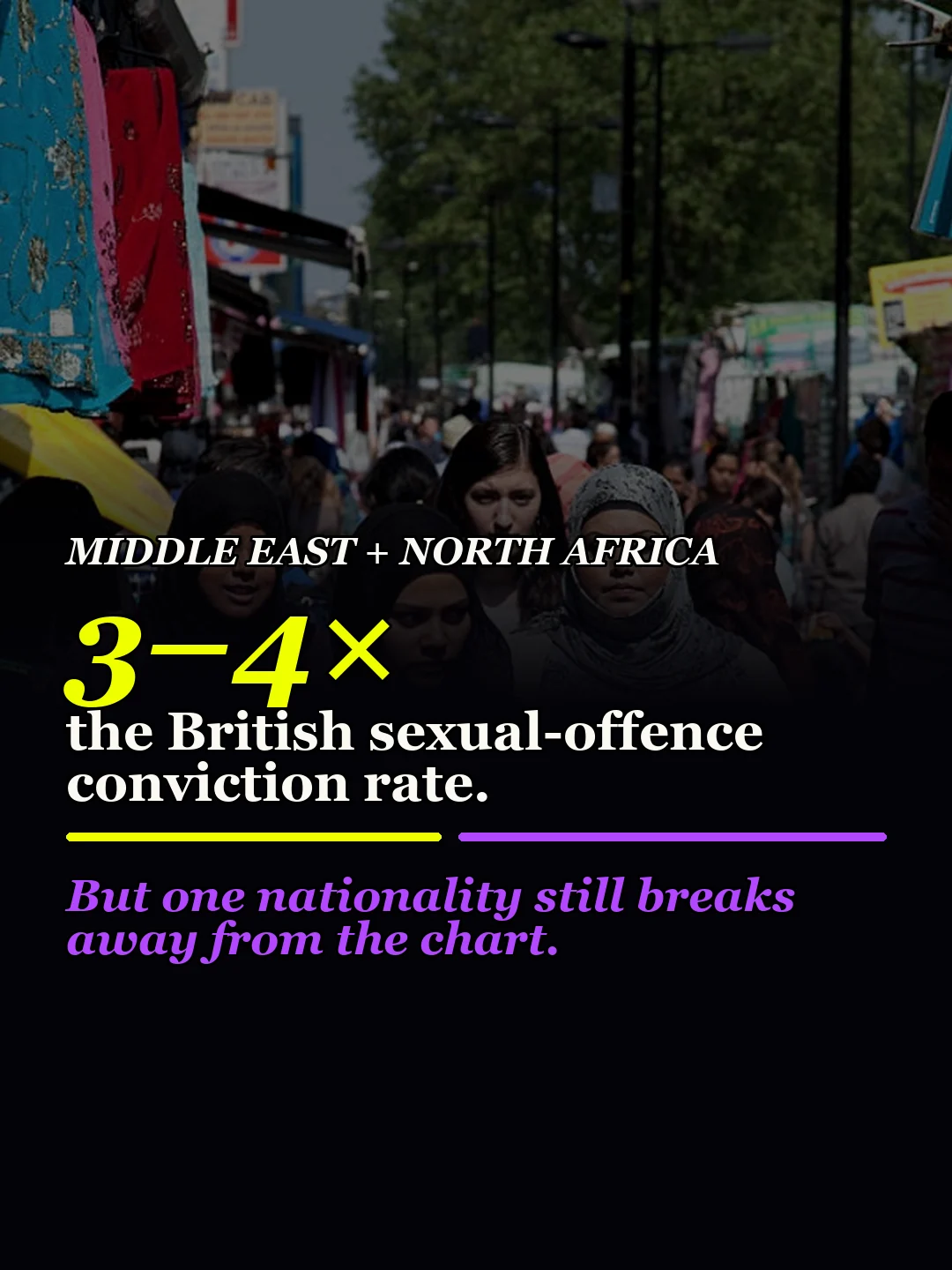
| Middle Eastern and North African nationals | 3–4× |
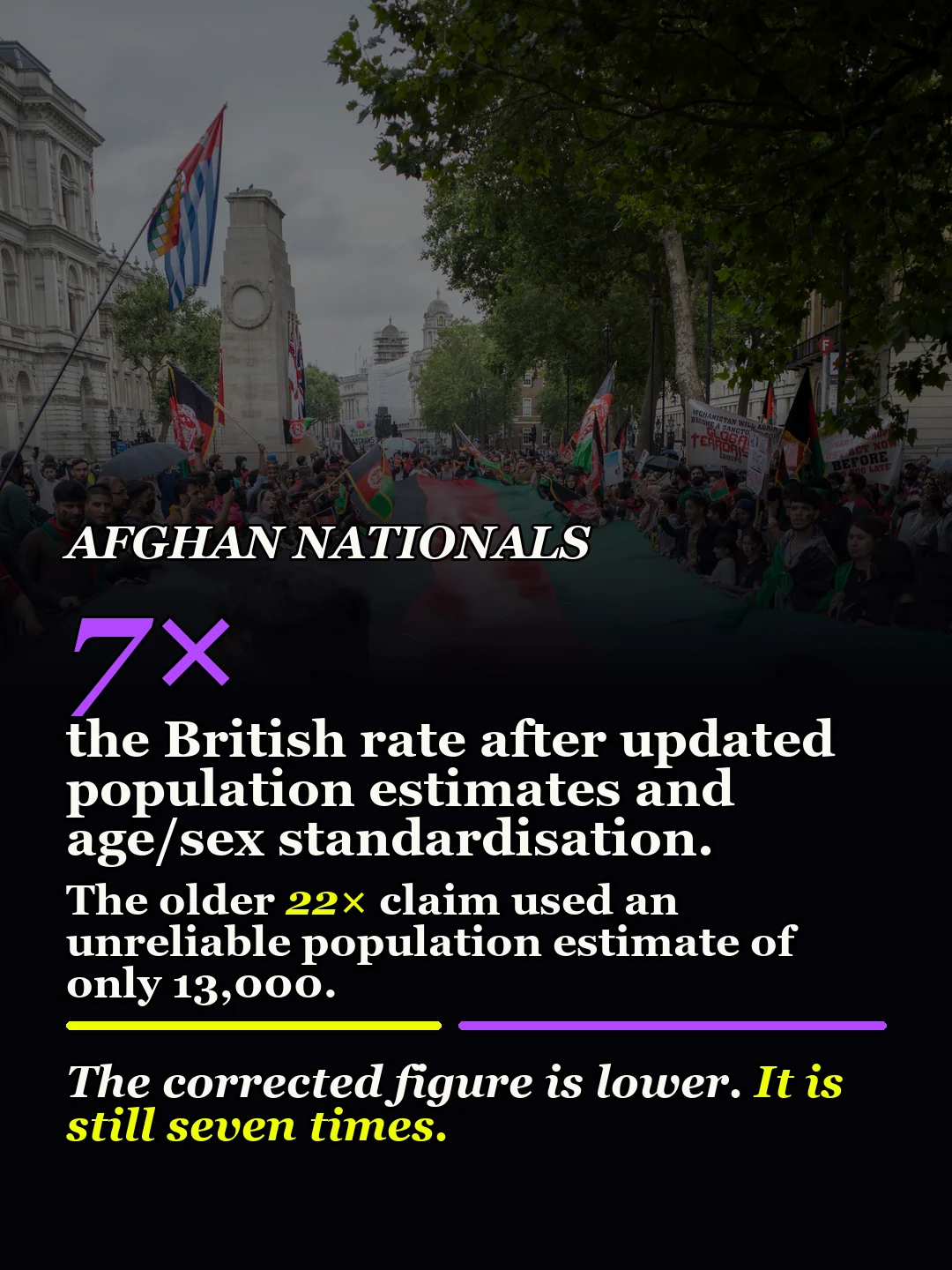
| Afghan nationals | 7× |
Two different time windows
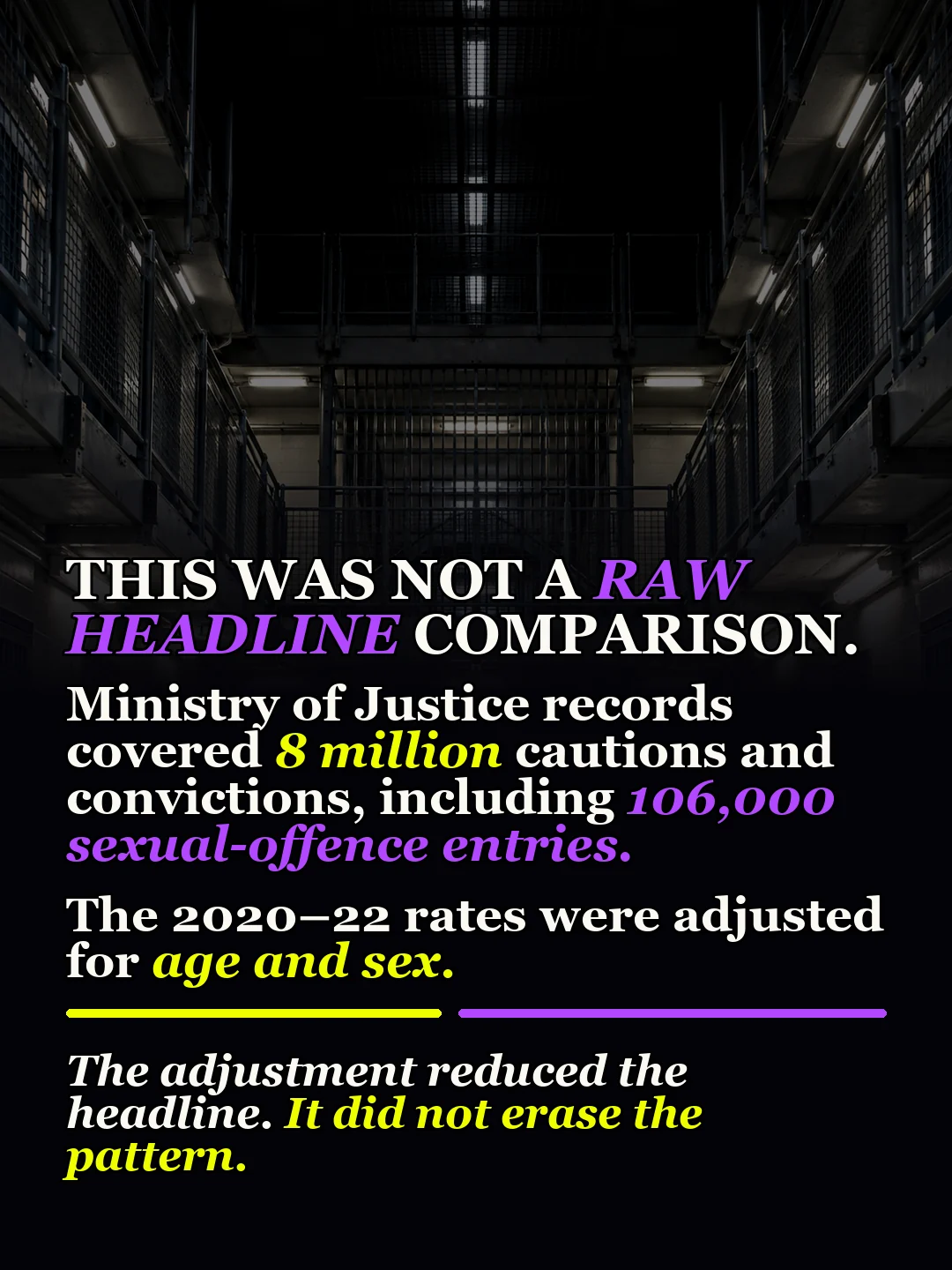
The wider Ministry of Justice dataset covers 2010–2024. The comparison highlighted in my post uses 2020–2022. The carousel’s approximately eight million cautions and convictions, including 106,000 sexual-offence entries, refer to the wider dataset, not just those three comparison years.
Why the population denominator matters
The earlier estimate of around 22 times used an unreliable population estimate. The revised analysis used a different population estimate and adjusted for age and sex, producing a substantially lower figure of about seven times.
A rate is a count divided by the relevant population. Underestimating that population inflates the calculated rate. Standardisation then asks what the comparison would look like if the groups had a common age and sex structure. It helps address those differences, but does not adjust for every possible influence.
Reading “seven times” correctly
A ratio of seven means the estimated rate is seven times the reference rate, or 600% higher. It does not mean seven in ten people offended, a 700-percentage-point difference, or a sevenfold probability for every individual. A ratio also needs an absolute rate to tell readers how frequent the outcome is.
Nationality, country of birth and ethnicity are different categories. British nationals can include people born abroad who later became citizens. These figures cannot be used as a substitute for a comparison by ethnicity, religion or asylum status.
What the records measure
Oxford’s Migration Observatory explains that the underlying Police National Computer extract records cautions and convictions by nationality. Someone can appear more than once across sentencing occasions. Nationality is self-reported, and the broad sexual-offence category includes offences of varying seriousness.
Conviction records do not measure every offence committed: reporting, detection and prosecution affect which incidents reach this stage. These group-level comparisons do not establish a cause for the differences or determine any individual’s behaviour.
Sources and method notes
- The Economist: the original analysis and population-adjustment method, 25 October 2026.
- Authorised syndicated version, credited to The Economist.
- Migration Observatory, University of Oxford: Migrants and crime in the UK, including the data definitions and limitations. The original research notes identify Ministry of Justice FOI requests 250430068 and 250821077.
The original carousel
The remaining six slides preserve my original presentation. The notes above distinguish the wider dataset from the comparison period and explain how to read the ratios.

Related research
- Denmark sexual-offence convictions by origin
- Nevada rape-offender data and Las Vegas registry figures
Keep the research going
I study the sources and create these reports myself. Support my work on Buy Me a Coffee, or send a correction or source suggestion.