HIV diagnoses in Ireland and Germany: 2024 data explained
Official reports from Ireland, Germany and the EU/EEA show substantial differences in HIV diagnoses by region of origin. The figures deserve...
Official reports from Ireland, Germany and the EU/EEA show substantial differences in HIV diagnoses by region of origin. The figures deserve scrutiny, with the definitions and denominators kept clear.
This report expands the original Dog vs World Instagram carousel, published on 24 October 2026. The original slides are reproduced below, alongside the source reports and workings.
Ireland: 74% of first-time diagnoses
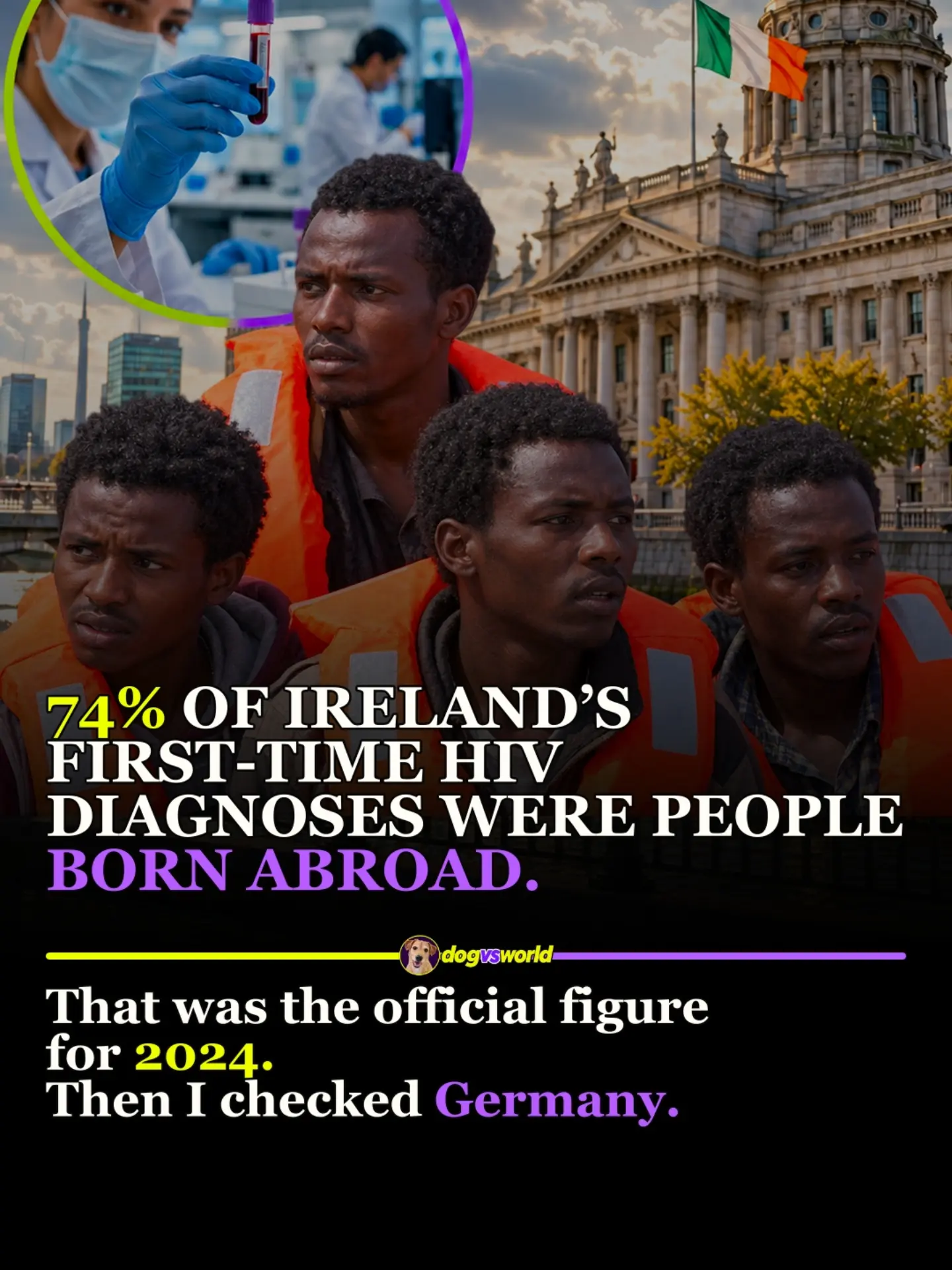
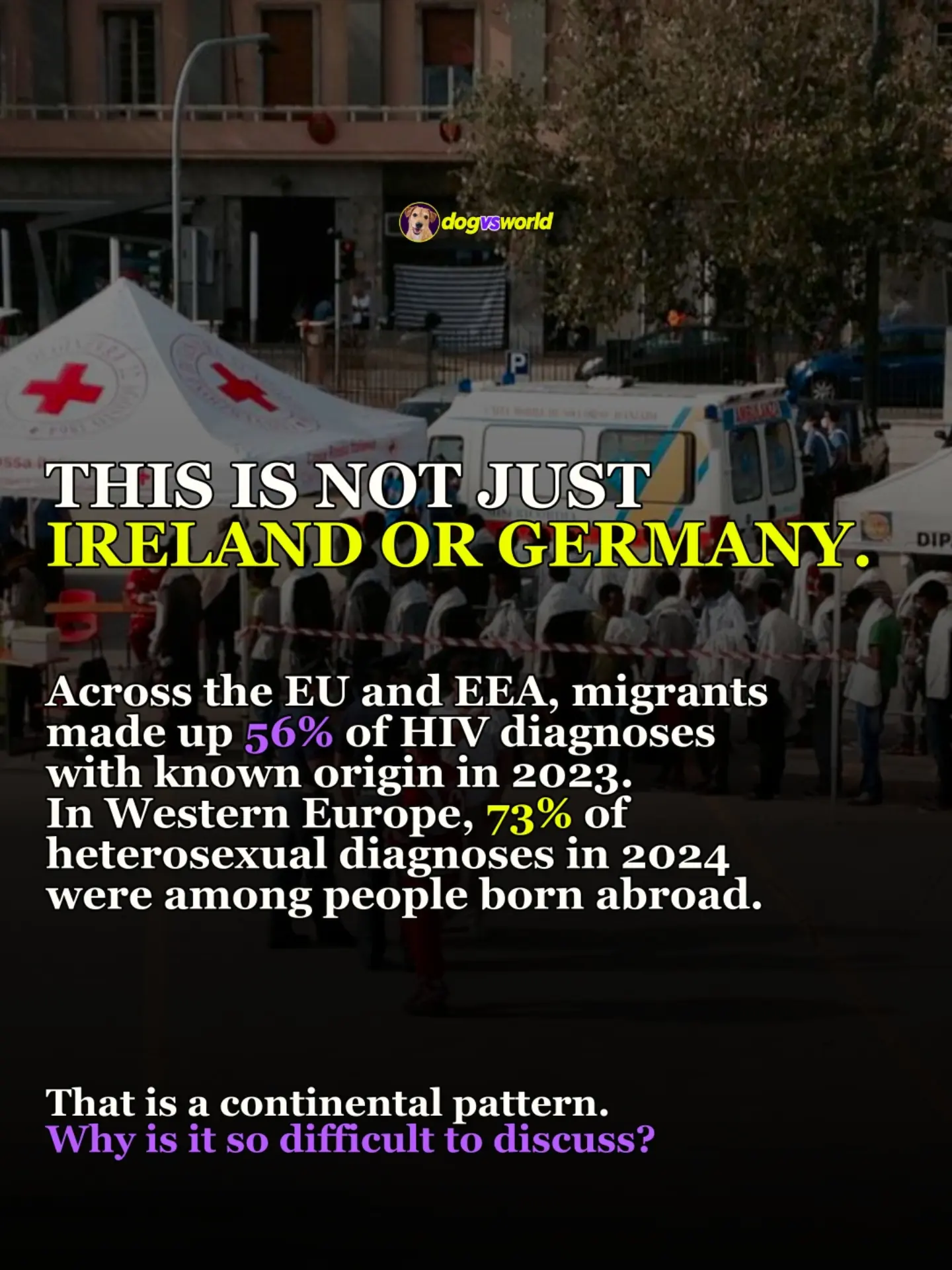
Ireland’s HPSC recorded 239 first-time HIV diagnoses in 2024. It reports that 74% were among people born outside Ireland, 23% among people born in Ireland, and 3% had unknown birthplace. First-time means a person was not previously aware they had HIV; it does not necessarily mean a recent infection.
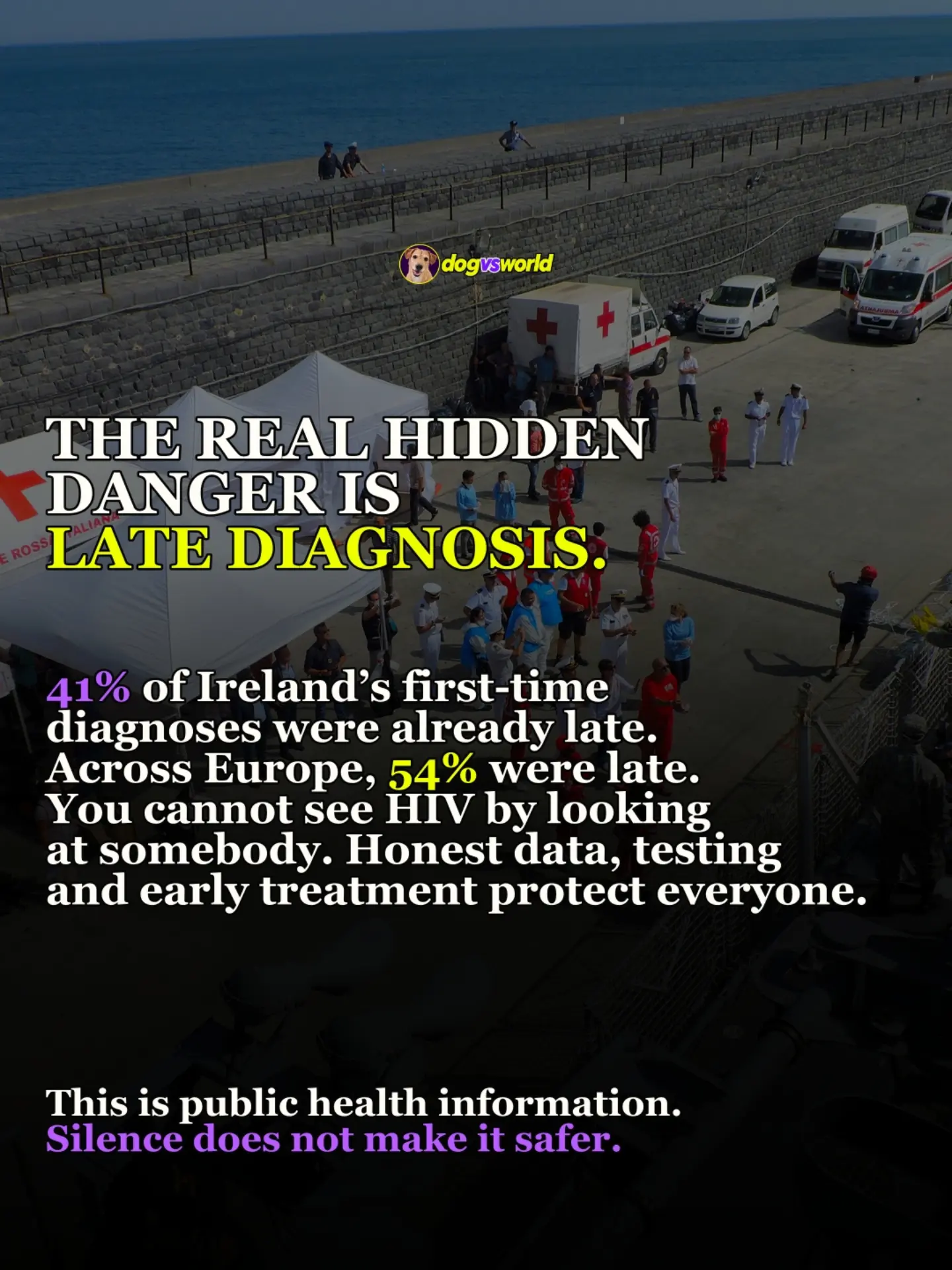
The report separately counts 989 total notifications, including 577 people with a previous diagnosis and 173 with unknown diagnostic history. These totals must not be treated as 989 newly acquired infections. Of first-time diagnoses, 41% were late-stage. Source: HPSC, HIV in Ireland 2024, definitions and summary.
Germany: 86% among heterosexual diagnoses with stated origin
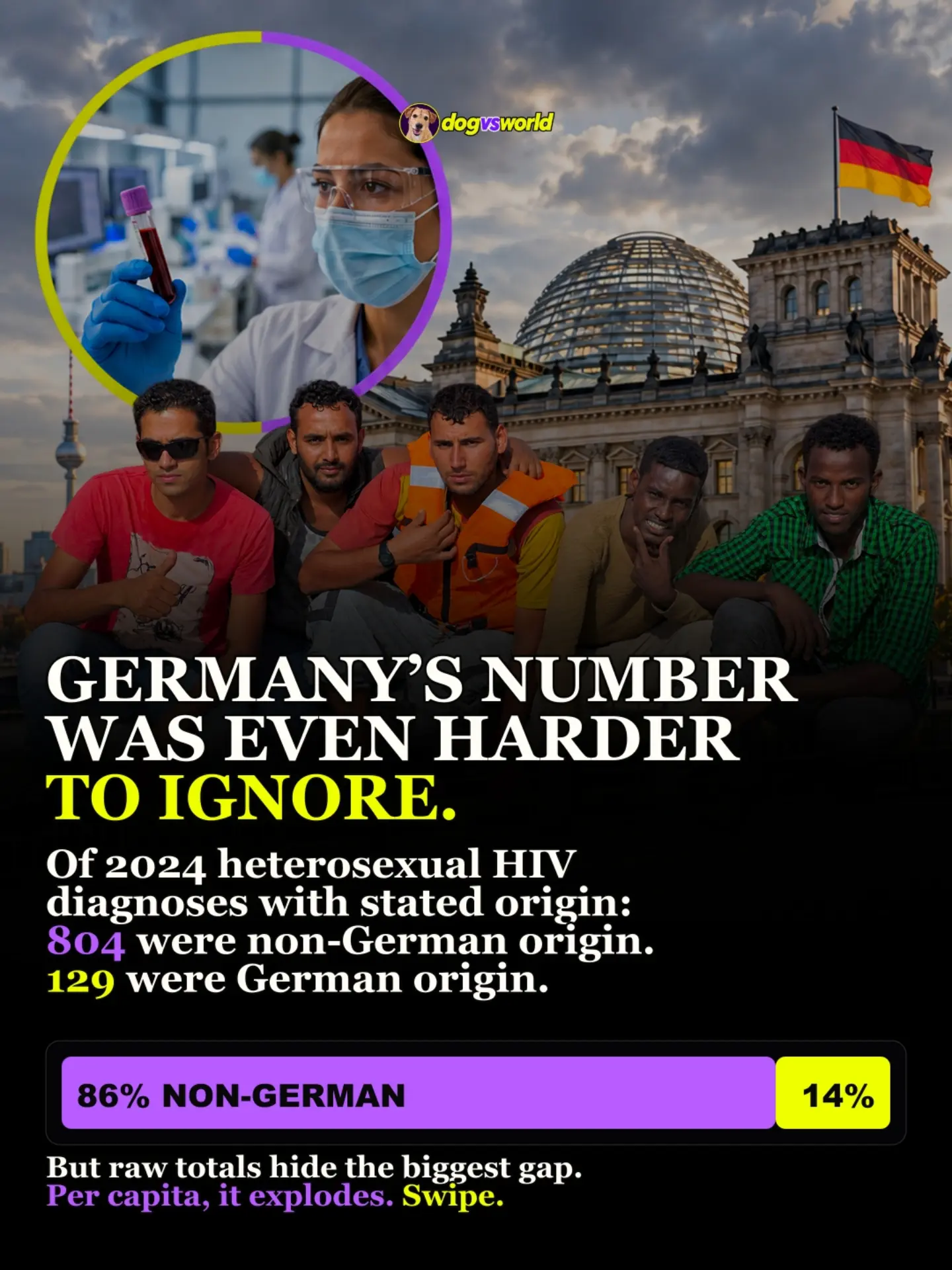
86% of Germany’s heterosexual HIV diagnoses with a stated country of origin involved people of non-German origin.
The Robert Koch Institute’s 2024 yearbook records 958 diagnoses attributed to heterosexual transmission: 804 involved people of non-German origin, 129 German origin and 25 unknown origin.
Excluding unknown origin gives a denominator of 933. The calculation is 804 ÷ (804 + 129) × 100 = 86.2%. Including all 958 gives 83.9%. Neither percentage describes all HIV diagnoses in Germany or the prevalence of HIV in the general population. Source: RKI, 2024 yearbook, HIV section, pages 124–125.
The wider EU/EEA picture
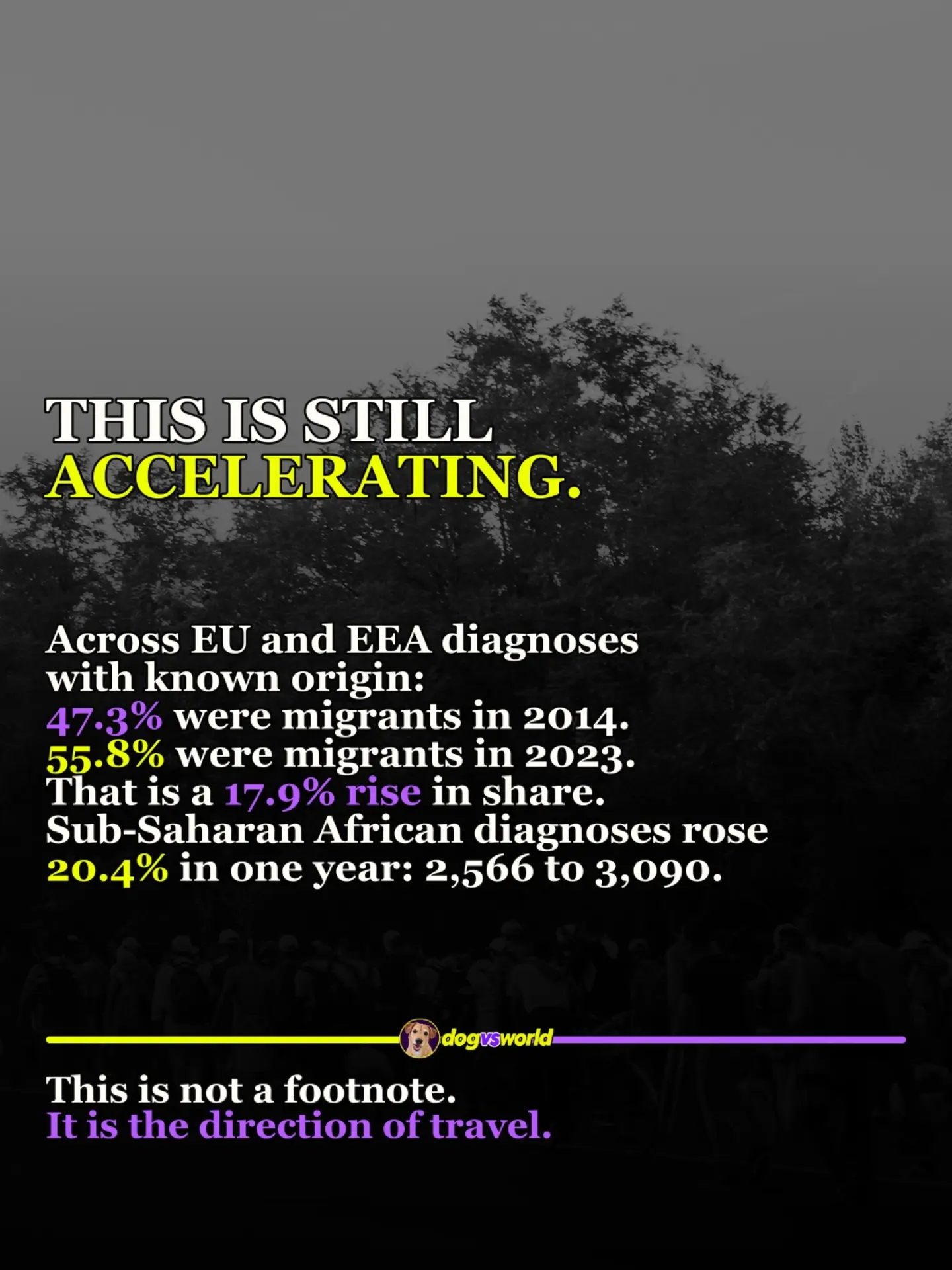
ECDC reports that, within its consistently reporting country series and excluding unknown origin, the migrant share of diagnoses increased from 47.3% in 2014 to 55.8% in 2023. That is an increase of 8.5 percentage points, or approximately 18.0% relative to the starting share, using the displayed rounded figures.
Diagnoses among people originating from sub-Saharan Africa increased from 2,566 in 2022 to 3,090 in 2023: (3,090 − 2,566) ÷ 2,566 × 100 = 20.4%. These are reported diagnoses, rather than a direct count of infections acquired that year. The trend analysis excludes certain countries with substantial missing origin data. Source: ECDC, HIV and migrants in the EU/EEA, 2024 report, 2023 data.
The original carousel, in order
The first slide appears above. The remaining slides are reproduced here.

Reading the evidence
Birthplace or origin alone does not establish where or when an infection was acquired, and group-level figures cannot determine an individual’s HIV status. Testing and access to effective treatment are central to prevention. The HSE explains that a person on effective treatment with an undetectable viral load cannot pass HIV to sexual partners. Source: HSE public-health update.
Questioning policy and examining the figures should go together with checking what those figures actually measure. For corrections or source suggestions, use the Contact page.
☕ Support my research on Buy Me a Coffee ↗
Read the report →